 Image 1 of 3
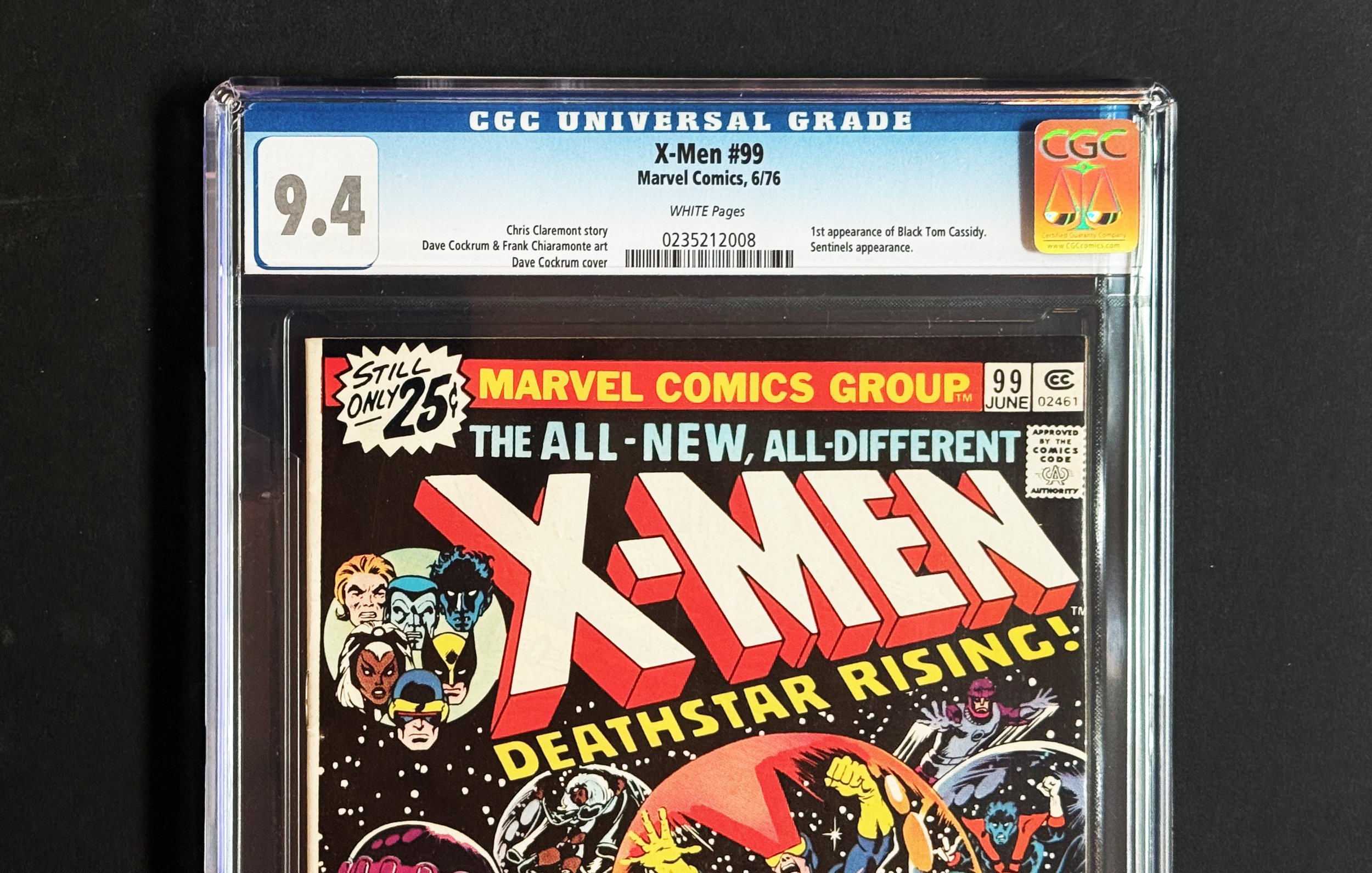 Image 2 of 3
 Image 3 of 3
There is a particular pleasure in owning a comic from just before the moment everyone remembers.
June 1976. The all-new, all-different X-Men are six issues into Chris Claremont’s run and nobody — not the readers, not the distributors, not entirely Marvel — knows what they have. Claremont will write this book for another fifteen years. At this point he is still finding out, month to month and in public, what it is going to be about.
“Deathstar, Rising!” is part two of three. The X-Men are aboard Steve Lang’s orbital station, fighting Sentinels above the atmosphere, and what matters about the issue is where it stands in line. The shuttle ride home from this station is the one where Jean Grey takes the controls, flies down through a solar storm, and rises out of Jamaica Bay as Phoenix. Everything that follows — the Hellfire Club, Dark Phoenix, the most retold storyline in superhero comics — begins its countdown on these pages.
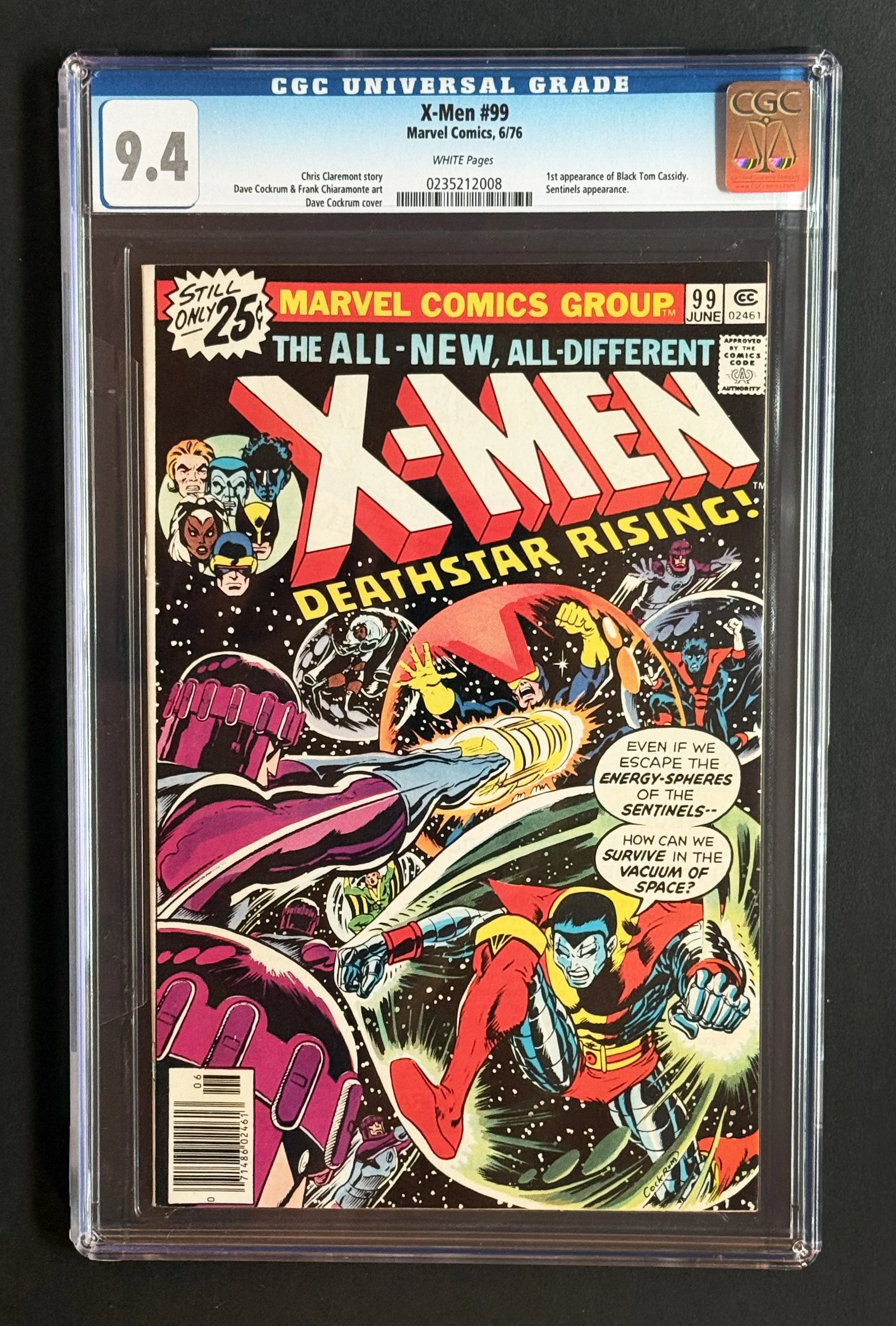
Dave Cockrum drew it. He had designed Storm, Nightcrawler and Colossus the year before; the visual grammar of the modern X-Men is his, and he is working here at the height of it. The cover is staged against a field of pure black — bodies suspended in vacuum, Sentinel energy spheres burning orange, Colossus lunging across the lower third with his fists out. It is one of the better-designed covers of the Bronze Age and one of the cruelest to own. Black ink shows everything: every spine tick, every corner ping, every place a thumb rested for fifty years. Copies of #99 in high grade are rarer than the print run would suggest, and the ones that exist have generally spent their whole lives in a box in the dark.
This copy is CGC 9.4 with white pages. On a black cover, half a century on, that is the entire story.
It is also the first appearance of Black Tom Cassidy, who waited thirty years for anyone to notice him and then turned up next to Deadpool.
There is a particular pleasure in owning a comic from just before the moment everyone remembers.
June 1976. The all-new, all-different X-Men are six issues into Chris Claremont’s run and nobody — not the readers, not the distributors, not entirely Marvel — knows what they have. Claremont will write this book for another fifteen years. At this point he is still finding out, month to month and in public, what it is going to be about.
“Deathstar, Rising!” is part two of three. The X-Men are aboard Steve Lang’s orbital station, fighting Sentinels above the atmosphere, and what matters about the issue is where it stands in line. The shuttle ride home from this station is the one where Jean Grey takes the controls, flies down through a solar storm, and rises out of Jamaica Bay as Phoenix. Everything that follows — the Hellfire Club, Dark Phoenix, the most retold storyline in superhero comics — begins its countdown on these pages.
Dave Cockrum drew it. He had designed Storm, Nightcrawler and Colossus the year before; the visual grammar of the modern X-Men is his, and he is working here at the height of it. The cover is staged against a field of pure black — bodies suspended in vacuum, Sentinel energy spheres burning orange, Colossus lunging across the lower third with his fists out. It is one of the better-designed covers of the Bronze Age and one of the cruelest to own. Black ink shows everything: every spine tick, every corner ping, every place a thumb rested for fifty years. Copies of #99 in high grade are rarer than the print run would suggest, and the ones that exist have generally spent their whole lives in a box in the dark.
This copy is CGC 9.4 with white pages. On a black cover, half a century on, that is the entire story.
It is also the first appearance of Black Tom Cassidy, who waited thirty years for anyone to notice him and then turned up next to Deadpool.