 Image 1 of 3
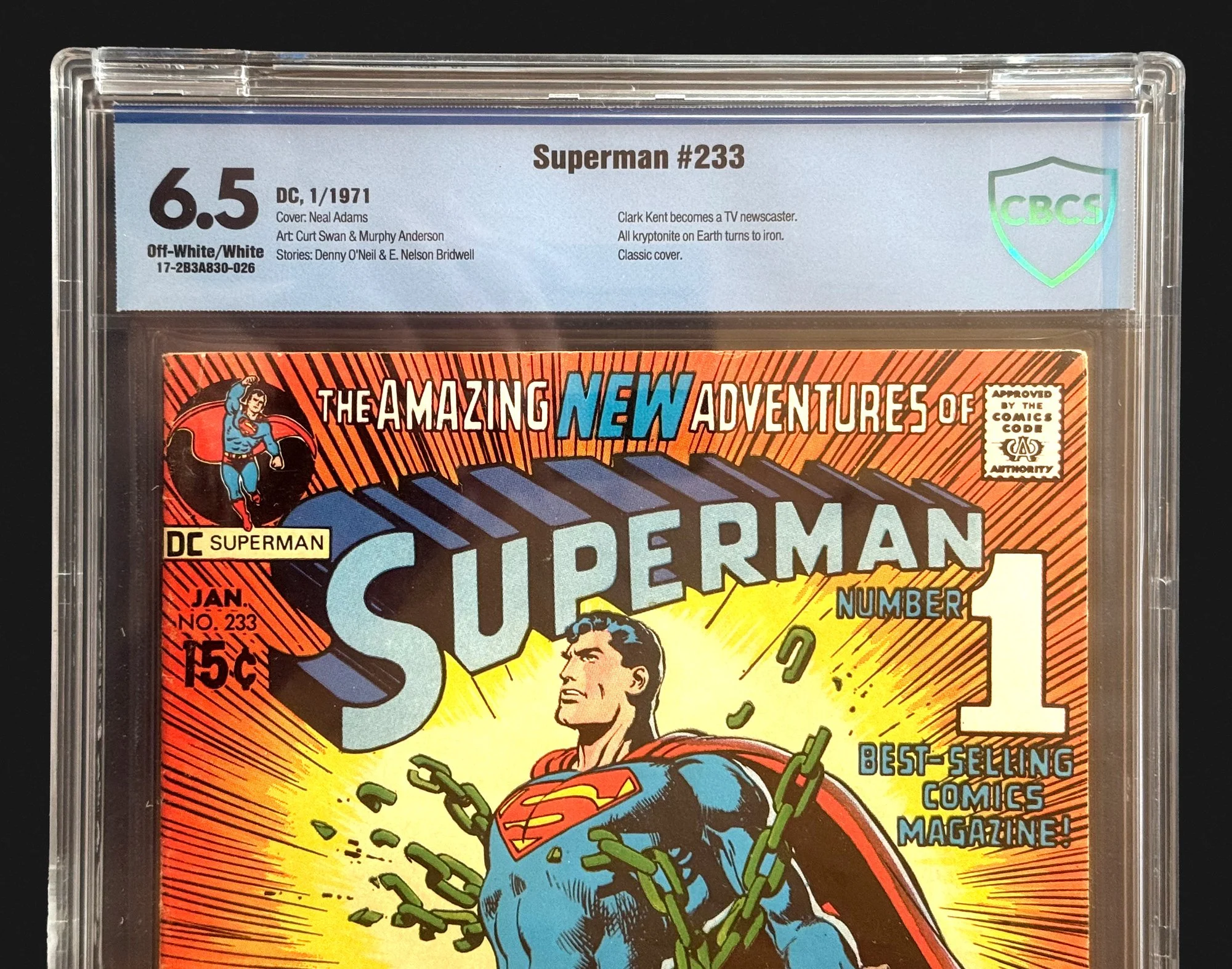 Image 2 of 3
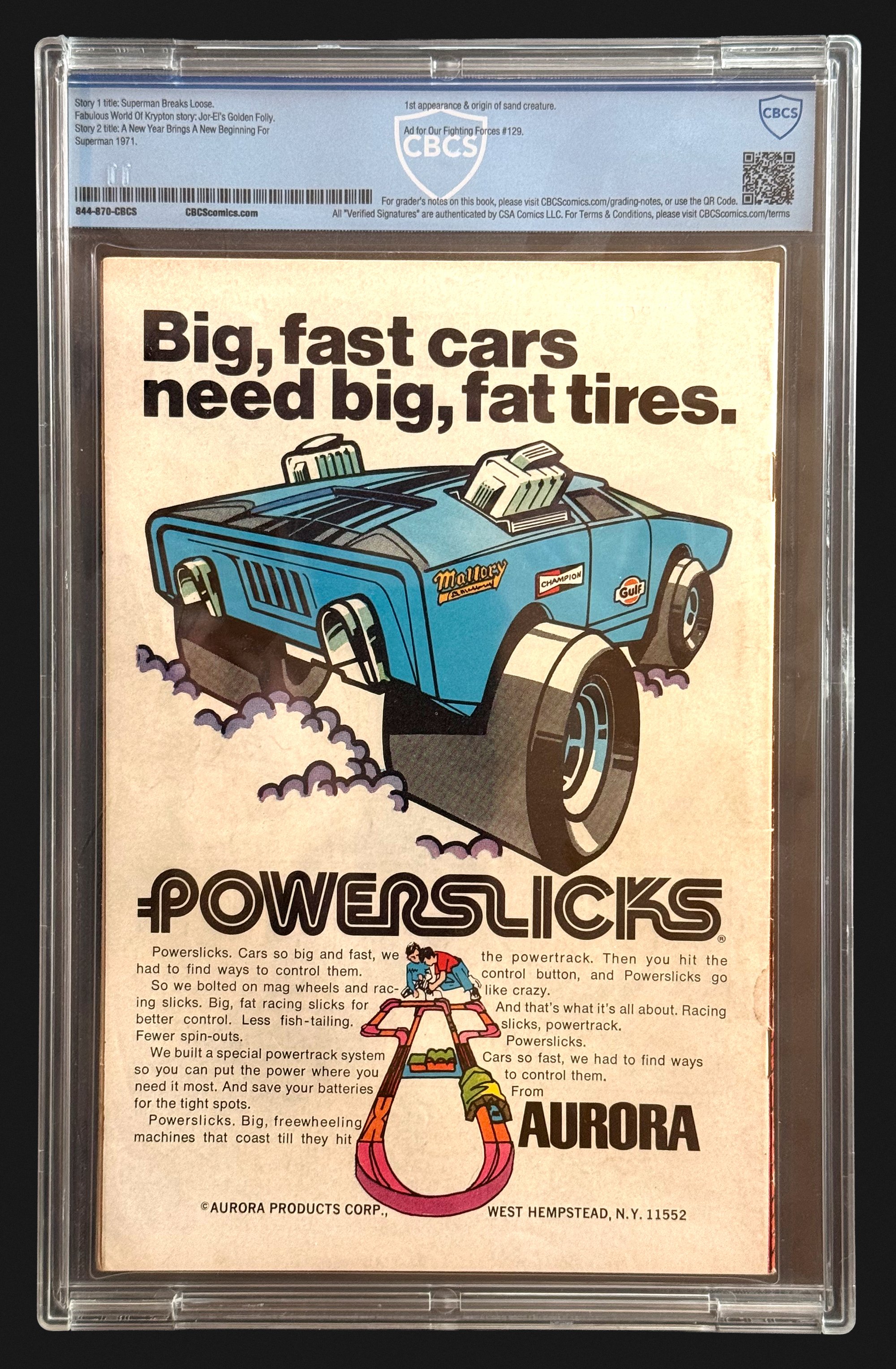 Image 3 of 3
By 1970 Superman had a problem that thirty years of success had built for him: nothing could hurt him, so nothing that happened to him mattered very much. The only remaining lever was a green rock, and the green rock had been pulled so many times it had gone slack.
Denny O’Neil’s answer, in the issue cover-dated January 1971, was to take it away entirely. A scientific accident turns every piece of kryptonite on Earth to iron. Superman’s power level comes down. Clark Kent leaves newspaper work for television journalism under a new boss. It is a piece of deliberate, unsentimental maintenance performed on the most valuable character in the company’s catalog, and it remains one of the most-discussed editorial decisions in the medium.
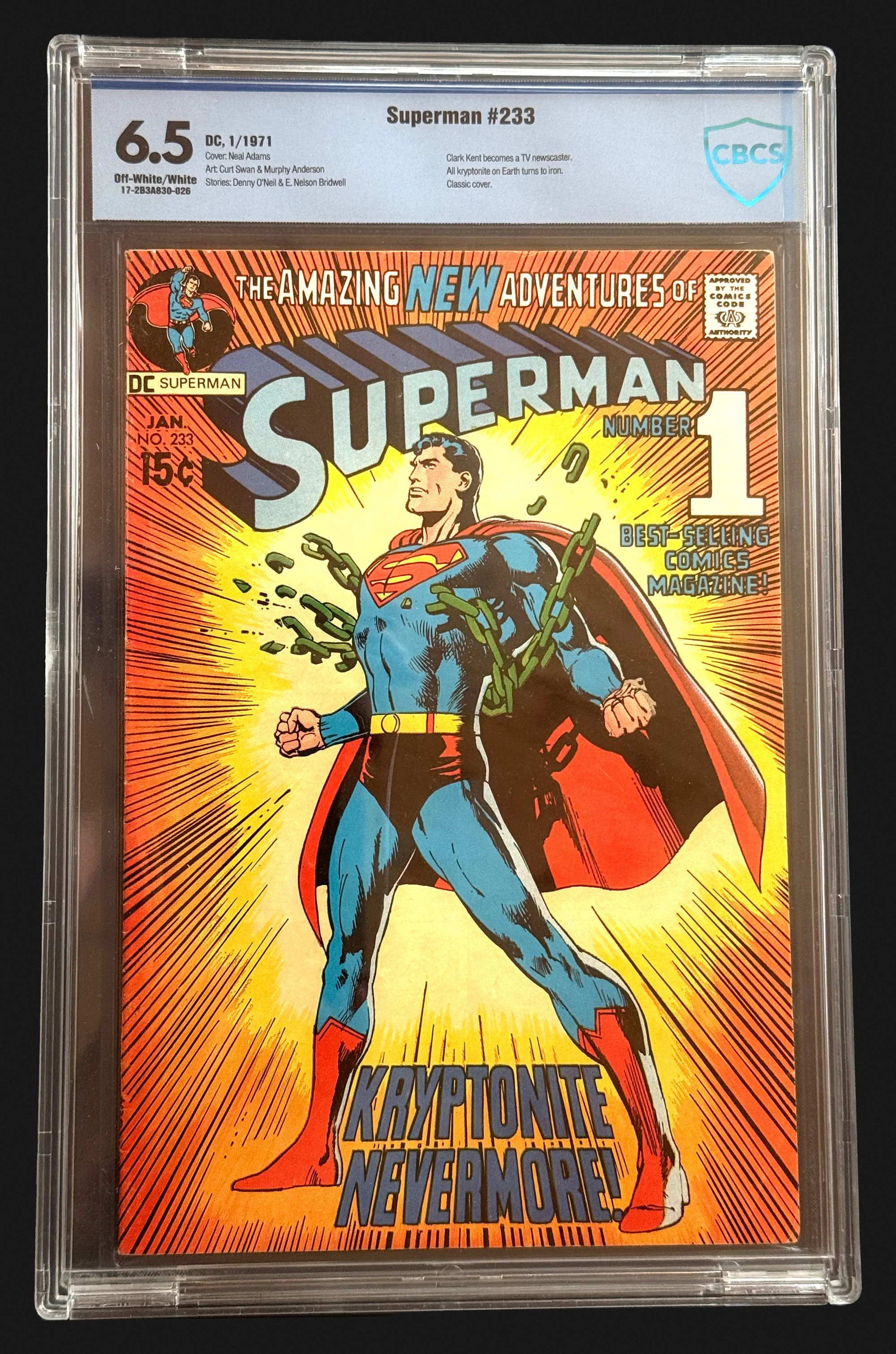
Neal Adams gave it the cover it needed. Superman braced and mid-stride, breaking a chain of green links across his chest, fragments scattering, KRYPTONITE NEVERMORE! stamped across the bottom. There is no background to speak of and nothing decorative anywhere in the frame. It is one of the most reproduced comic book images ever drawn, and the reason is that it makes its entire argument in a single silhouette.
Curt Swan and Murphy Anderson draw the interiors. The issue also introduces the sand creature, the duplicate that will spend the following storyline quietly draining what power Superman has left, and it opens “The Fabulous World of Krypton” with “Jor-El’s Golden Folly.”
This copy grades CBCS 6.5, Fine+, with off-white to white pages. The back cover advertises Aurora Powerslicks — big fat racing tires on a cartoon hot rod — which is roughly the most 1971 object it is possible to print on the back of a comic.
By 1970 Superman had a problem that thirty years of success had built for him: nothing could hurt him, so nothing that happened to him mattered very much. The only remaining lever was a green rock, and the green rock had been pulled so many times it had gone slack.
Denny O’Neil’s answer, in the issue cover-dated January 1971, was to take it away entirely. A scientific accident turns every piece of kryptonite on Earth to iron. Superman’s power level comes down. Clark Kent leaves newspaper work for television journalism under a new boss. It is a piece of deliberate, unsentimental maintenance performed on the most valuable character in the company’s catalog, and it remains one of the most-discussed editorial decisions in the medium.
Neal Adams gave it the cover it needed. Superman braced and mid-stride, breaking a chain of green links across his chest, fragments scattering, KRYPTONITE NEVERMORE! stamped across the bottom. There is no background to speak of and nothing decorative anywhere in the frame. It is one of the most reproduced comic book images ever drawn, and the reason is that it makes its entire argument in a single silhouette.
Curt Swan and Murphy Anderson draw the interiors. The issue also introduces the sand creature, the duplicate that will spend the following storyline quietly draining what power Superman has left, and it opens “The Fabulous World of Krypton” with “Jor-El’s Golden Folly.”
This copy grades CBCS 6.5, Fine+, with off-white to white pages. The back cover advertises Aurora Powerslicks — big fat racing tires on a cartoon hot rod — which is roughly the most 1971 object it is possible to print on the back of a comic.