 Image 1 of 3
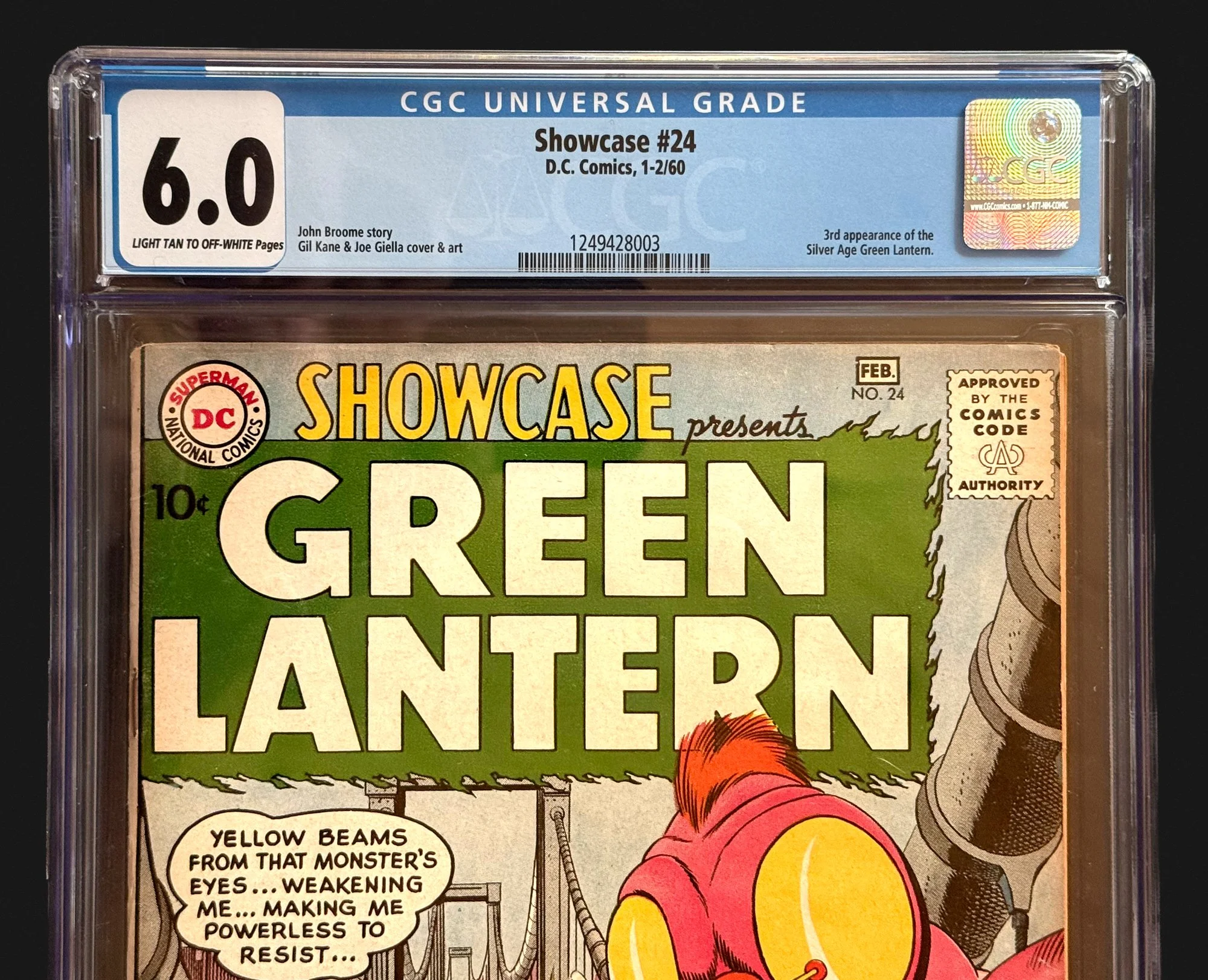 Image 2 of 3
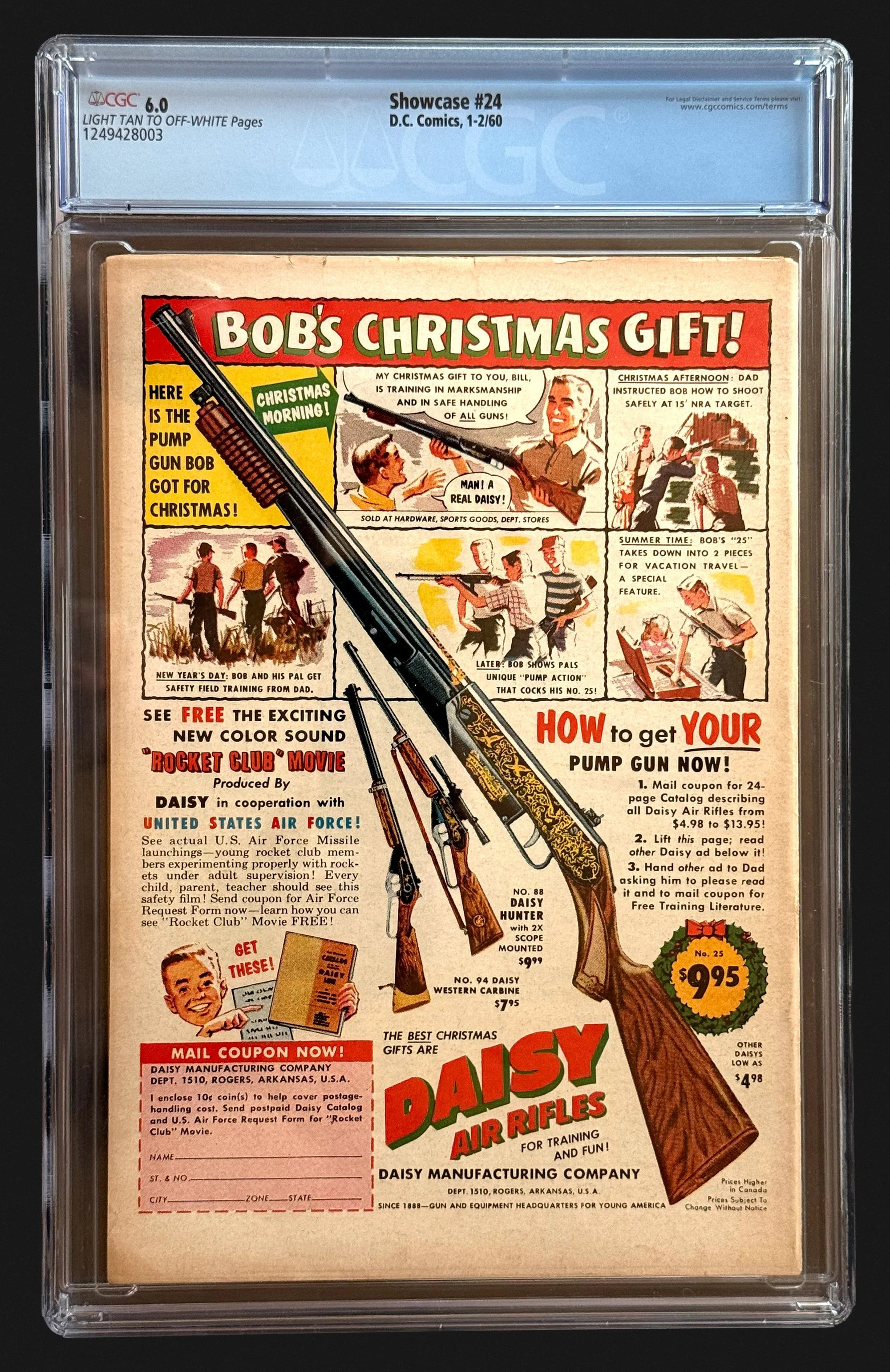 Image 3 of 3
Every character DC revived in the Silver Age got three issues of Showcase to make its case. Three issues, then a verdict. Showcase #24 is Green Lantern’s third.
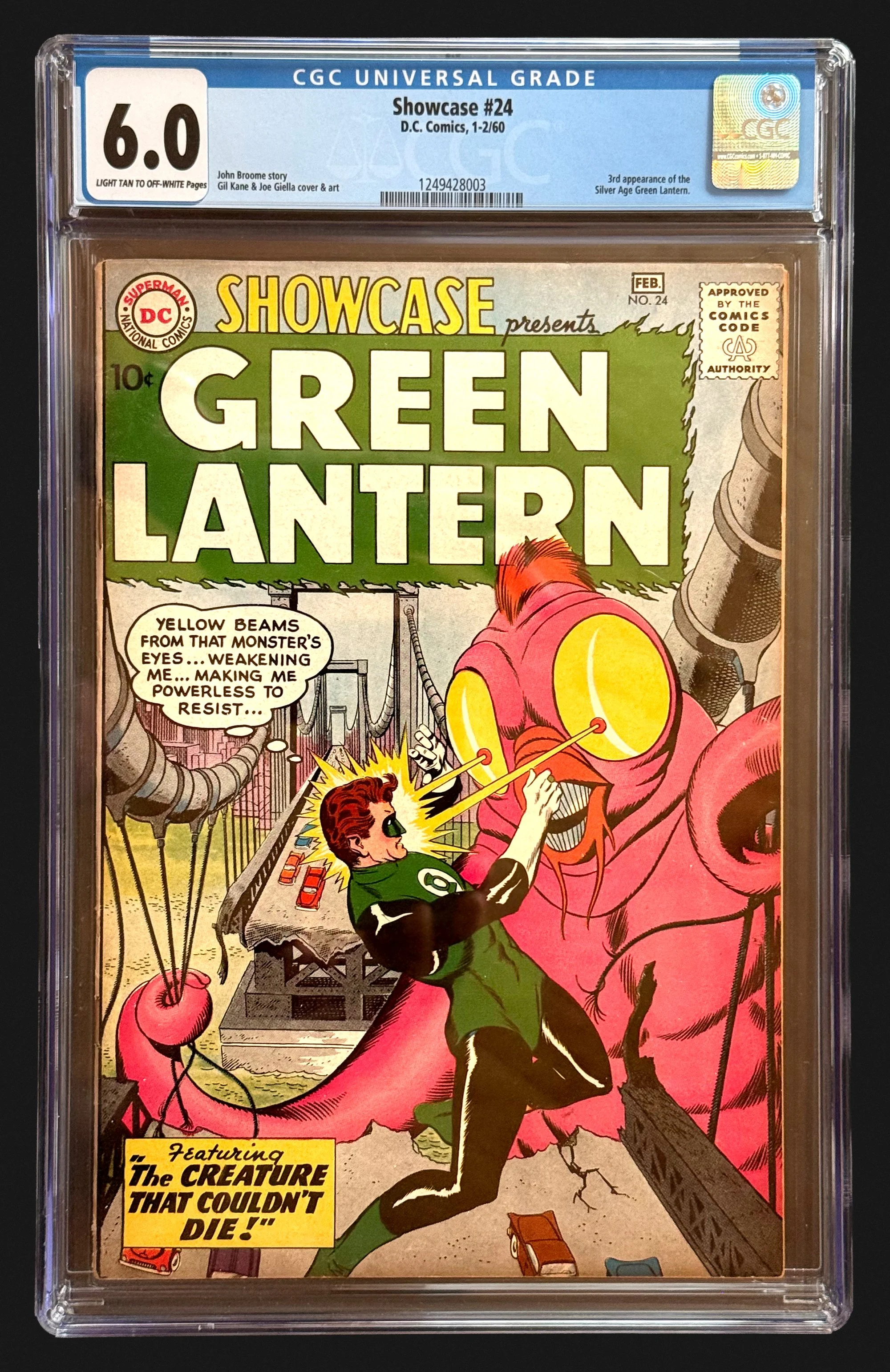
What makes it worth looking at closely is the choice Gil Kane and Joe Giella made for the closing argument. With the whole future of the character resting on whether this issue sold, they did not draw him winning. They drew him losing. “The Creature That Couldn’t Die!” puts Hal Jordan on his knees in the middle of a suspension bridge, yellow beams pinning him, the ring useless, the caption in his own words: powerless to resist.
The yellow weakness is the strangest piece of engineering in the character. It is not a weakness in any principled sense — it is a color. And it has proven more generative than almost any other limitation in superhero comics, because it forces the writer to solve problems sideways rather than by escalation. Choosing to advertise it on the make-or-break cover was a bet that readers find constraints more interesting than power. February 1960 says the bet paid.
Green Lantern #1 followed. So did the Corps, the Guardians, the oath, and every ring-bearer since.
This copy grades CGC 6.0, Fine, with light tan to off-white pages — an honest, complete, unrestored example of a book that was never meant to be saved. The back cover still runs its Daisy Air Rifles ad, a Christmas photo story about a boy named Bob getting his first pump gun, sold to children without a second thought in the winter of 1960.
Every character DC revived in the Silver Age got three issues of Showcase to make its case. Three issues, then a verdict. Showcase #24 is Green Lantern’s third.
What makes it worth looking at closely is the choice Gil Kane and Joe Giella made for the closing argument. With the whole future of the character resting on whether this issue sold, they did not draw him winning. They drew him losing. “The Creature That Couldn’t Die!” puts Hal Jordan on his knees in the middle of a suspension bridge, yellow beams pinning him, the ring useless, the caption in his own words: powerless to resist.
The yellow weakness is the strangest piece of engineering in the character. It is not a weakness in any principled sense — it is a color. And it has proven more generative than almost any other limitation in superhero comics, because it forces the writer to solve problems sideways rather than by escalation. Choosing to advertise it on the make-or-break cover was a bet that readers find constraints more interesting than power. February 1960 says the bet paid.
Green Lantern #1 followed. So did the Corps, the Guardians, the oath, and every ring-bearer since.
This copy grades CGC 6.0, Fine, with light tan to off-white pages — an honest, complete, unrestored example of a book that was never meant to be saved. The back cover still runs its Daisy Air Rifles ad, a Christmas photo story about a boy named Bob getting his first pump gun, sold to children without a second thought in the winter of 1960.