 Image 1 of 3
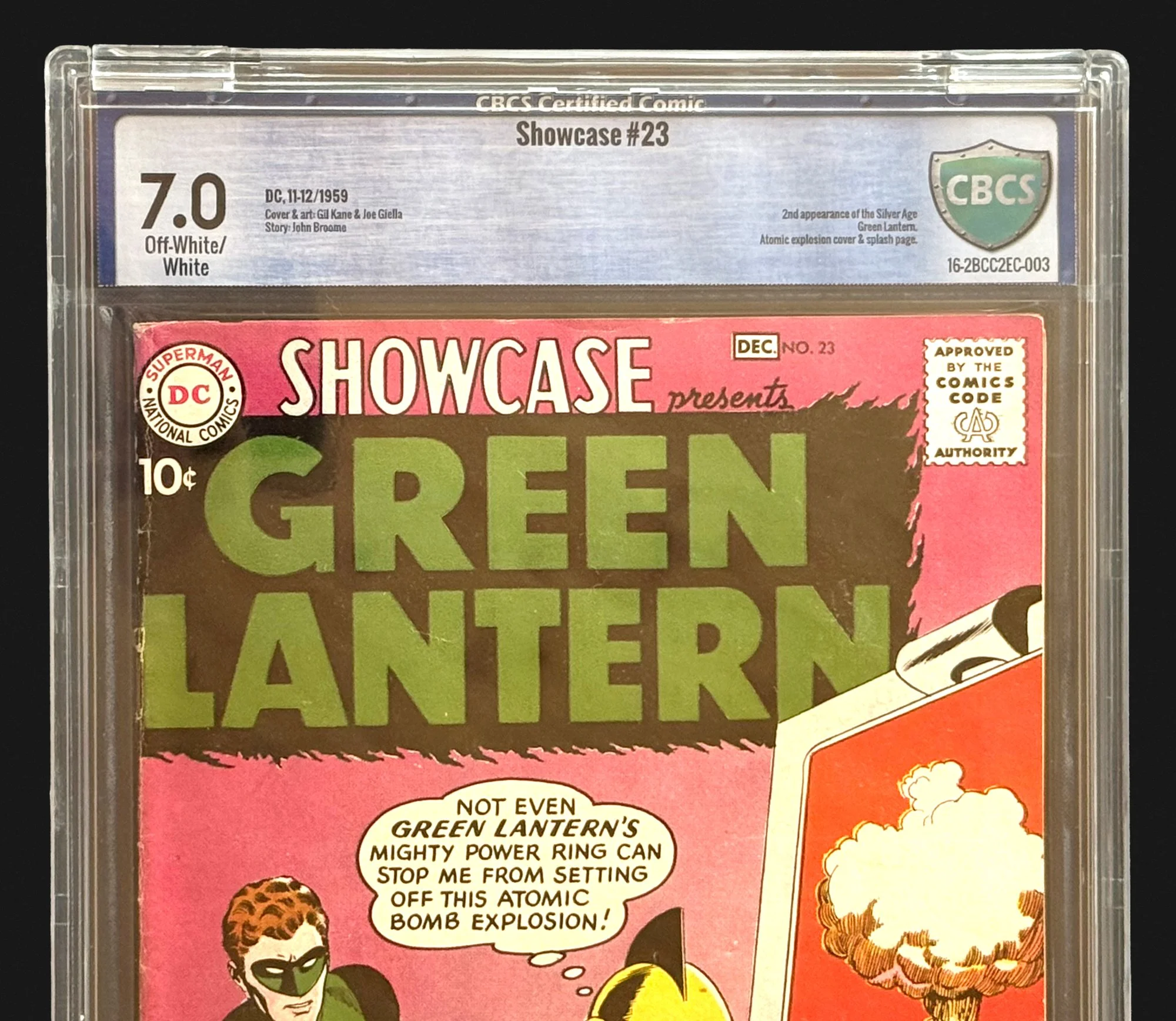 Image 2 of 3
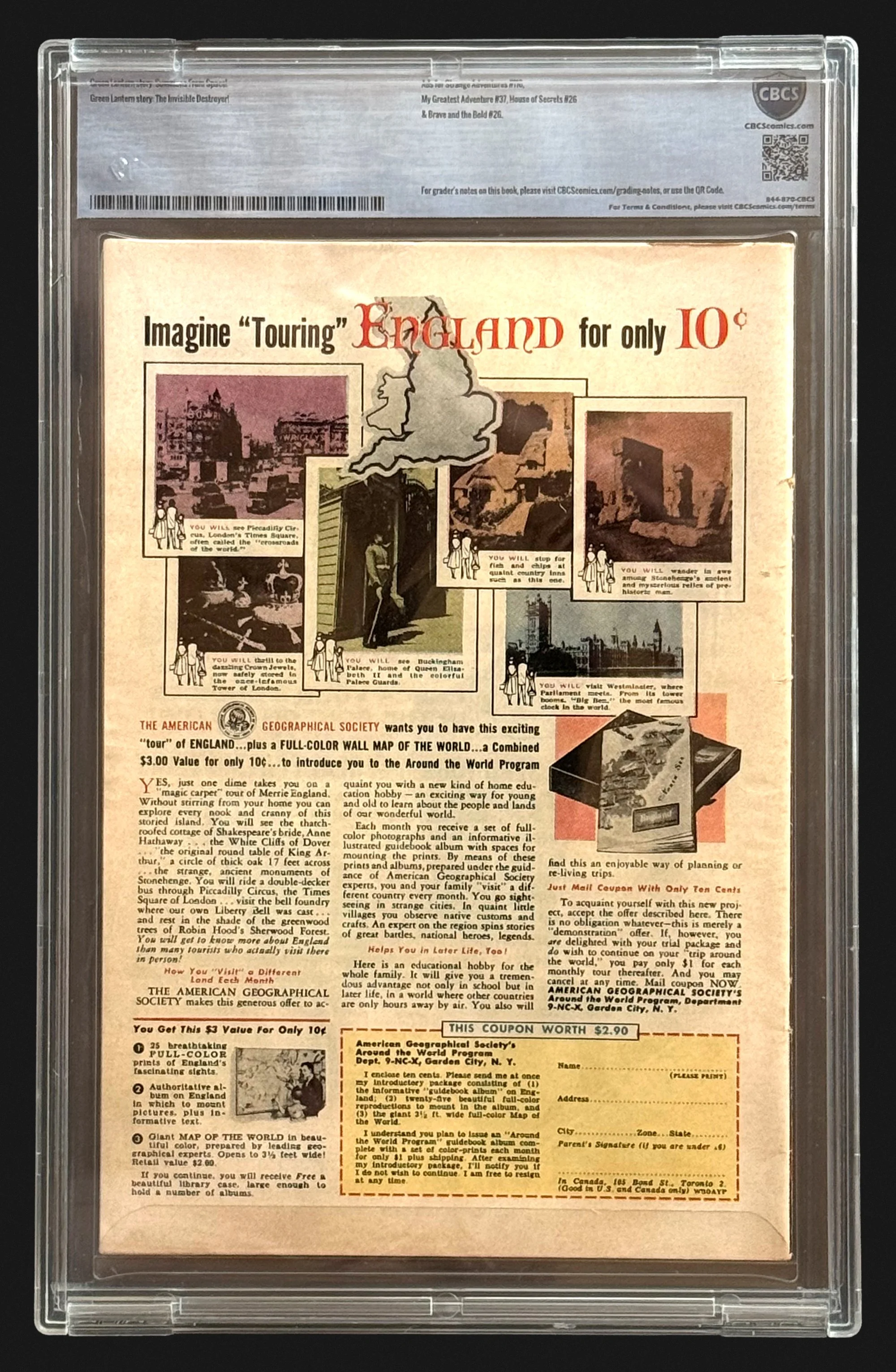 Image 3 of 3
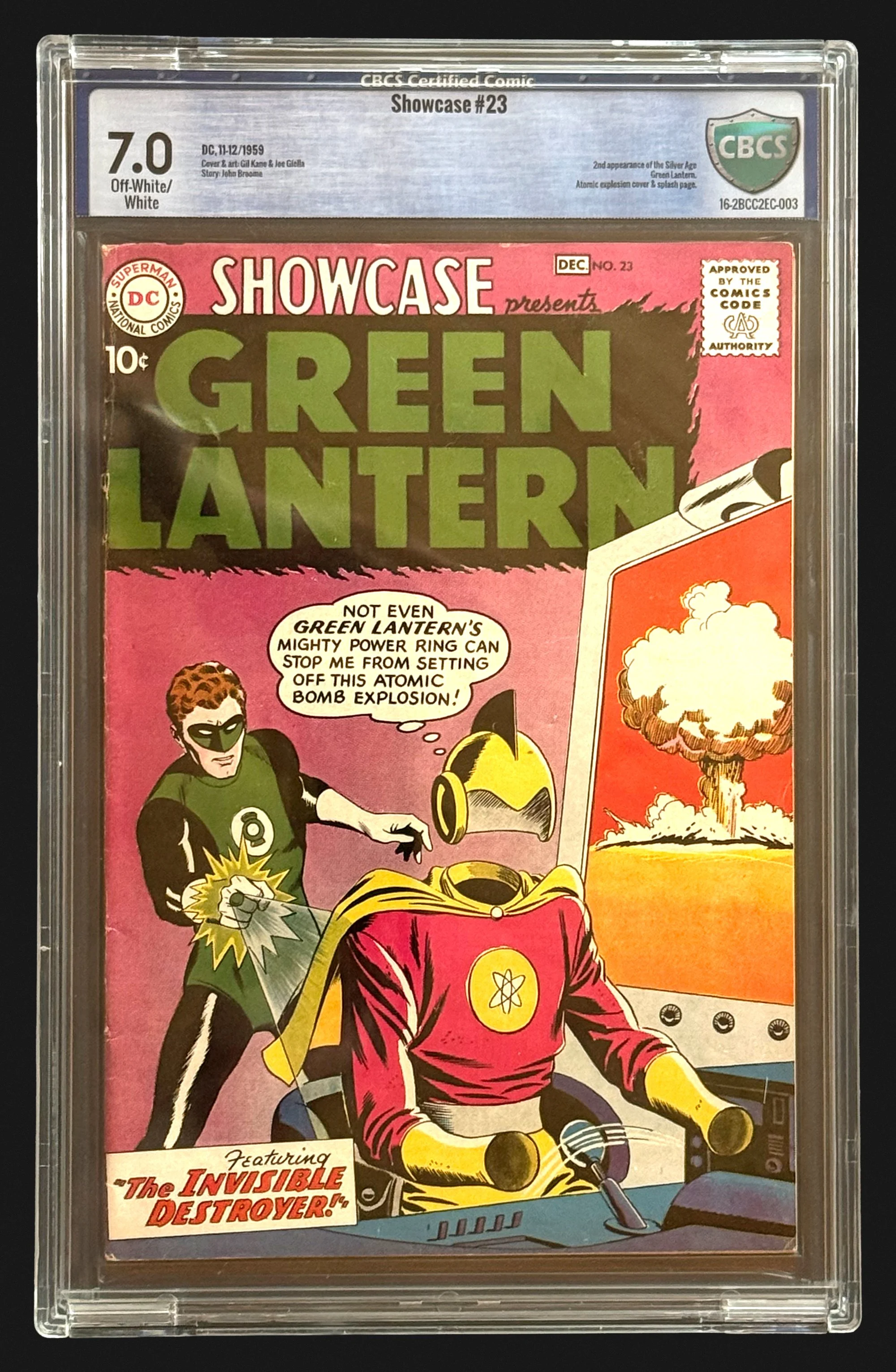
There is a specific kind of nerve on display on the cover of Showcase #23, and it takes a moment to register what it is.
It is December 1959. Hal Jordan is two months old as a character. DC has given him three issues of its tryout title to prove he can hold a book, and this is the second of the three — the one in the middle, where the audition is neither novel nor decided. And what Gil Kane and Joe Giella put on the front is not a fistfight. It is a man standing beside an atomic bomb, addressing Green Lantern directly, informing him that the ring will not be enough. The blast is already drawn, blooming behind them both. It runs again on the splash page inside.
Put that in its moment. Civil defense pamphlets were arriving in mailboxes. Children were being taught to get under their desks. And a ten-cent comic aimed squarely at those children put the mushroom cloud on the cover in full color and attached to it a hero who might lose. John Broome wrote it, Julius Schwartz edited it, and neither of them appears to have flinched.
The three Showcase tryouts are the foundation everything else sits on. Green Lantern #1 arrived in 1960 because #22, #23 and #24 sold. The Corps, the Guardians of Oa, the oath, the ring, every Lantern who has followed Hal Jordan in sixty-six years of continuity — all of it is downstream of three issues of an anthology title finding an audience.
This copy grades CBCS 7.0, Fine/Very Fine, with off-white to white pages. High grade is the exception on early Showcase; these were flimsy books, bought by kids, read hard, and mostly thrown away. The back cover still carries the American Geographical Society’s invitation to tour England for a dime.
There is a specific kind of nerve on display on the cover of Showcase #23, and it takes a moment to register what it is.
It is December 1959. Hal Jordan is two months old as a character. DC has given him three issues of its tryout title to prove he can hold a book, and this is the second of the three — the one in the middle, where the audition is neither novel nor decided. And what Gil Kane and Joe Giella put on the front is not a fistfight. It is a man standing beside an atomic bomb, addressing Green Lantern directly, informing him that the ring will not be enough. The blast is already drawn, blooming behind them both. It runs again on the splash page inside.
Put that in its moment. Civil defense pamphlets were arriving in mailboxes. Children were being taught to get under their desks. And a ten-cent comic aimed squarely at those children put the mushroom cloud on the cover in full color and attached to it a hero who might lose. John Broome wrote it, Julius Schwartz edited it, and neither of them appears to have flinched.
The three Showcase tryouts are the foundation everything else sits on. Green Lantern #1 arrived in 1960 because #22, #23 and #24 sold. The Corps, the Guardians of Oa, the oath, the ring, every Lantern who has followed Hal Jordan in sixty-six years of continuity — all of it is downstream of three issues of an anthology title finding an audience.
This copy grades CBCS 7.0, Fine/Very Fine, with off-white to white pages. High grade is the exception on early Showcase; these were flimsy books, bought by kids, read hard, and mostly thrown away. The back cover still carries the American Geographical Society’s invitation to tour England for a dime.