 Image 1 of 3
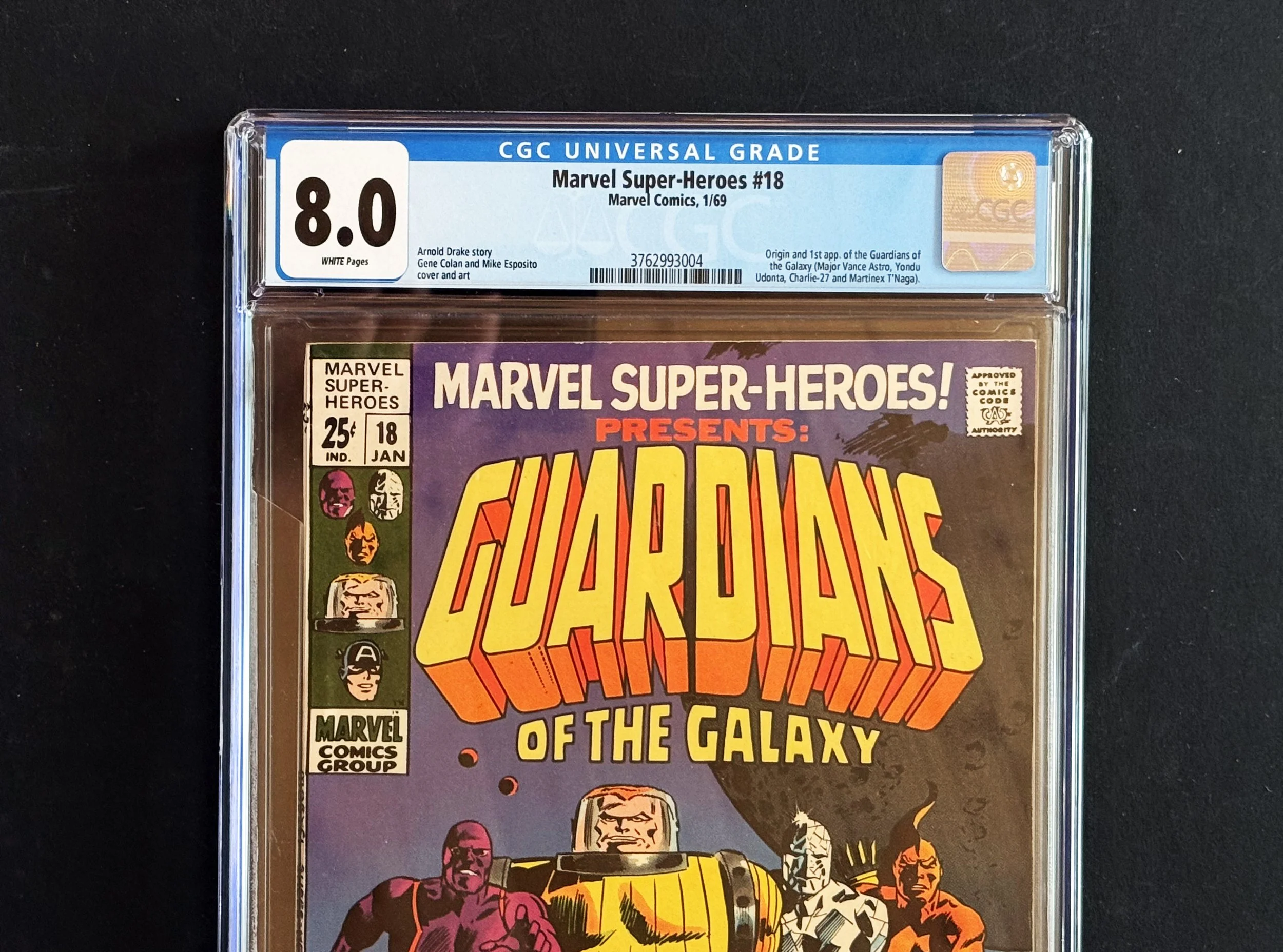 Image 2 of 3
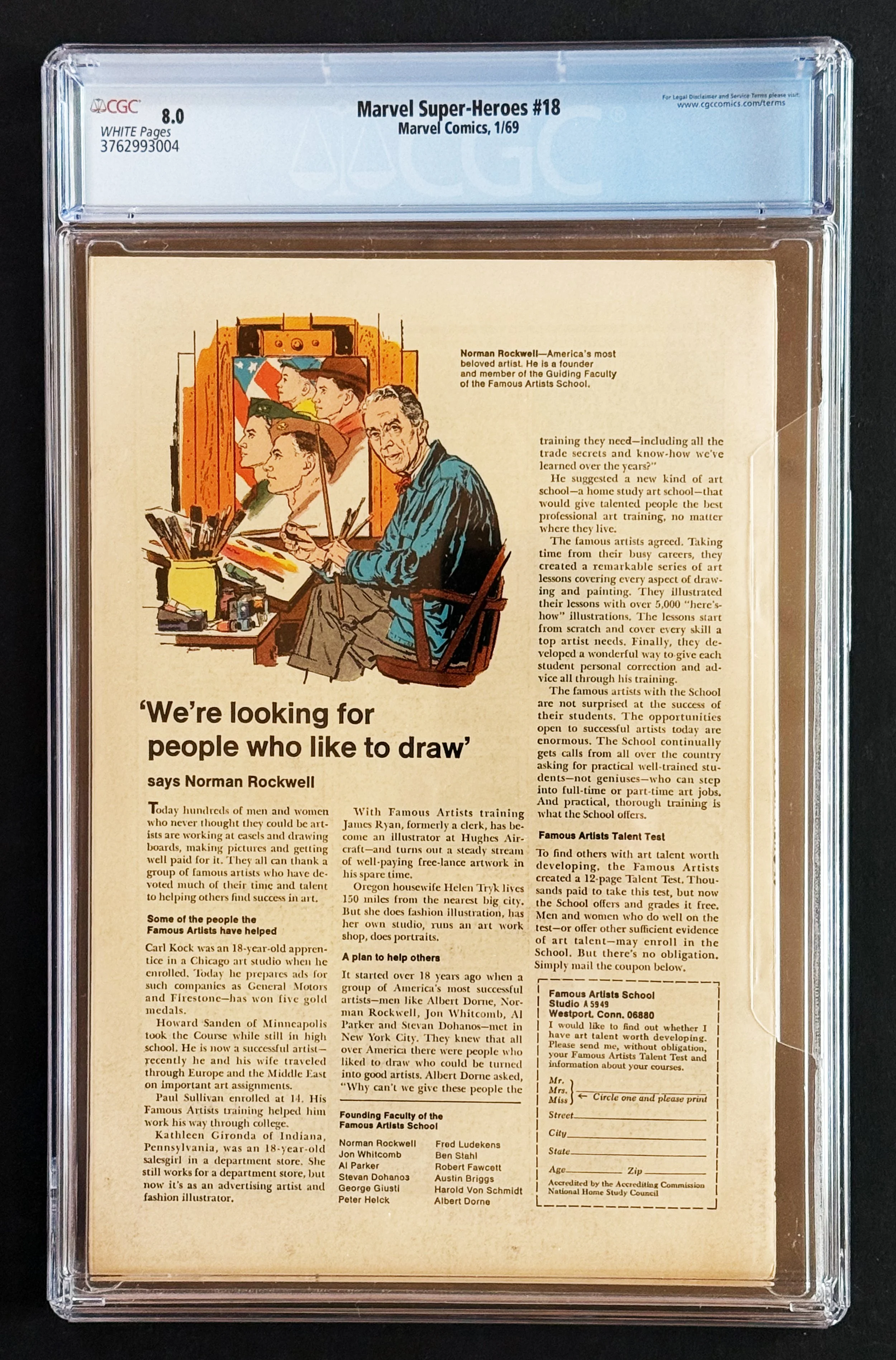 Image 3 of 3
Marvel Super-Heroes was a landfill with a skylight. Through most of its run it existed to reprint material Marvel already owned, which is the least glamorous job a comic can have. But every so often the company used it as a place to try something out with no series attached and nothing riding on the result, and a few of those experiments turned into the foundations of the modern company. Captain Marvel came out of this title. So did these four.
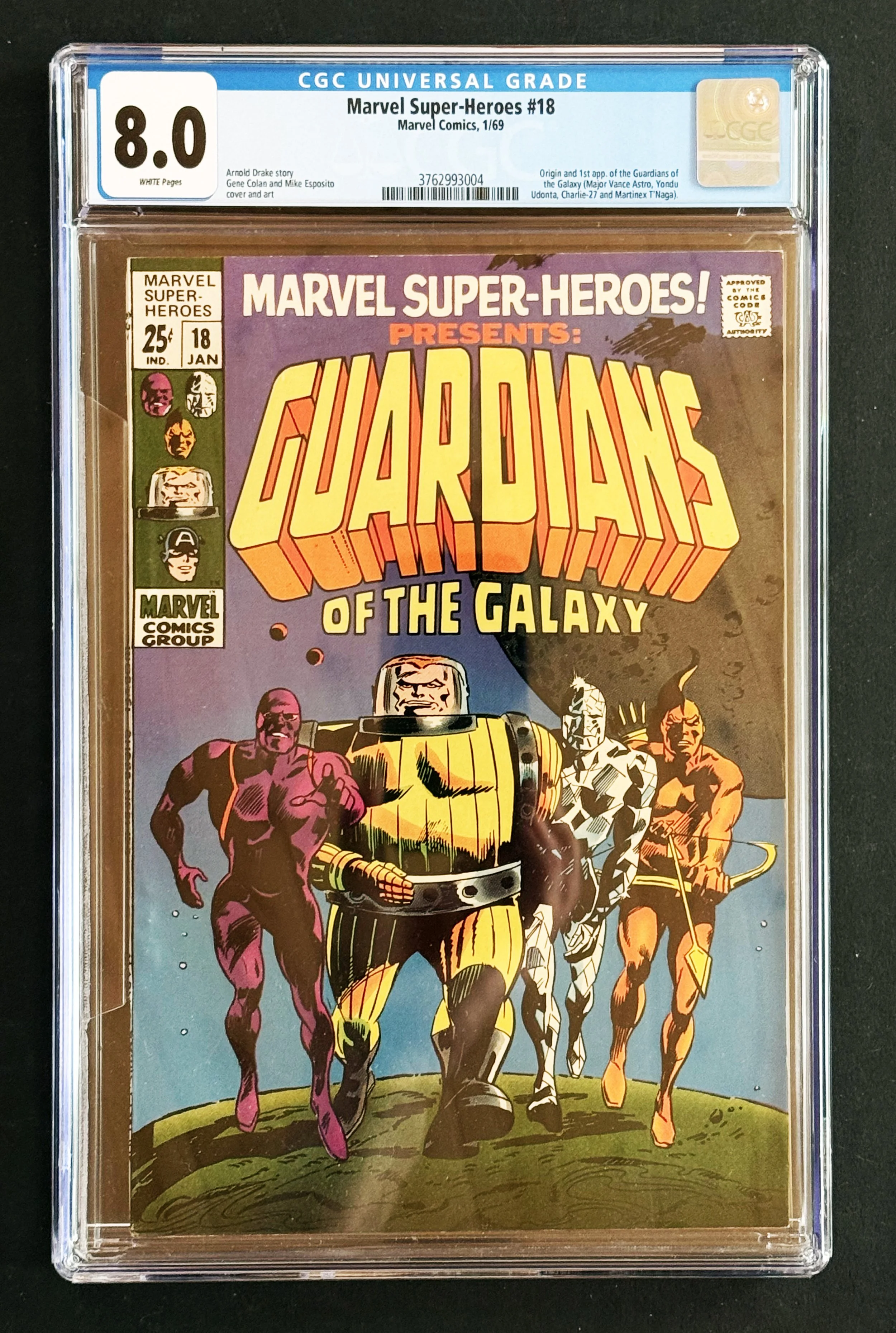
January 1969. Arnold Drake writes, Gene Colan pencils, Mike Esposito inks, and the story introduces Major Vance Astro, Yondu Udonta, Charlie-27 and Martinex T’Naga — the last survivors of a thirty-first century that the reptilian Badoon have already conquered. They are not a franchise. They are not even, in any real sense, a team yet. They are four people from different worlds who have lost everything and have nowhere else to be.
Drake had arrived at Marvel from DC, where he co-created the Doom Patrol, and the family resemblance is unmistakable. Both books are built on the same premise: gather people whose powers have cost them something, give them a problem too big for them, and let the friction generate the story. It was a structural idea a decade ahead of where superhero comics generally were, and it is essentially the template the entire genre runs on now.
The Guardians spent years in limbo after this. No title, scattered guest appearances, a long stretch in which the only people who remembered them were the people who had bought this comic off a spinner rack. Then Marvel made a film in 2014 with a completely different roster, and the original four became historically important overnight — a first appearance that had been sitting in quarter boxes since the Ford administration.
This copy is CGC 8.0 with white pages, and the page quality deserves the emphasis. This was a twenty-five-cent printing on paper that has not aged gracefully across the surviving population; most graded copies come back off-white or cream. White at any grade is uncommon here, and it is the reason this particular 8.0 is worth more attention than the number alone suggests.
Marvel Super-Heroes was a landfill with a skylight. Through most of its run it existed to reprint material Marvel already owned, which is the least glamorous job a comic can have. But every so often the company used it as a place to try something out with no series attached and nothing riding on the result, and a few of those experiments turned into the foundations of the modern company. Captain Marvel came out of this title. So did these four.
January 1969. Arnold Drake writes, Gene Colan pencils, Mike Esposito inks, and the story introduces Major Vance Astro, Yondu Udonta, Charlie-27 and Martinex T’Naga — the last survivors of a thirty-first century that the reptilian Badoon have already conquered. They are not a franchise. They are not even, in any real sense, a team yet. They are four people from different worlds who have lost everything and have nowhere else to be.
Drake had arrived at Marvel from DC, where he co-created the Doom Patrol, and the family resemblance is unmistakable. Both books are built on the same premise: gather people whose powers have cost them something, give them a problem too big for them, and let the friction generate the story. It was a structural idea a decade ahead of where superhero comics generally were, and it is essentially the template the entire genre runs on now.
The Guardians spent years in limbo after this. No title, scattered guest appearances, a long stretch in which the only people who remembered them were the people who had bought this comic off a spinner rack. Then Marvel made a film in 2014 with a completely different roster, and the original four became historically important overnight — a first appearance that had been sitting in quarter boxes since the Ford administration.
This copy is CGC 8.0 with white pages, and the page quality deserves the emphasis. This was a twenty-five-cent printing on paper that has not aged gracefully across the surviving population; most graded copies come back off-white or cream. White at any grade is uncommon here, and it is the reason this particular 8.0 is worth more attention than the number alone suggests.