 Image 1 of 3
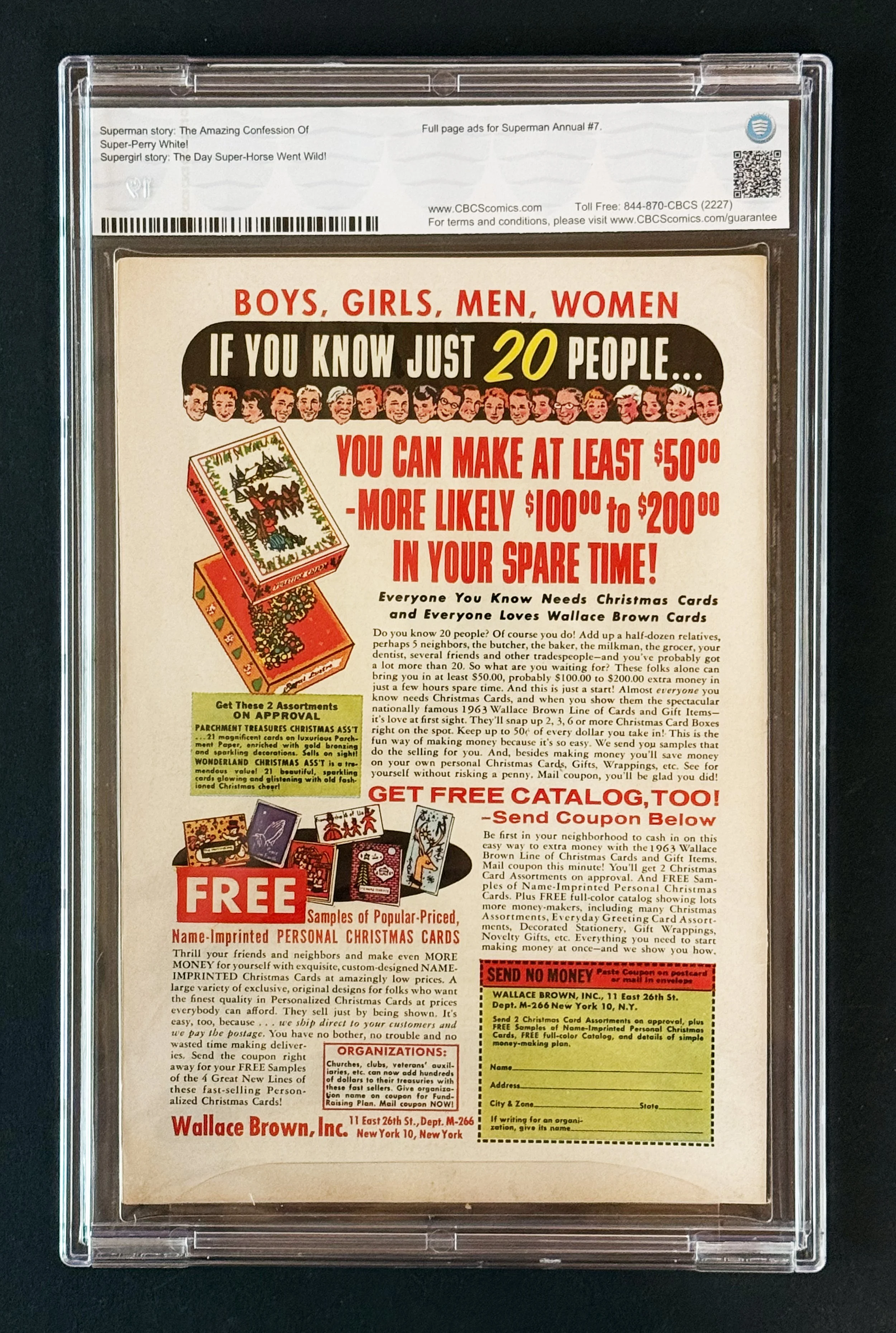 Image 2 of 3
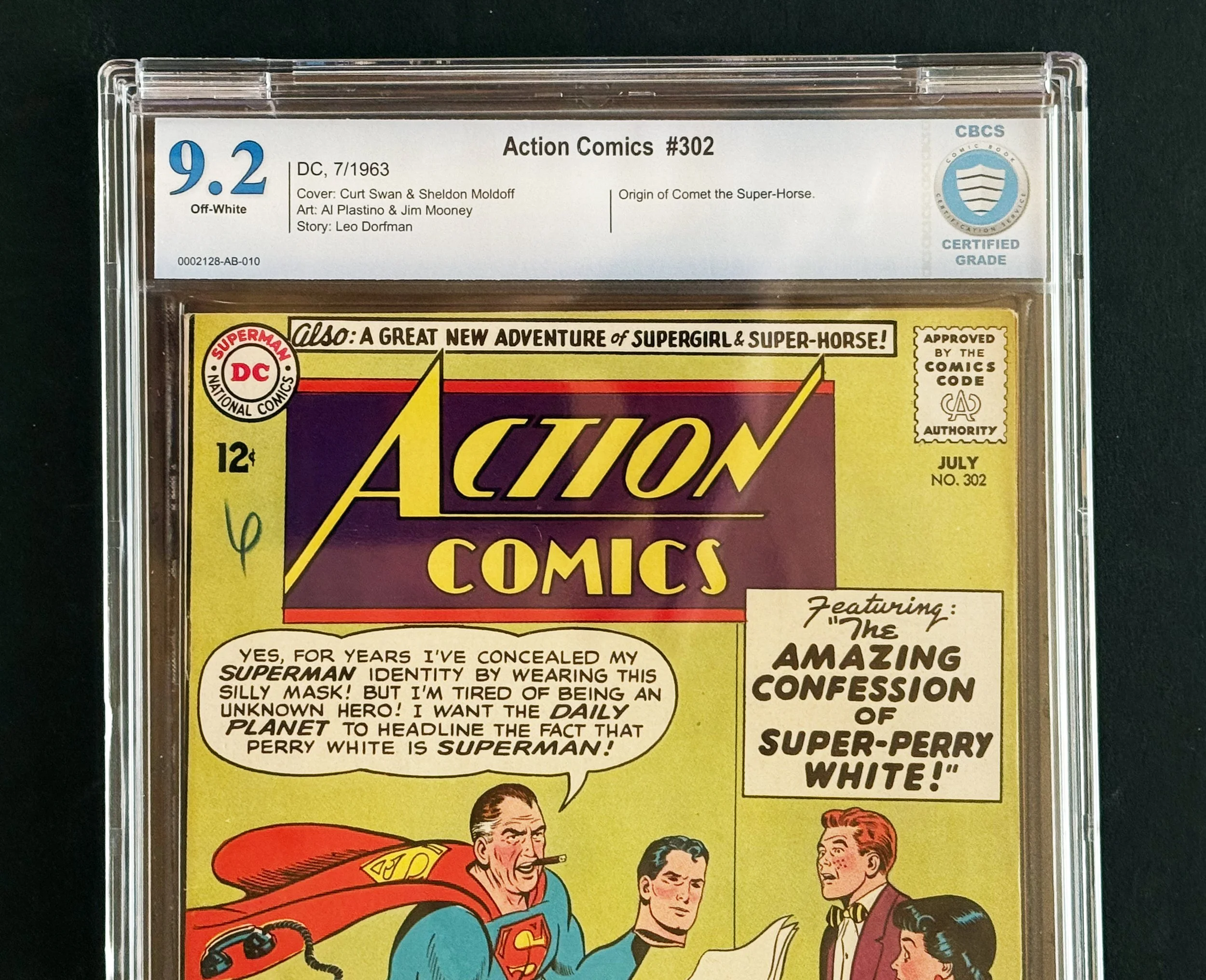 Image 3 of 3
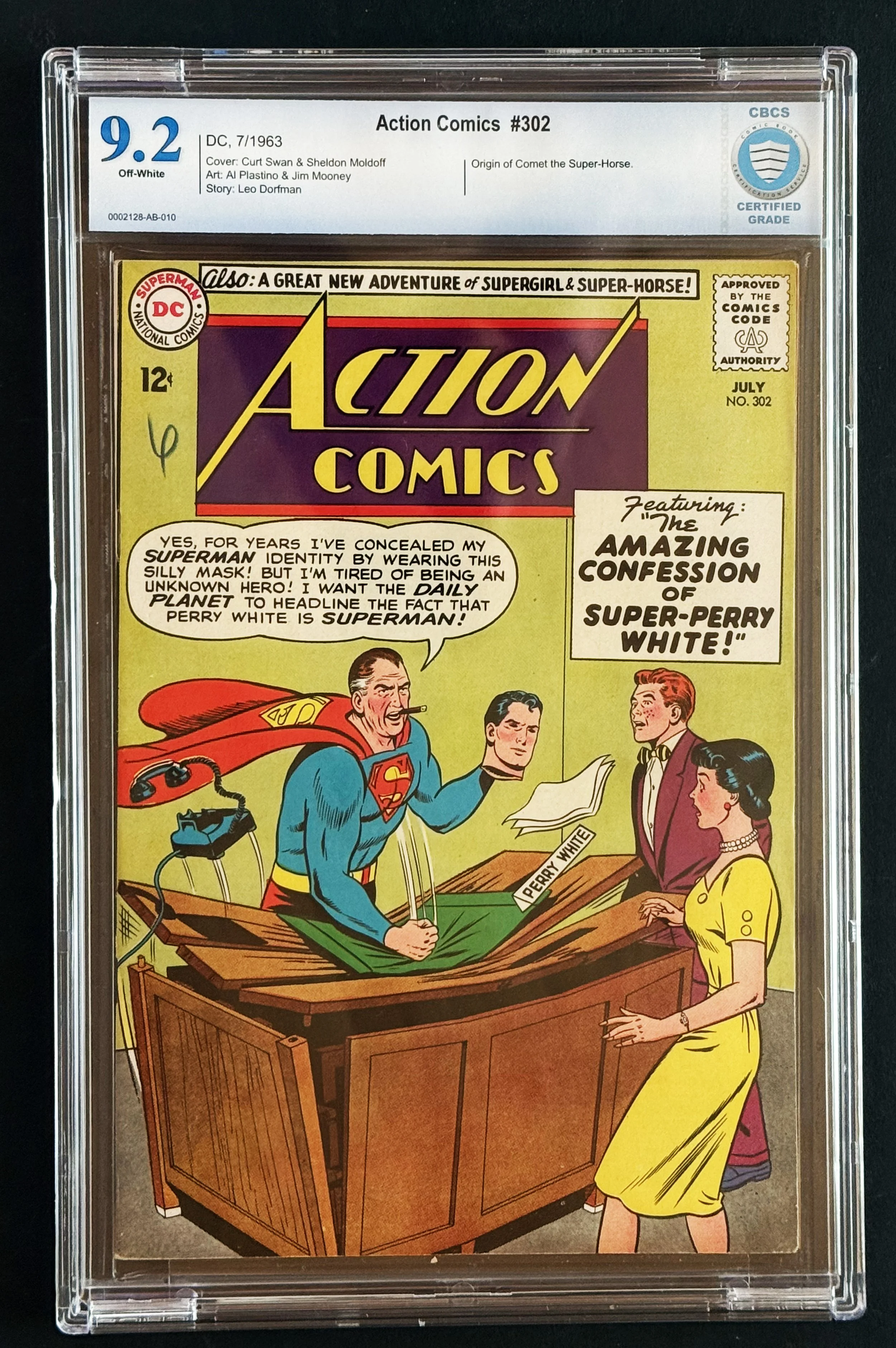
Curt Swan drew Perry White approximately ten thousand times over four decades, and he never drew him better than this. July 1963: the editor of the Daily Planet is standing behind his own desk in a full Superman costume, cape thrown back, cigar jammed in the corner of his mouth at the angle of a man who has had enough. In his left hand, held out at arm’s length like something he has just peeled off, is Superman’s face. Lois and Jimmy have gone rigid. Perry is announcing that he is finished being an unknown hero and he would like the Planet to run the headline.
It is, of course, Superman doing something reckless for a reason the story will get to. It always was. But the cover does not care about the explanation, and neither, sixty-three years later, do we. What sells the image is Swan’s control of the joke: everything is drawn perfectly straight. Perry’s fury is real fury. The cigar is a working cigar. The desk is a real desk being manhandled. Nobody in the frame thinks this is funny, which is precisely why it is.
Leo Dorfman scripted; Al Plastino and Jim Mooney handled the interiors. The back of the book belongs to Supergirl, in “The Day Super-Horse Went Wild!”, which retells the origin of Comet — a winged horse who is also a centaur transformed by Circe and who occasionally spends time on Earth as a rodeo cowboy named Bronco Bill. This is the sort of thing that happened constantly in the Superman family books of the early sixties and that nobody involved seems to have found remarkable.
One thing you should see before you buy it, because we would rather you saw it here than after the box is open: there is a green marker mark on the front cover, left of the logo. It is the ordinary sort — the mark a kid put on a comic he had just bought, the way kids did, to establish that it was his and not his brother’s. Marks like it are common on newsstand-era copies. It was present when CBCS graded the book and is accounted for in the assigned 9.2.
What is remarkable is everything else about the copy. Action Comics in 1963 was printed on stock that scuffed if you looked at it hard, and a 9.2 from this stretch of the run is meaningfully harder to find than the issue’s reputation would lead you to expect. The cover field is bright, the colors have not shifted, the corners are sharp. Whoever wrote on this comic also, for sixty-three years, took very good care of it.
Curt Swan drew Perry White approximately ten thousand times over four decades, and he never drew him better than this. July 1963: the editor of the Daily Planet is standing behind his own desk in a full Superman costume, cape thrown back, cigar jammed in the corner of his mouth at the angle of a man who has had enough. In his left hand, held out at arm’s length like something he has just peeled off, is Superman’s face. Lois and Jimmy have gone rigid. Perry is announcing that he is finished being an unknown hero and he would like the Planet to run the headline.
It is, of course, Superman doing something reckless for a reason the story will get to. It always was. But the cover does not care about the explanation, and neither, sixty-three years later, do we. What sells the image is Swan’s control of the joke: everything is drawn perfectly straight. Perry’s fury is real fury. The cigar is a working cigar. The desk is a real desk being manhandled. Nobody in the frame thinks this is funny, which is precisely why it is.
Leo Dorfman scripted; Al Plastino and Jim Mooney handled the interiors. The back of the book belongs to Supergirl, in “The Day Super-Horse Went Wild!”, which retells the origin of Comet — a winged horse who is also a centaur transformed by Circe and who occasionally spends time on Earth as a rodeo cowboy named Bronco Bill. This is the sort of thing that happened constantly in the Superman family books of the early sixties and that nobody involved seems to have found remarkable.
One thing you should see before you buy it, because we would rather you saw it here than after the box is open: there is a green marker mark on the front cover, left of the logo. It is the ordinary sort — the mark a kid put on a comic he had just bought, the way kids did, to establish that it was his and not his brother’s. Marks like it are common on newsstand-era copies. It was present when CBCS graded the book and is accounted for in the assigned 9.2.
What is remarkable is everything else about the copy. Action Comics in 1963 was printed on stock that scuffed if you looked at it hard, and a 9.2 from this stretch of the run is meaningfully harder to find than the issue’s reputation would lead you to expect. The cover field is bright, the colors have not shifted, the corners are sharp. Whoever wrote on this comic also, for sixty-three years, took very good care of it.