 Image 1 of 4
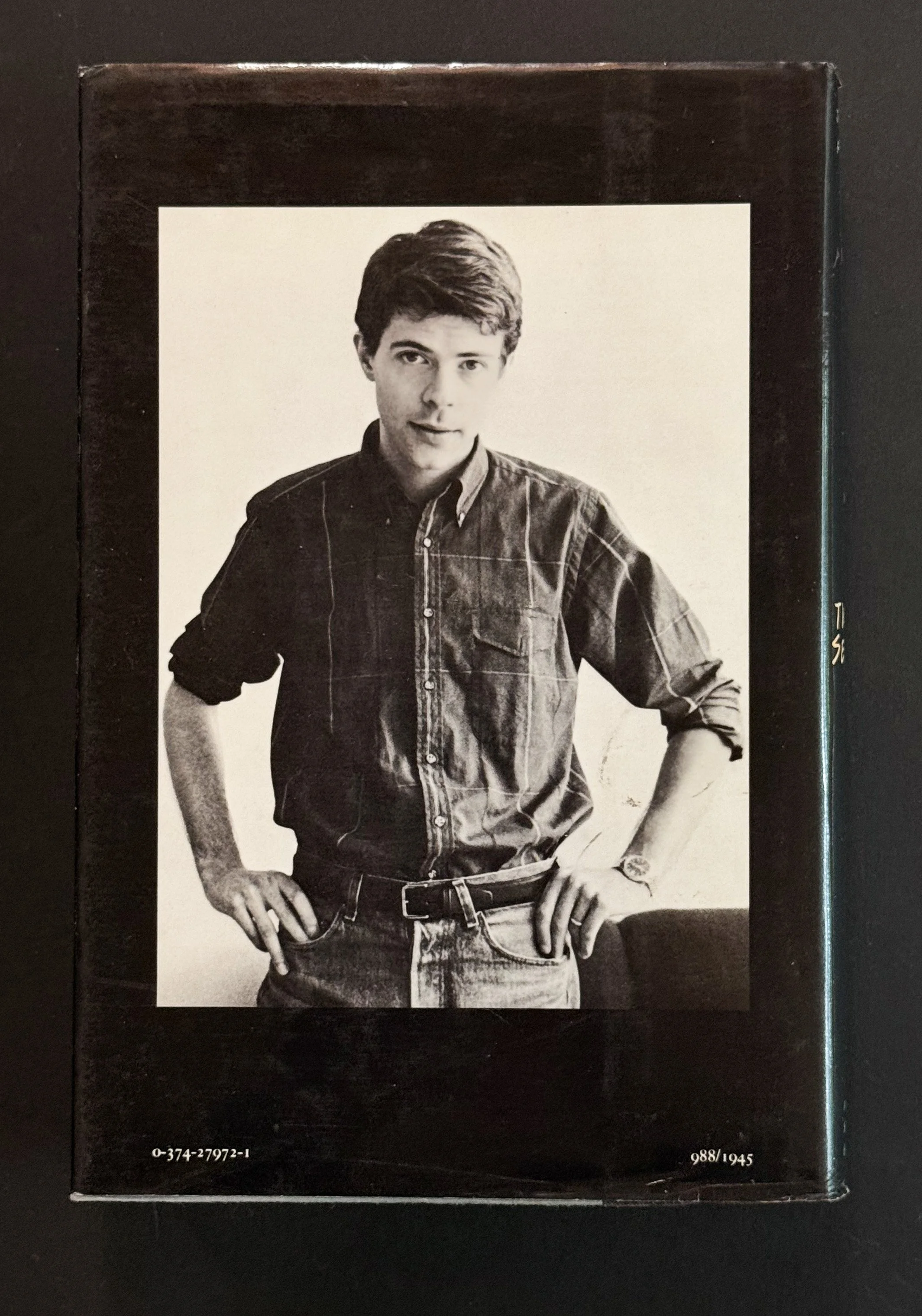 Image 2 of 4
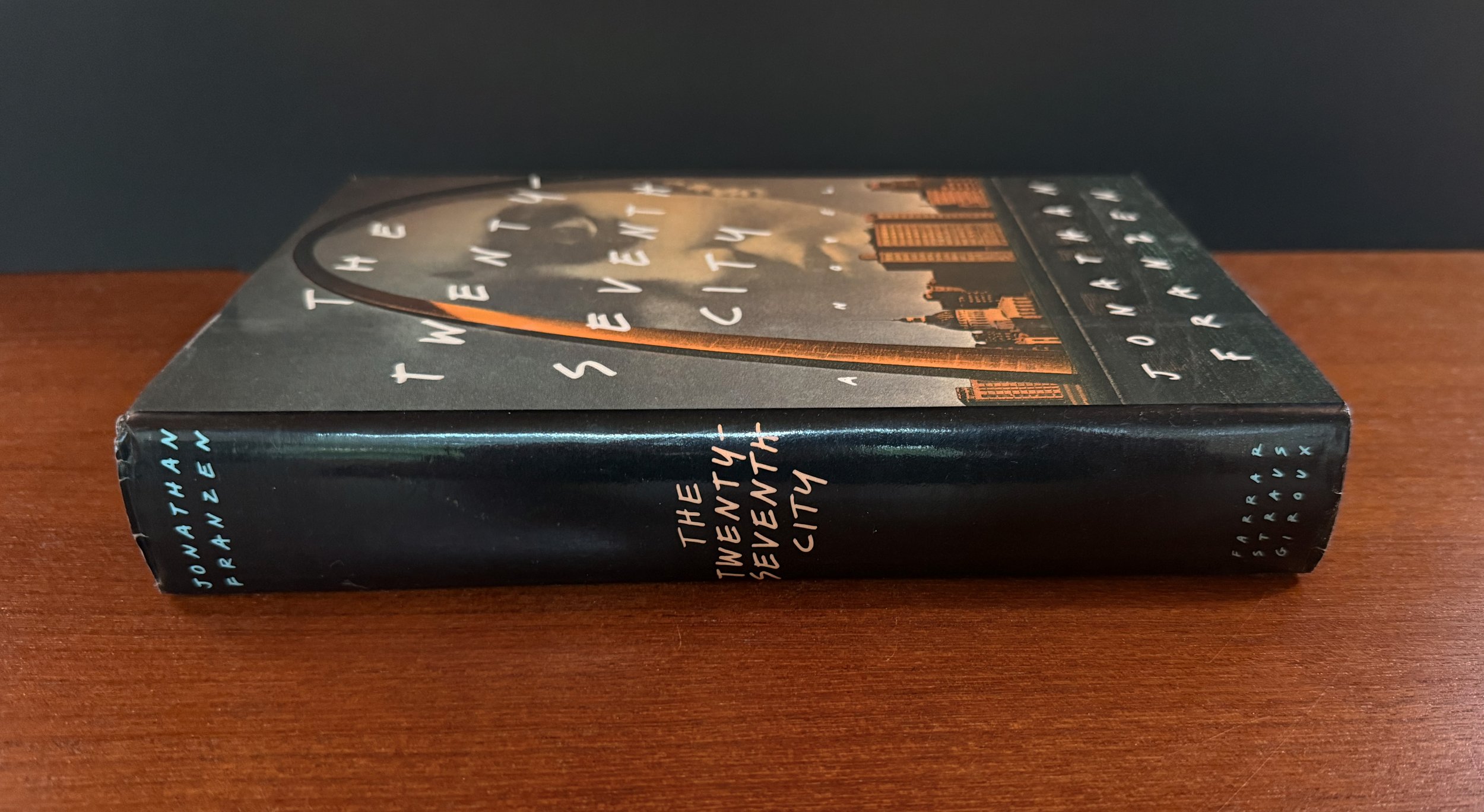 Image 3 of 4
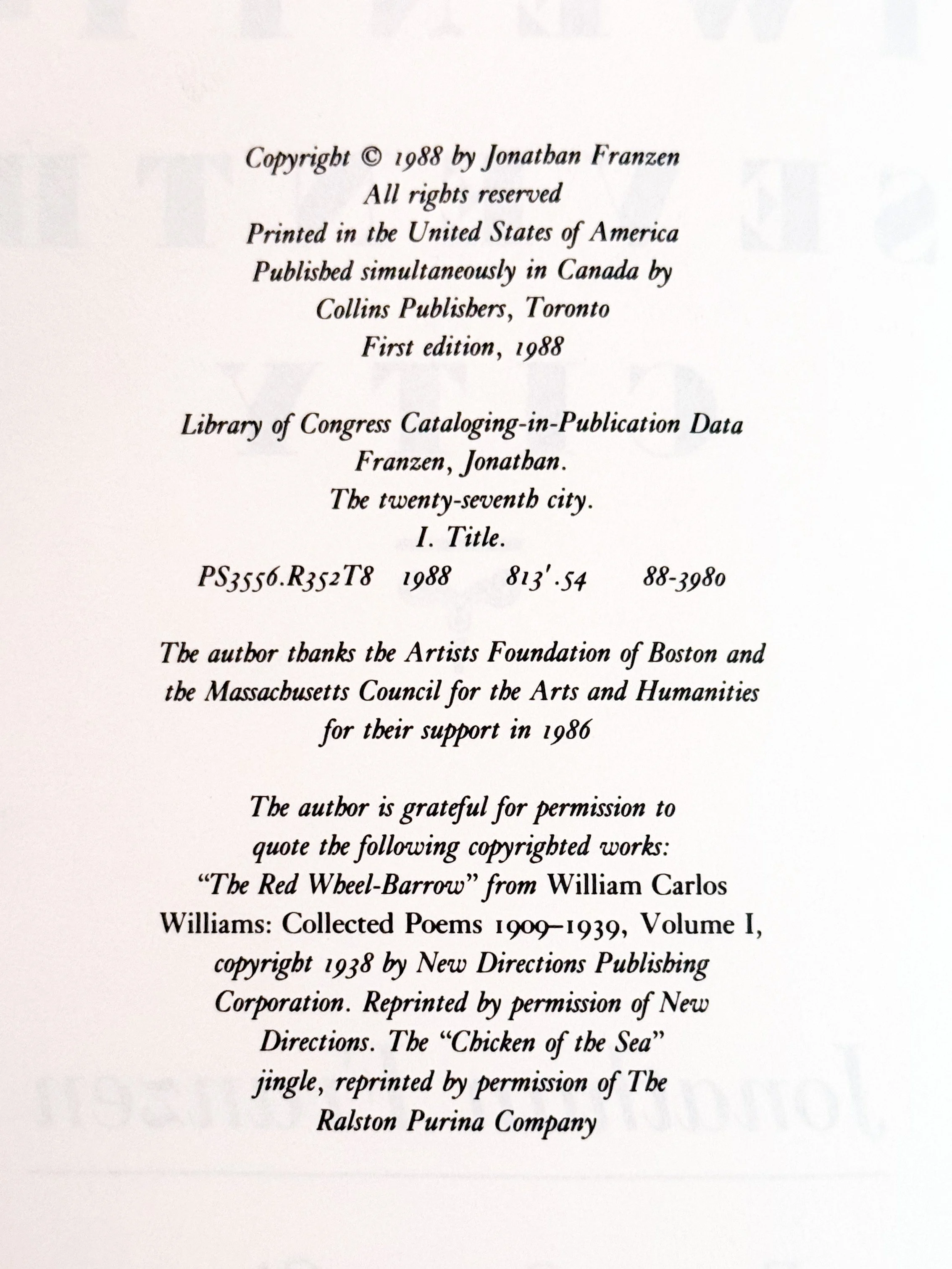 Image 4 of 4
Jonathan Franzen — First Edition, First Printing (Farrar, Straus and Giroux, 1988)
Every writer has a first book, but only a few first books arrive already carrying the weight of everything that will follow. The Twenty-Seventh City is one of those. Published in 1988, when Franzen was twenty-eight, it is a debut with the ambition and architecture of a mature novel — a dense, funny, conspiratorial portrait of a city that anticipates, by more than a decade, the writer who would win the National Book Award for The Corrections.
There is a quiet resonance to this book that we find hard to resist. Its title is a fact: St. Louis was once the fourth-largest city in America, and by the time Franzen wrote about it, it had slipped to twenty-seventh — a great American city living in the shadow of its own remembered greatness. That is a subject close to our heart. The novel is, among many other things, about what a place chooses to keep and what it lets go.
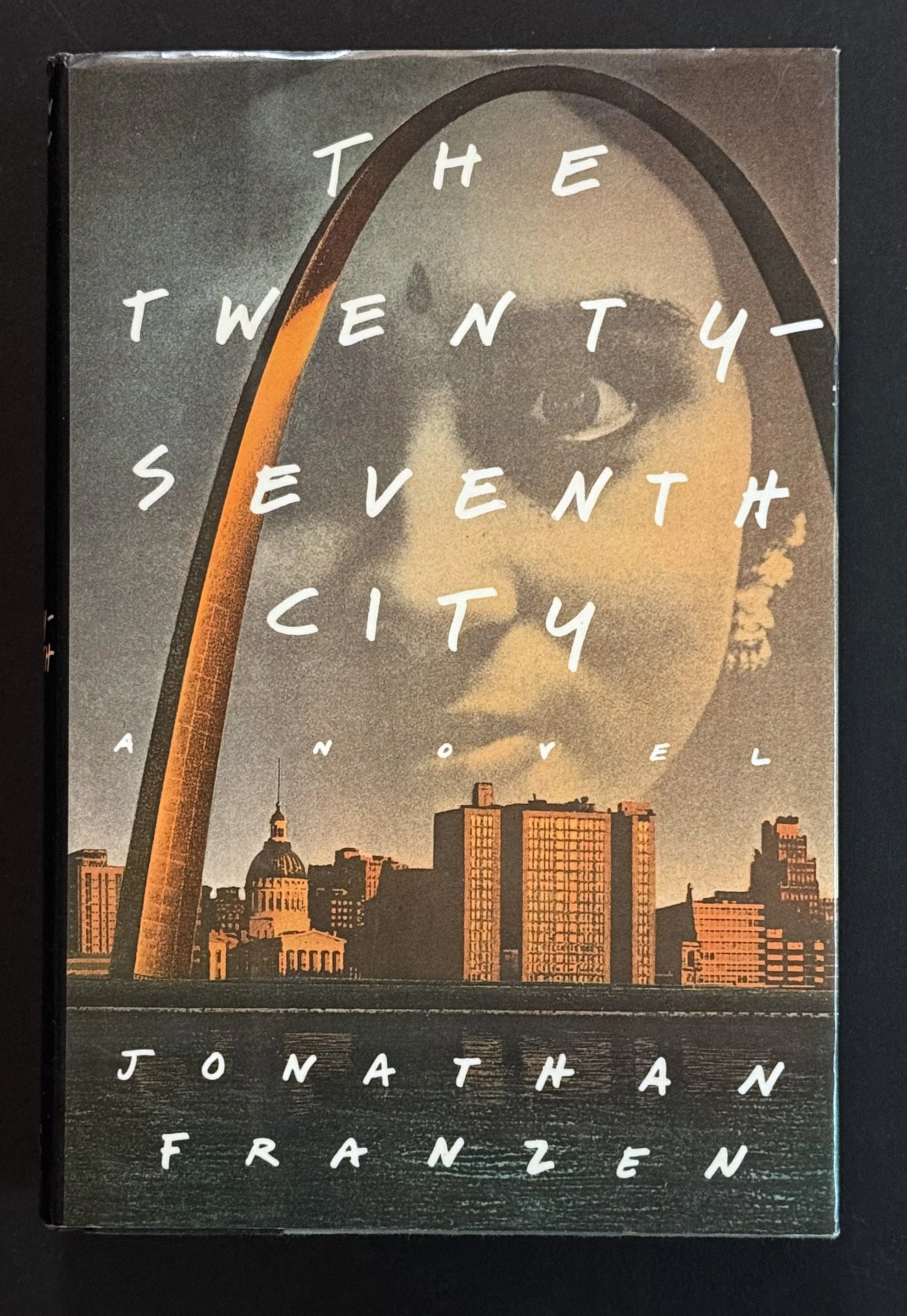
This is a true first edition, first printing — "First edition, 1988" stated on the copyright page — in the original Farrar, Straus and Giroux trade dust jacket, built around a stark and unforgettable image of the Gateway Arch. The book is Fine: tight, square, and clean. The jacket is Near Fine, bright and sharp, with only light wear at the spine ends, and now protected in a removable archival cover. A handsome copy of a book that is genuinely hard to find in this condition.
For the Franzen reader, the modern-firsts collector, or anyone drawn to the American city as a subject — this is where it began.
Jonathan Franzen — First Edition, First Printing (Farrar, Straus and Giroux, 1988)
Every writer has a first book, but only a few first books arrive already carrying the weight of everything that will follow. The Twenty-Seventh City is one of those. Published in 1988, when Franzen was twenty-eight, it is a debut with the ambition and architecture of a mature novel — a dense, funny, conspiratorial portrait of a city that anticipates, by more than a decade, the writer who would win the National Book Award for The Corrections.
There is a quiet resonance to this book that we find hard to resist. Its title is a fact: St. Louis was once the fourth-largest city in America, and by the time Franzen wrote about it, it had slipped to twenty-seventh — a great American city living in the shadow of its own remembered greatness. That is a subject close to our heart. The novel is, among many other things, about what a place chooses to keep and what it lets go.
This is a true first edition, first printing — "First edition, 1988" stated on the copyright page — in the original Farrar, Straus and Giroux trade dust jacket, built around a stark and unforgettable image of the Gateway Arch. The book is Fine: tight, square, and clean. The jacket is Near Fine, bright and sharp, with only light wear at the spine ends, and now protected in a removable archival cover. A handsome copy of a book that is genuinely hard to find in this condition.
For the Franzen reader, the modern-firsts collector, or anyone drawn to the American city as a subject — this is where it began.