For four years running, the Overstreet Price Guide put a legend on its cover. Will Eisner painted the Spirit leading a Bicentennial parade down a street paved with comic books for 1976. Carl Barks took 1977, and the story behind it is the best kind of industry accident — Disney would not clear the Good Duck Artist to draw the ducks he had made famous, so Barks drew Porky Pig as a Mountie instead, with Bugs Bunny along for the ride and a fourteen-page gallery of his paintings inside. Bill Ward took 1978 with Torchy at the head of the Women in Comics edition, working at the absolute peak of his powers. Wally Wood closed the run in 1979 with bubble helmets, bug-eyed aliens, and a jungle of bones.
That is Eisner, Barks, Ward, and Wood in consecutive years, on the covers of a book most people threw away the moment the next edition arrived. Which is precisely why these four are together and why they look the way they do. The Barks took the worst of it, creased across the whole front and chipped along the fore edge, and the Eisner is soiled and darkened with the original Harmony Books distributor label still stuck to the corner. The Ward and the Wood came through in far better shape — both still bright, both still glossy, marked only by worn corners, a scuff where the price sits, and someone’s pencil doodles on the back of No. 9. Turn them over and the Eisner carries an advertisement from Robert Bell of Hauppauge, New York, offering more than a hundred thousand comics by mail; the other three sell you three-mil plastic bags from Bill Cole in Wollaston, Massachusetts. That was the infrastructure of the hobby in 1977, printed on the back of the book that priced it.
The prices inside stopped meaning anything in 1980. What survived is the art, and four rows of color on a shelf, stacked in order, that make a small argument about who was working in comics when the hobby was still figuring out that it was one.
For four years running, the Overstreet Price Guide put a legend on its cover. Will Eisner painted the Spirit leading a Bicentennial parade down a street paved with comic books for 1976. Carl Barks took 1977, and the story behind it is the best kind of industry accident — Disney would not clear the Good Duck Artist to draw the ducks he had made famous, so Barks drew Porky Pig as a Mountie instead, with Bugs Bunny along for the ride and a fourteen-page gallery of his paintings inside. Bill Ward took 1978 with Torchy at the head of the Women in Comics edition, working at the absolute peak of his powers. Wally Wood closed the run in 1979 with bubble helmets, bug-eyed aliens, and a jungle of bones.
That is Eisner, Barks, Ward, and Wood in consecutive years, on the covers of a book most people threw away the moment the next edition arrived. Which is precisely why these four are together and why they look the way they do. The Barks took the worst of it, creased across the whole front and chipped along the fore edge, and the Eisner is soiled and darkened with the original Harmony Books distributor label still stuck to the corner. The Ward and the Wood came through in far better shape — both still bright, both still glossy, marked only by worn corners, a scuff where the price sits, and someone’s pencil doodles on the back of No. 9. Turn them over and the Eisner carries an advertisement from Robert Bell of Hauppauge, New York, offering more than a hundred thousand comics by mail; the other three sell you three-mil plastic bags from Bill Cole in Wollaston, Massachusetts. That was the infrastructure of the hobby in 1977, printed on the back of the book that priced it.
The prices inside stopped meaning anything in 1980. What survived is the art, and four rows of color on a shelf, stacked in order, that make a small argument about who was working in comics when the hobby was still figuring out that it was one.
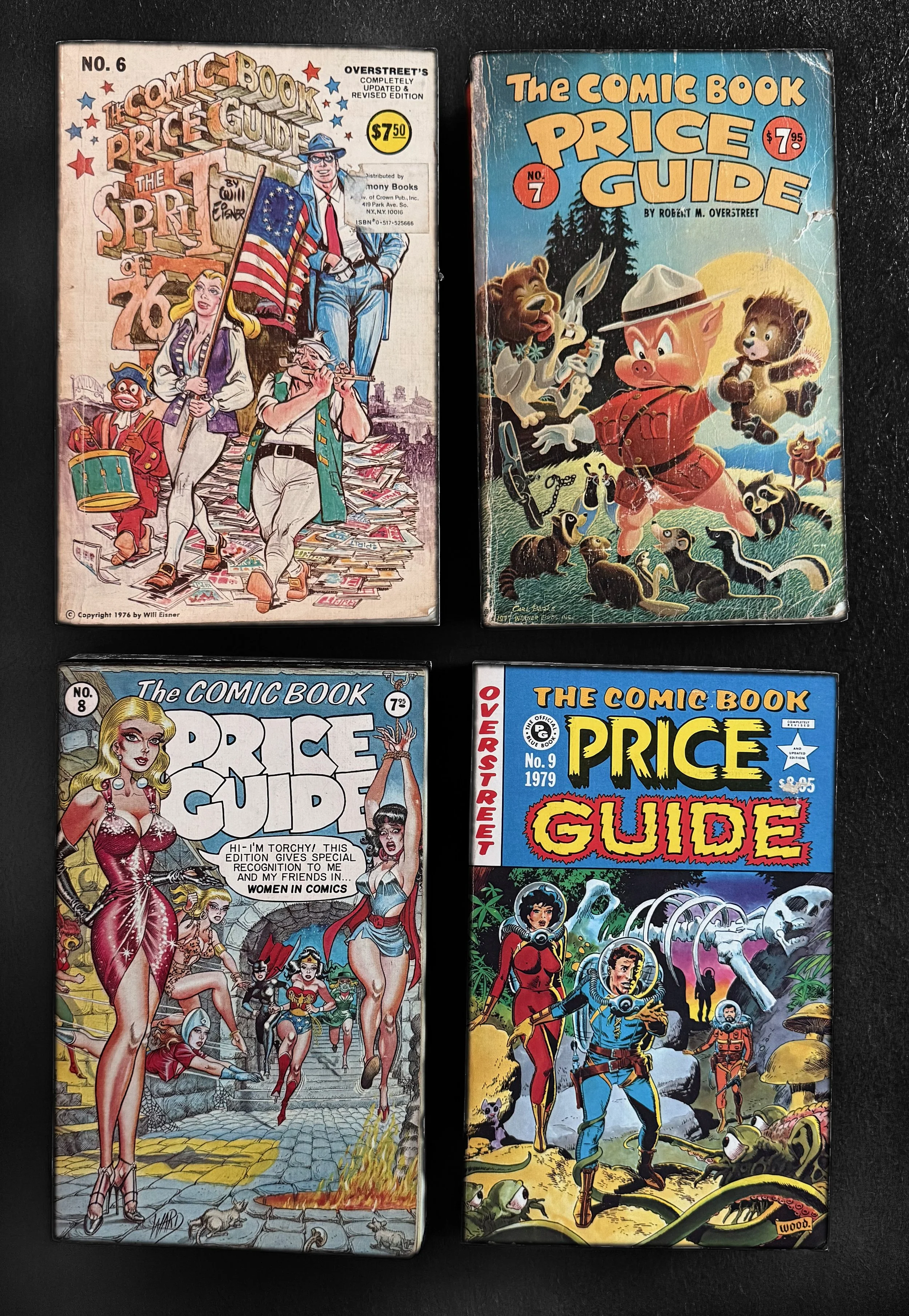 Image 1 of 7
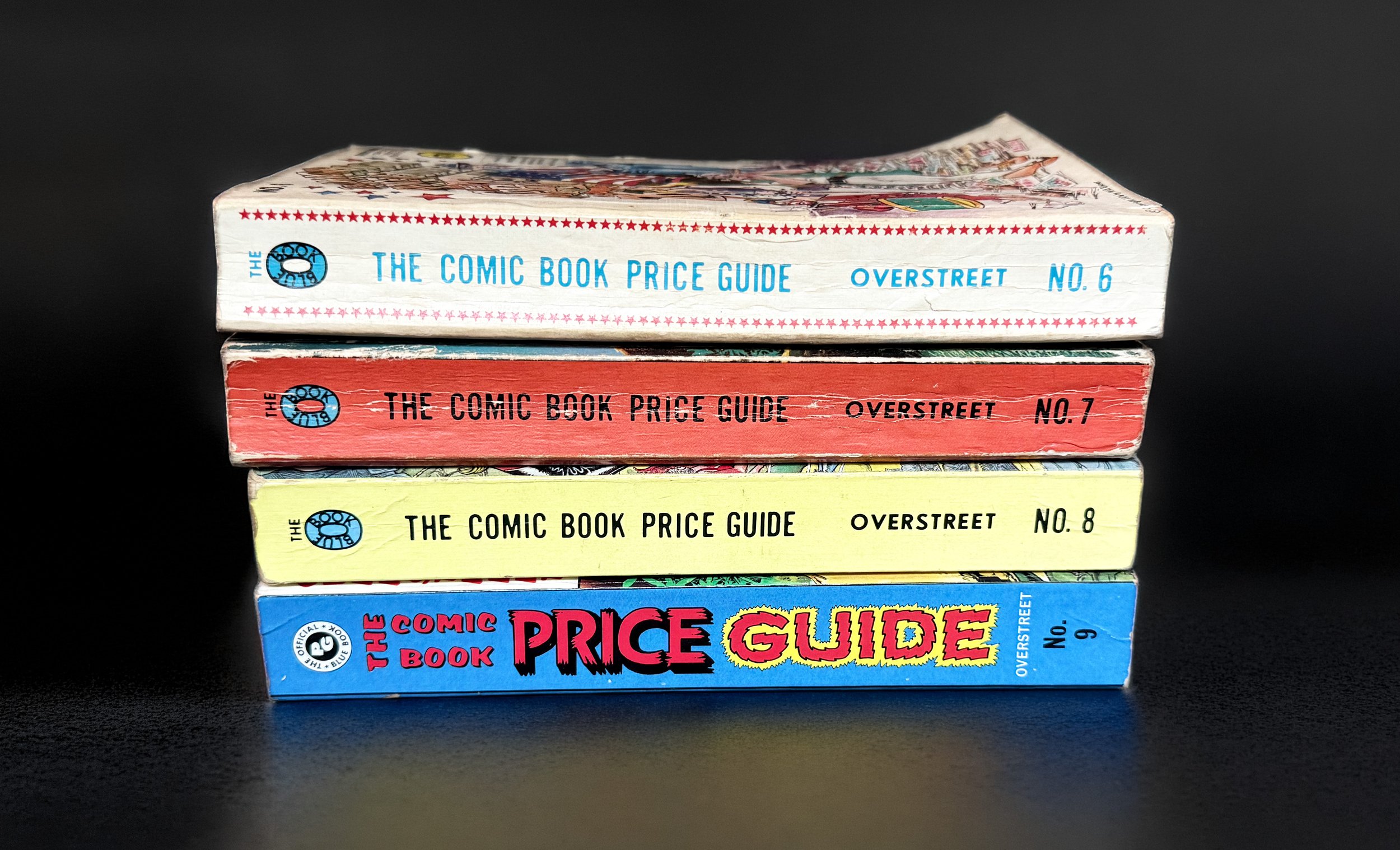 Image 2 of 7
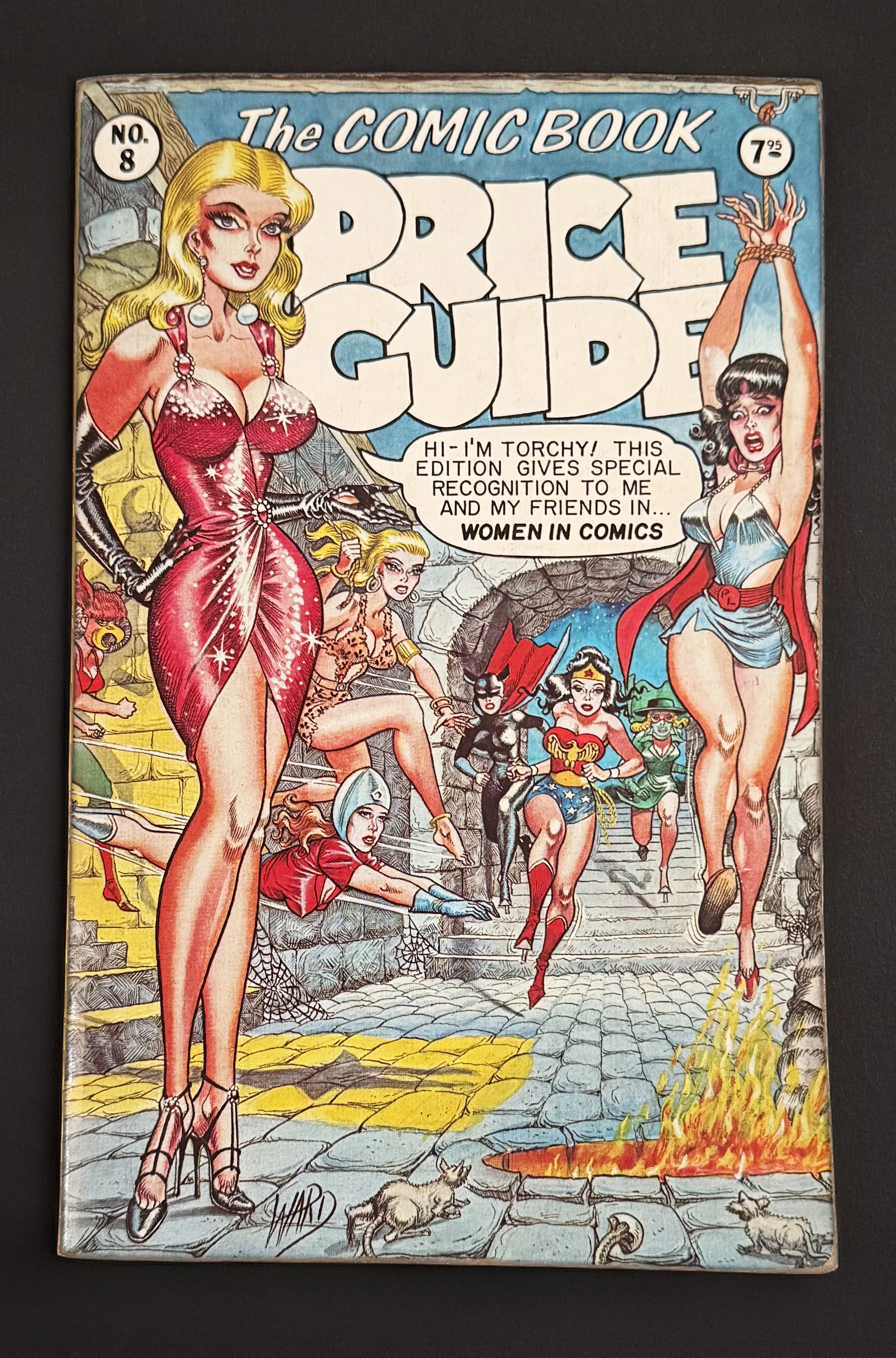 Image 3 of 7
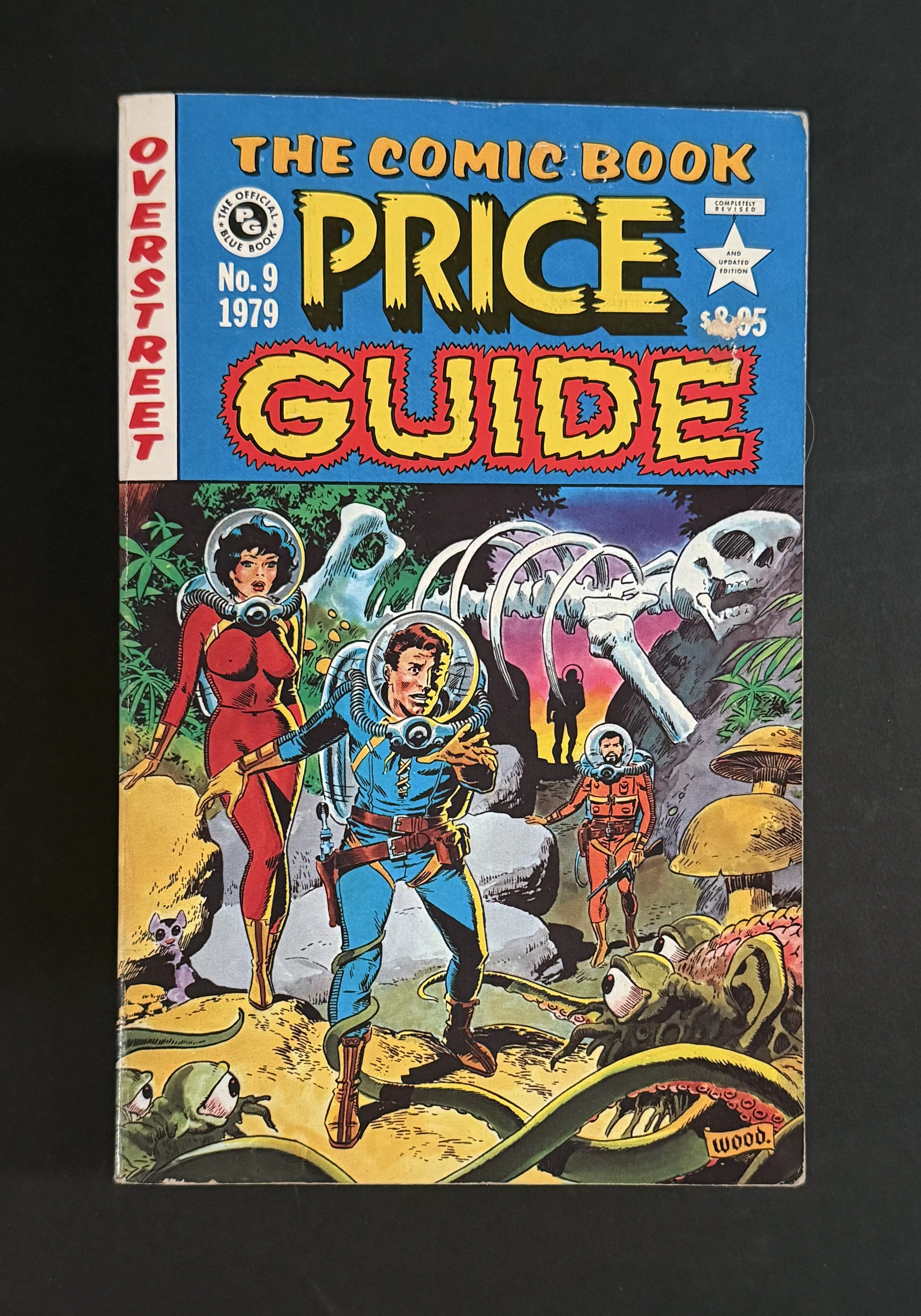 Image 4 of 7
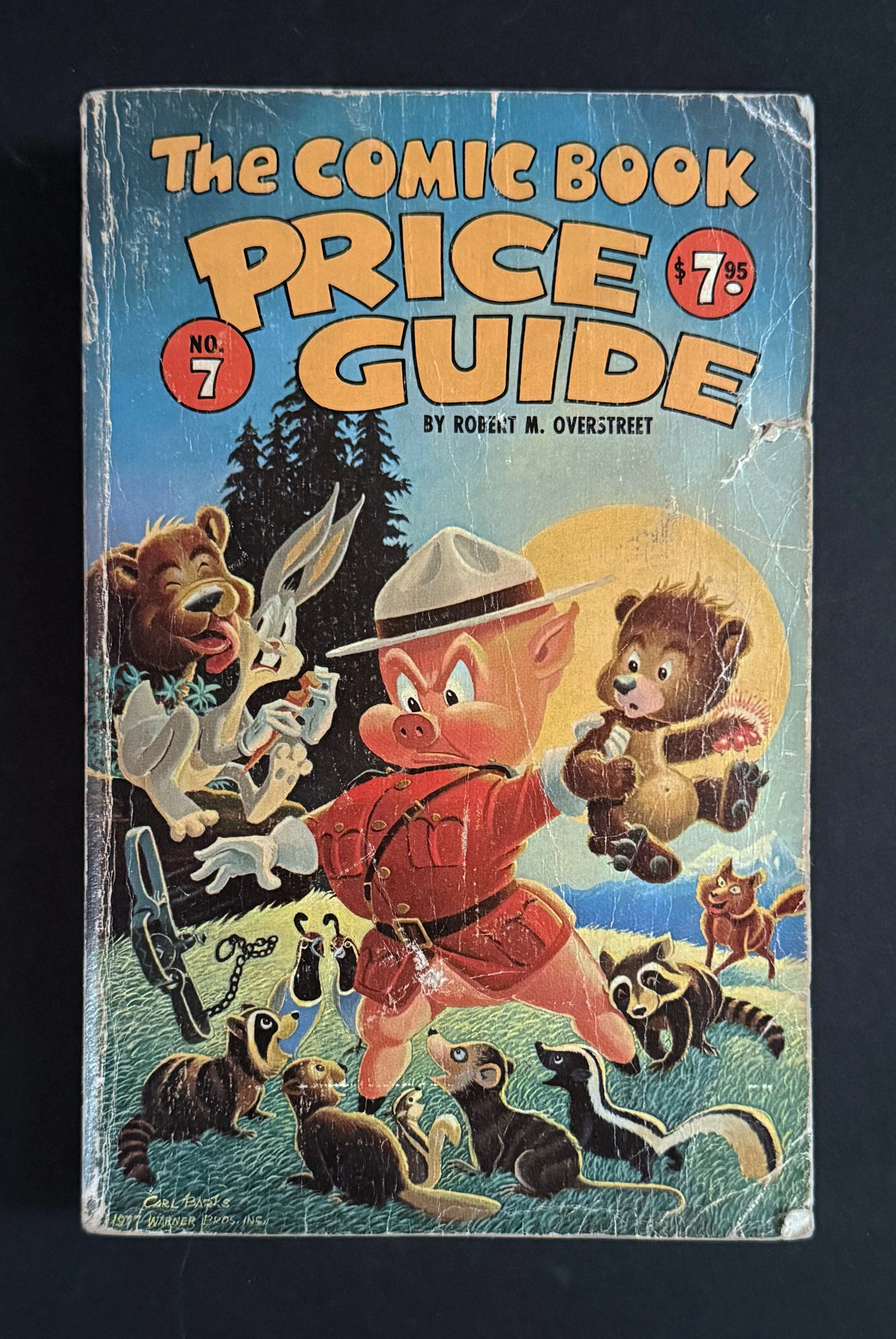 Image 5 of 7
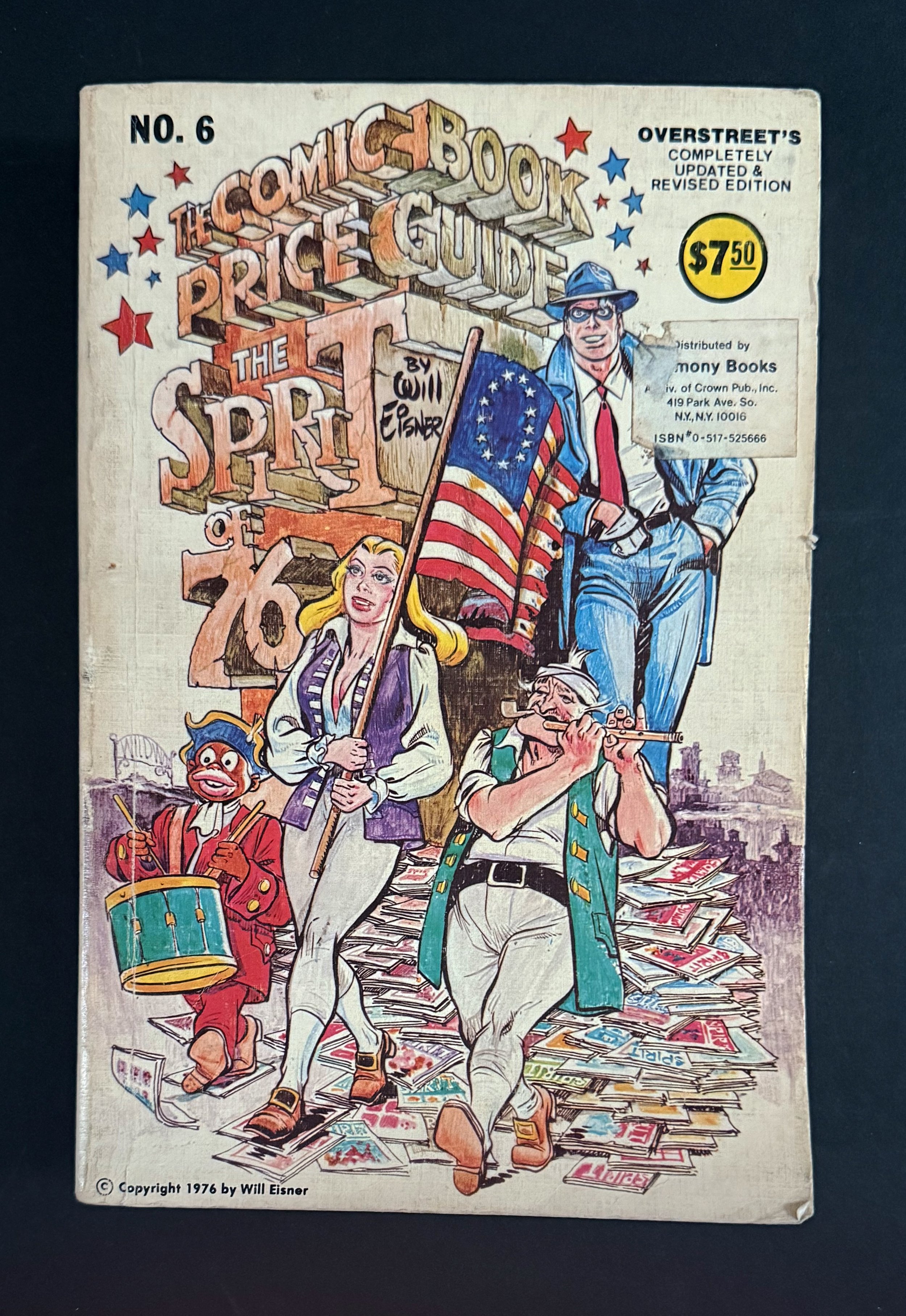 Image 6 of 7
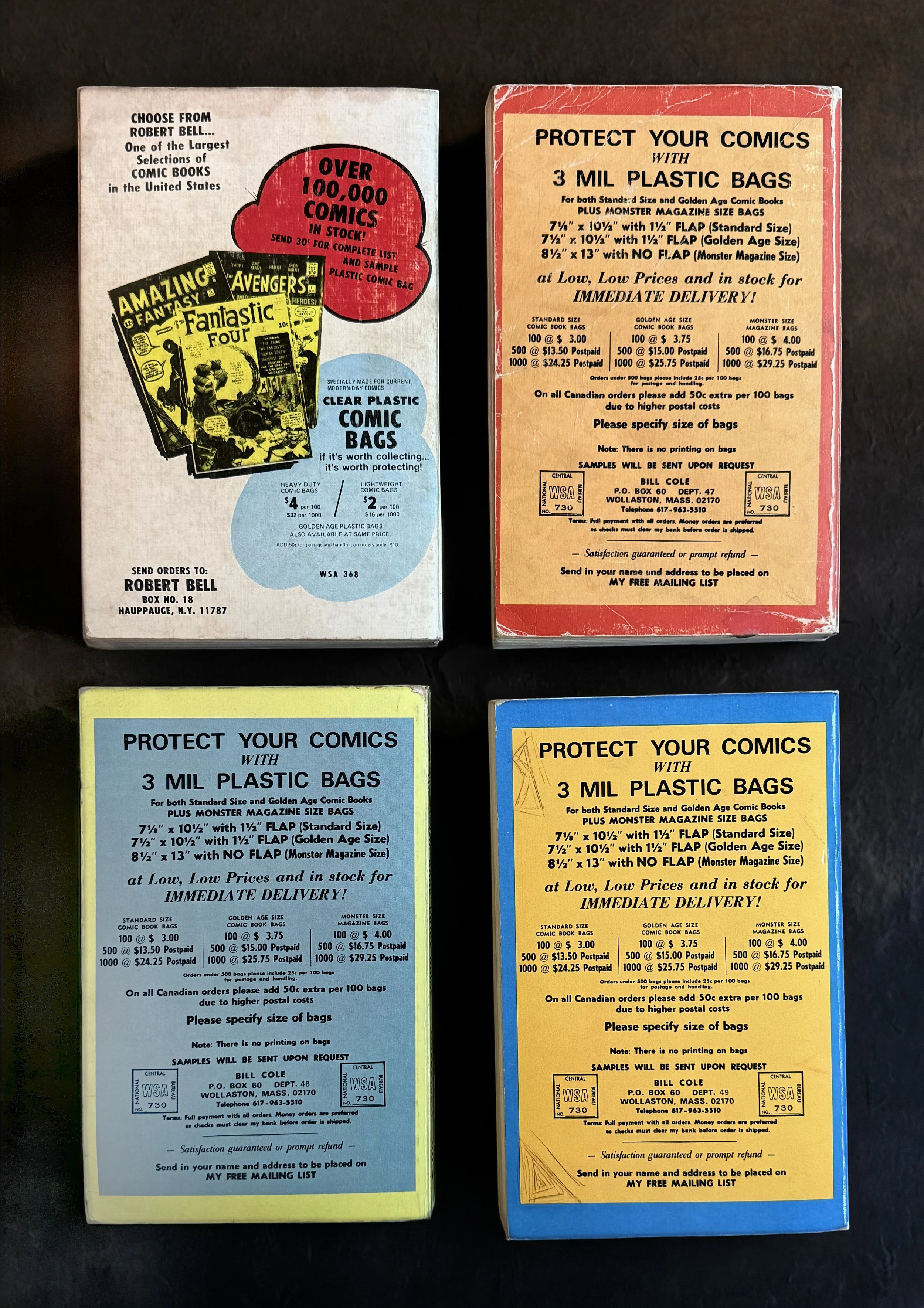 Image 7 of 7