A small book carrying a big piece of Spanish publishing history. Capullo Rojo comes from Editorial Saturnino Calleja’s “Cuentos de Calleja” series — the house sometimes called Spain’s own children’s-book empire, which put fairy tales and folklore into the hands of a generation of Spanish schoolchildren in the early 20th century. This volume, No. XXXII in the Biblioteca Escolar Recreativa line, gathers four illustrated stories under J. Zamora’s artwork.
The front cover does the talking: a veiled figure fanned by a sweep of stylized green hair against gold, rendered with the flat graphic confidence of full Art Deco. It’s the kind of cover that earns a spot on a shelf even for readers who don’t speak a word of Spanish.
Well-loved, with honest wear — a chipped spine, a bumped corner — but the artwork and stories inside remain intact and legible.
A small book carrying a big piece of Spanish publishing history. Capullo Rojo comes from Editorial Saturnino Calleja’s “Cuentos de Calleja” series — the house sometimes called Spain’s own children’s-book empire, which put fairy tales and folklore into the hands of a generation of Spanish schoolchildren in the early 20th century. This volume, No. XXXII in the Biblioteca Escolar Recreativa line, gathers four illustrated stories under J. Zamora’s artwork.
The front cover does the talking: a veiled figure fanned by a sweep of stylized green hair against gold, rendered with the flat graphic confidence of full Art Deco. It’s the kind of cover that earns a spot on a shelf even for readers who don’t speak a word of Spanish.
Well-loved, with honest wear — a chipped spine, a bumped corner — but the artwork and stories inside remain intact and legible.
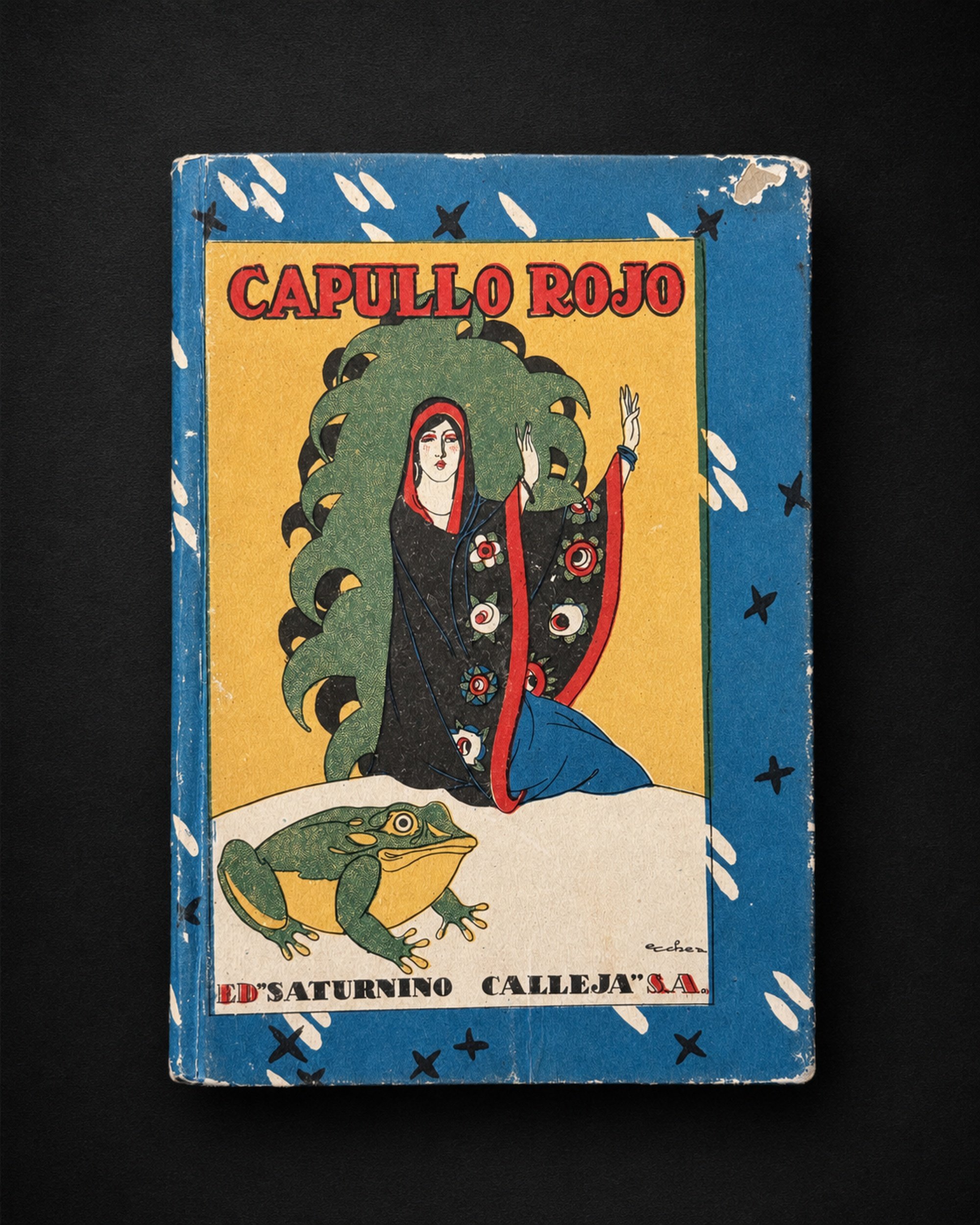 Image 1 of 7
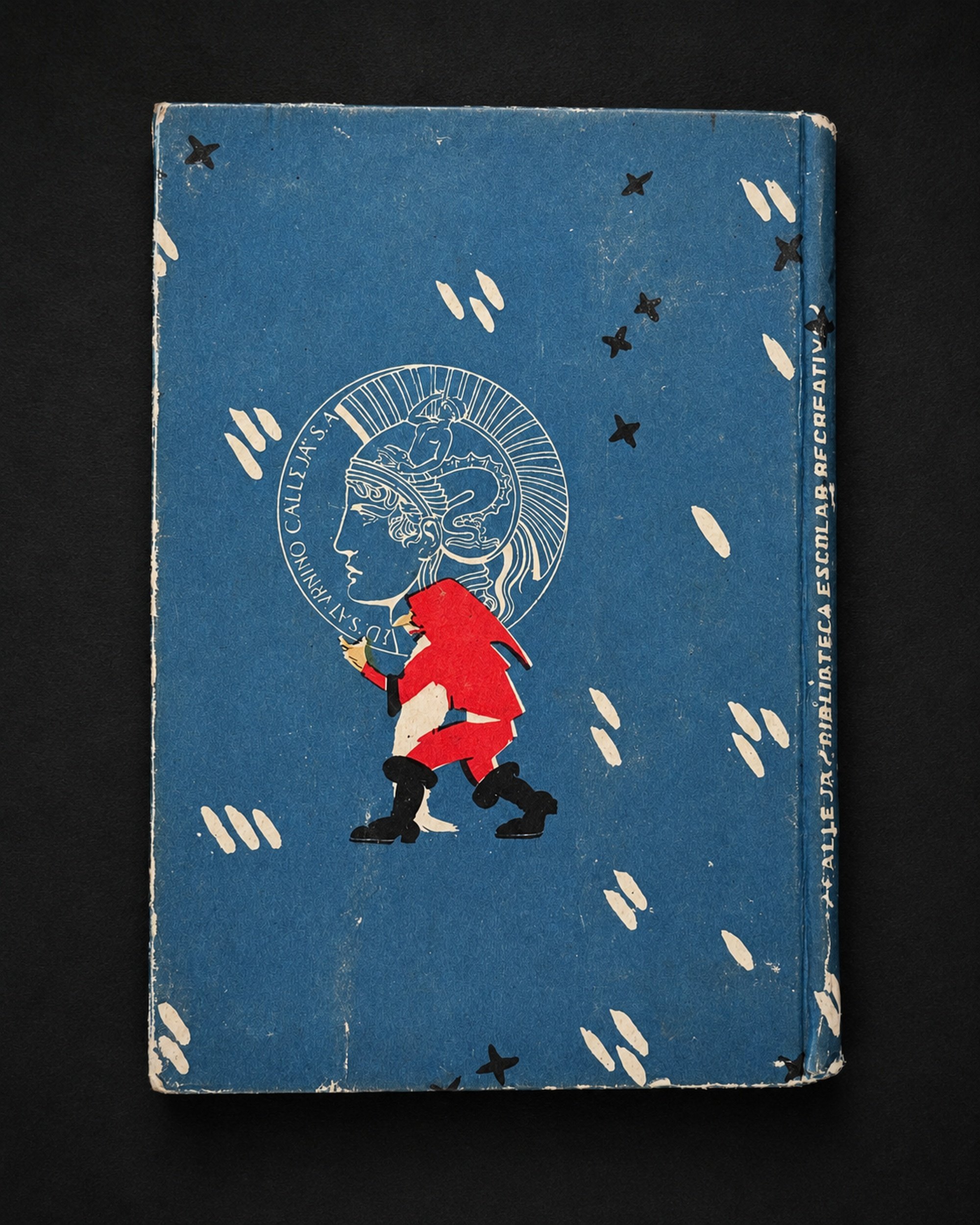 Image 2 of 7
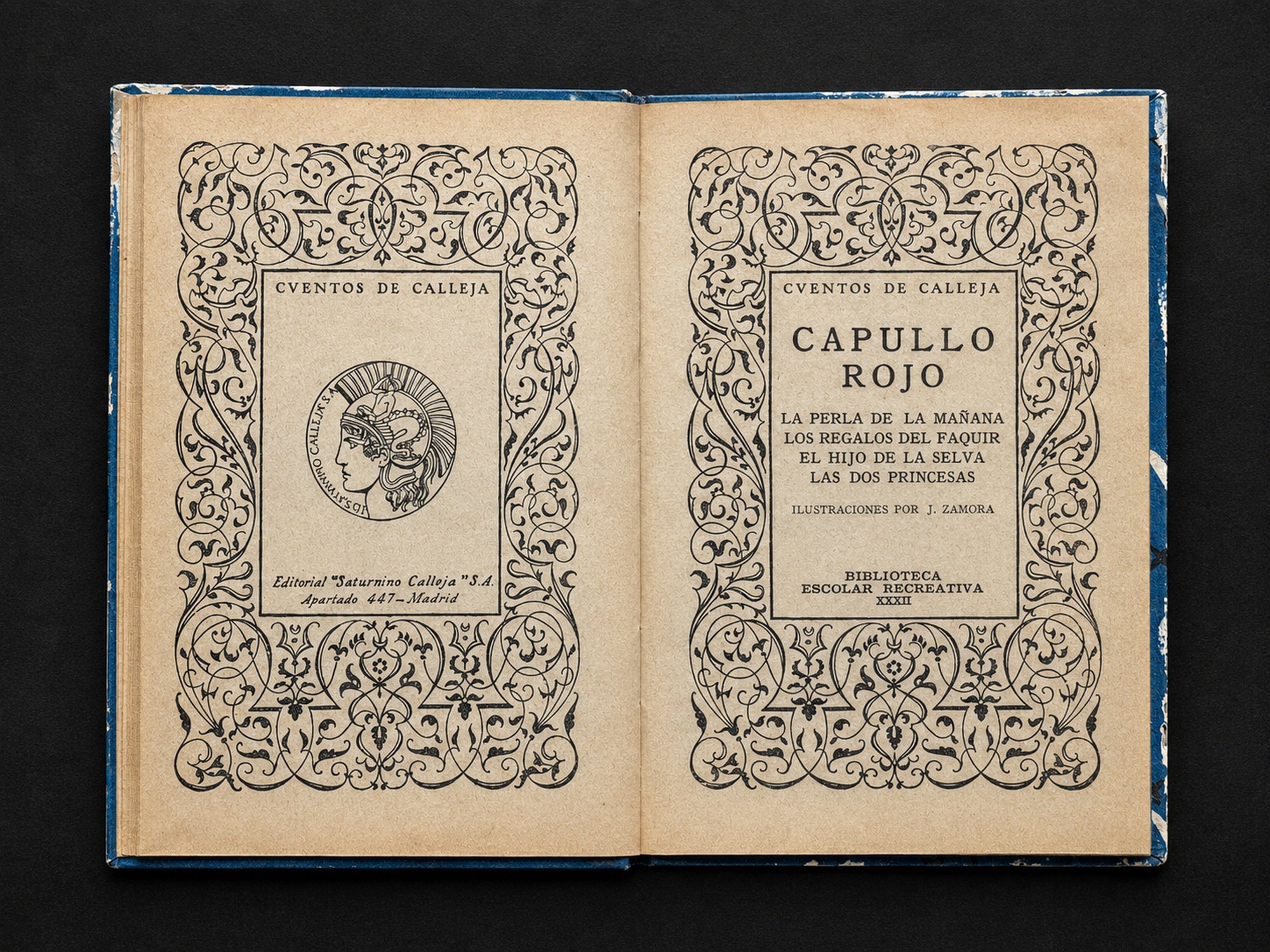 Image 3 of 7
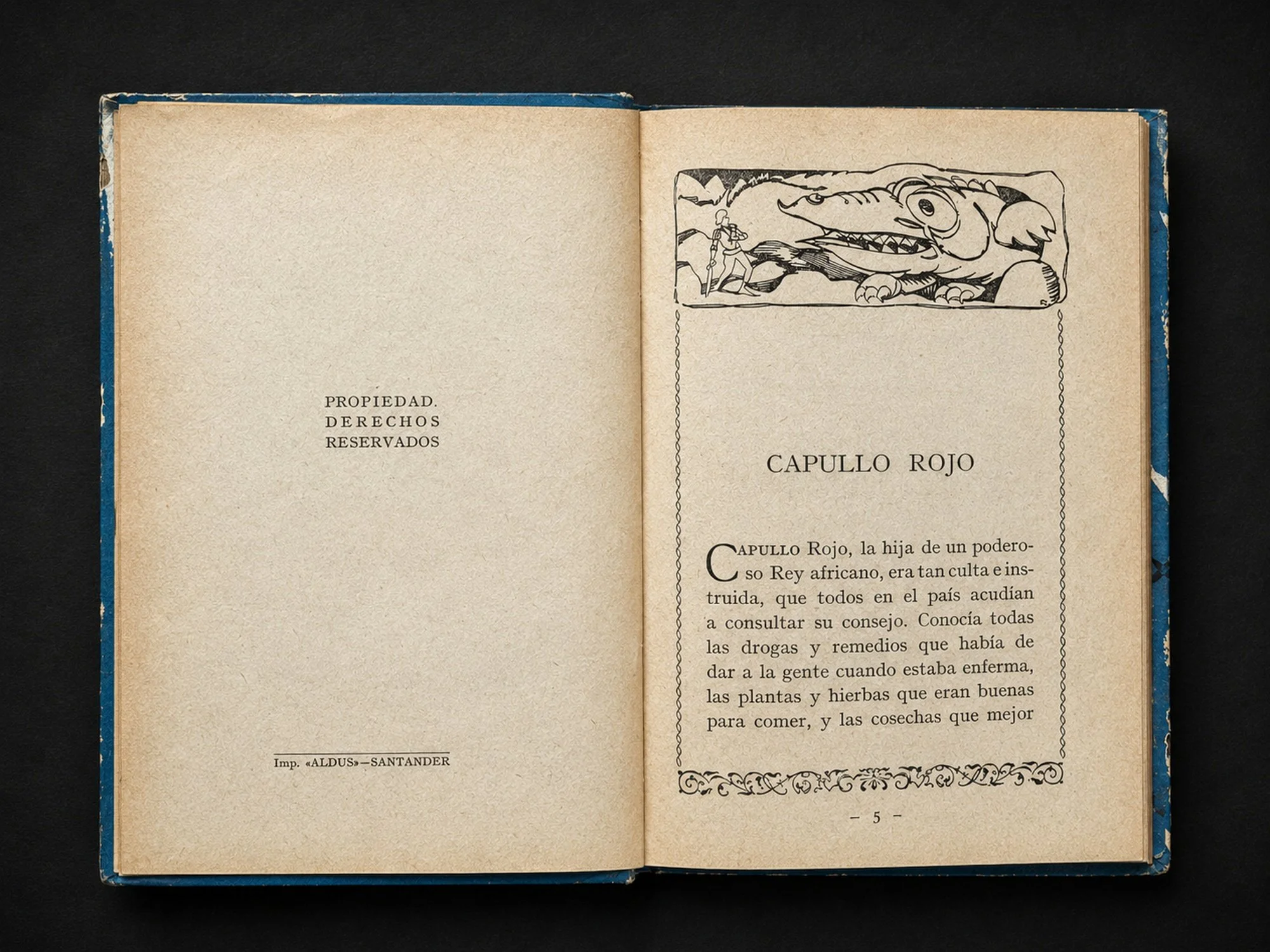 Image 4 of 7
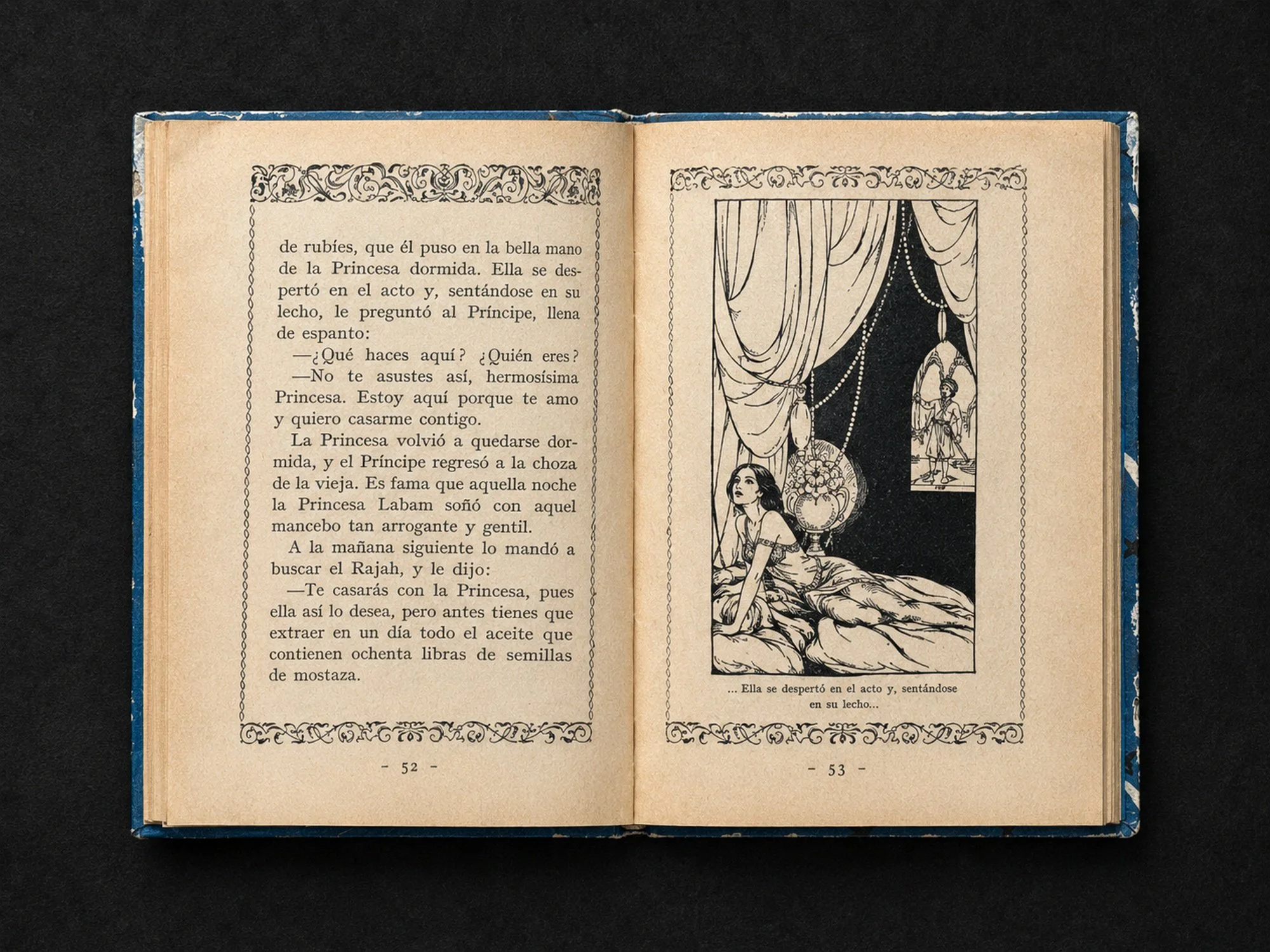 Image 5 of 7
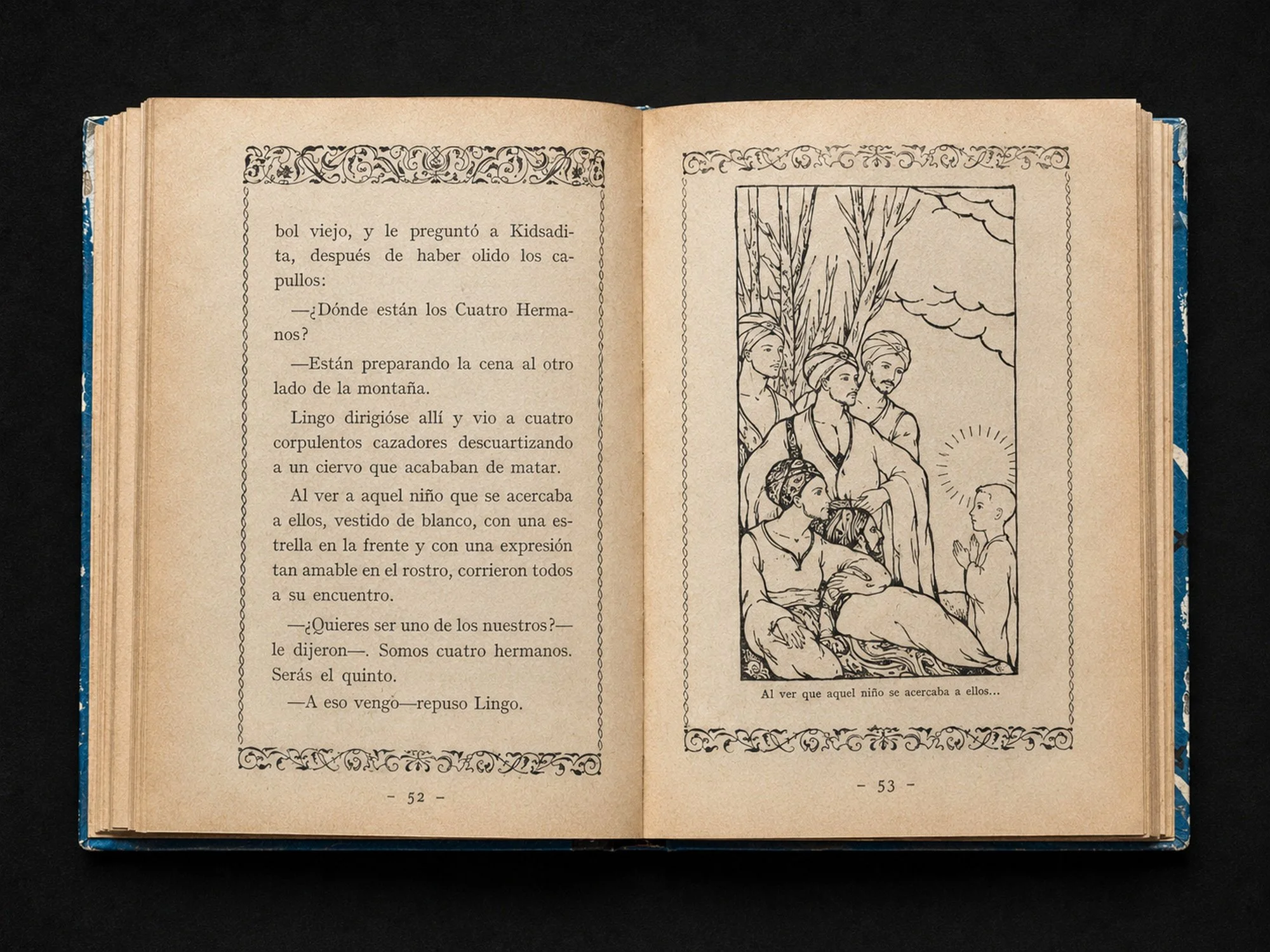 Image 6 of 7
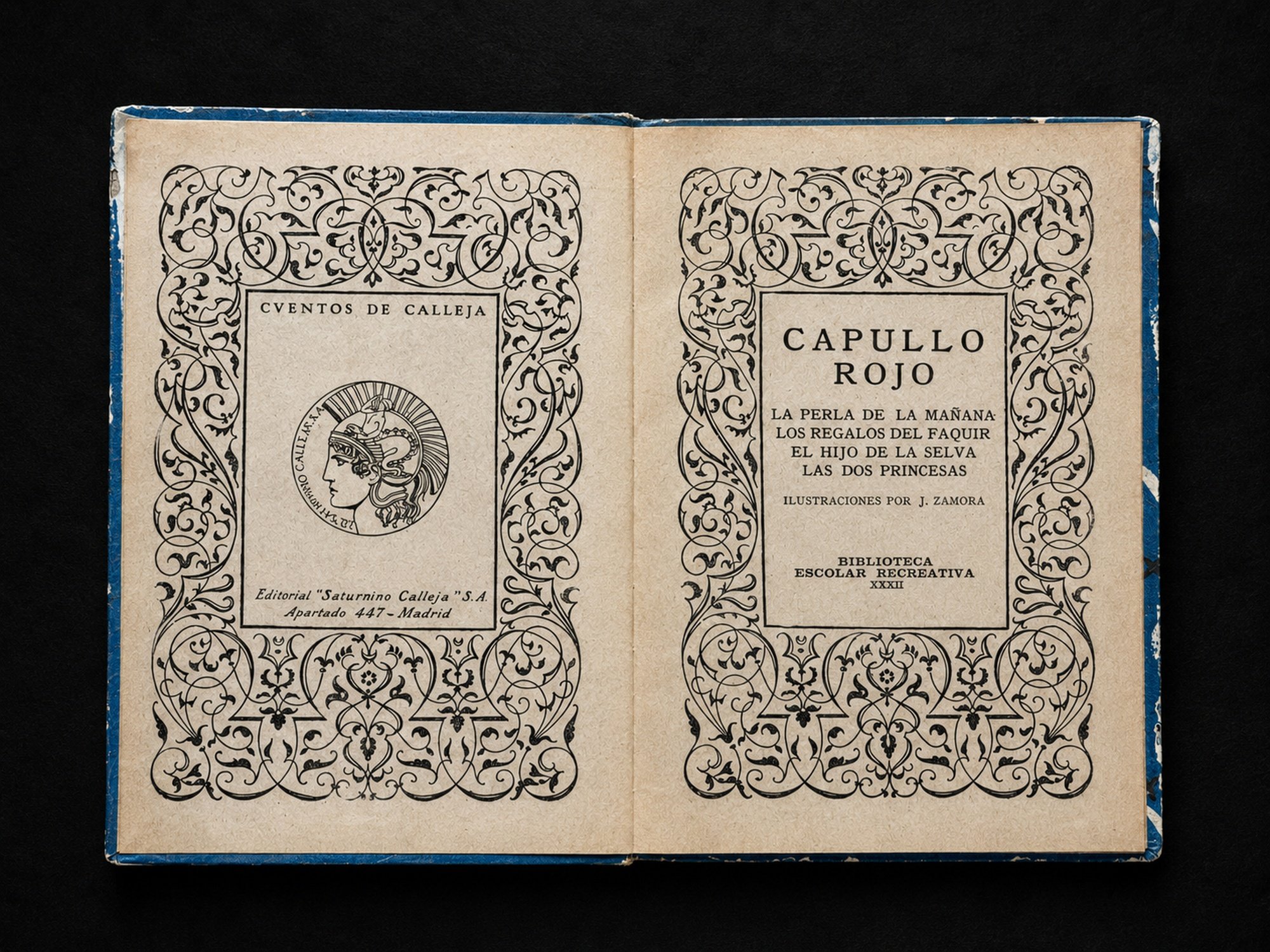 Image 7 of 7