 Image 1 of 3
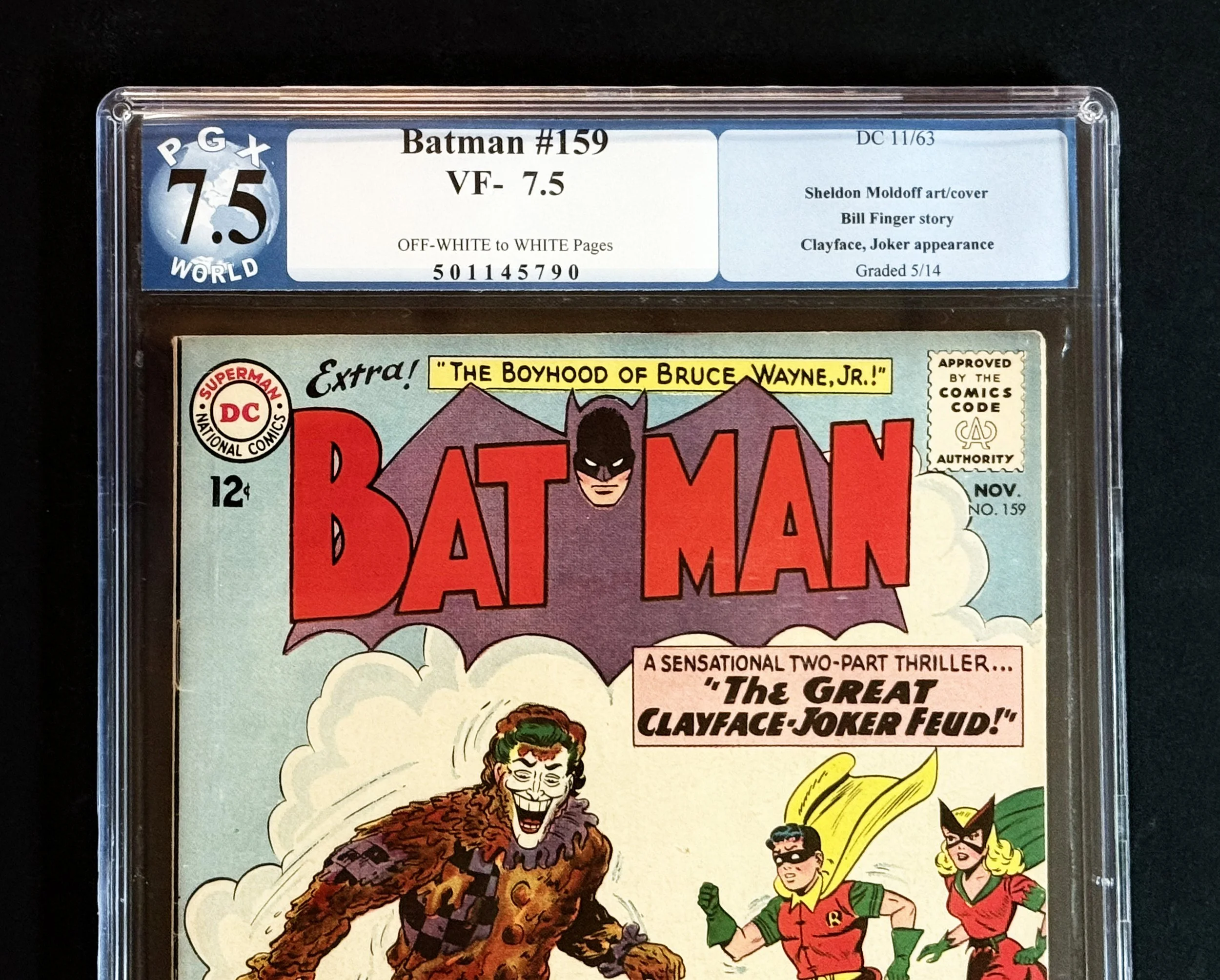 Image 2 of 3
 Image 3 of 3
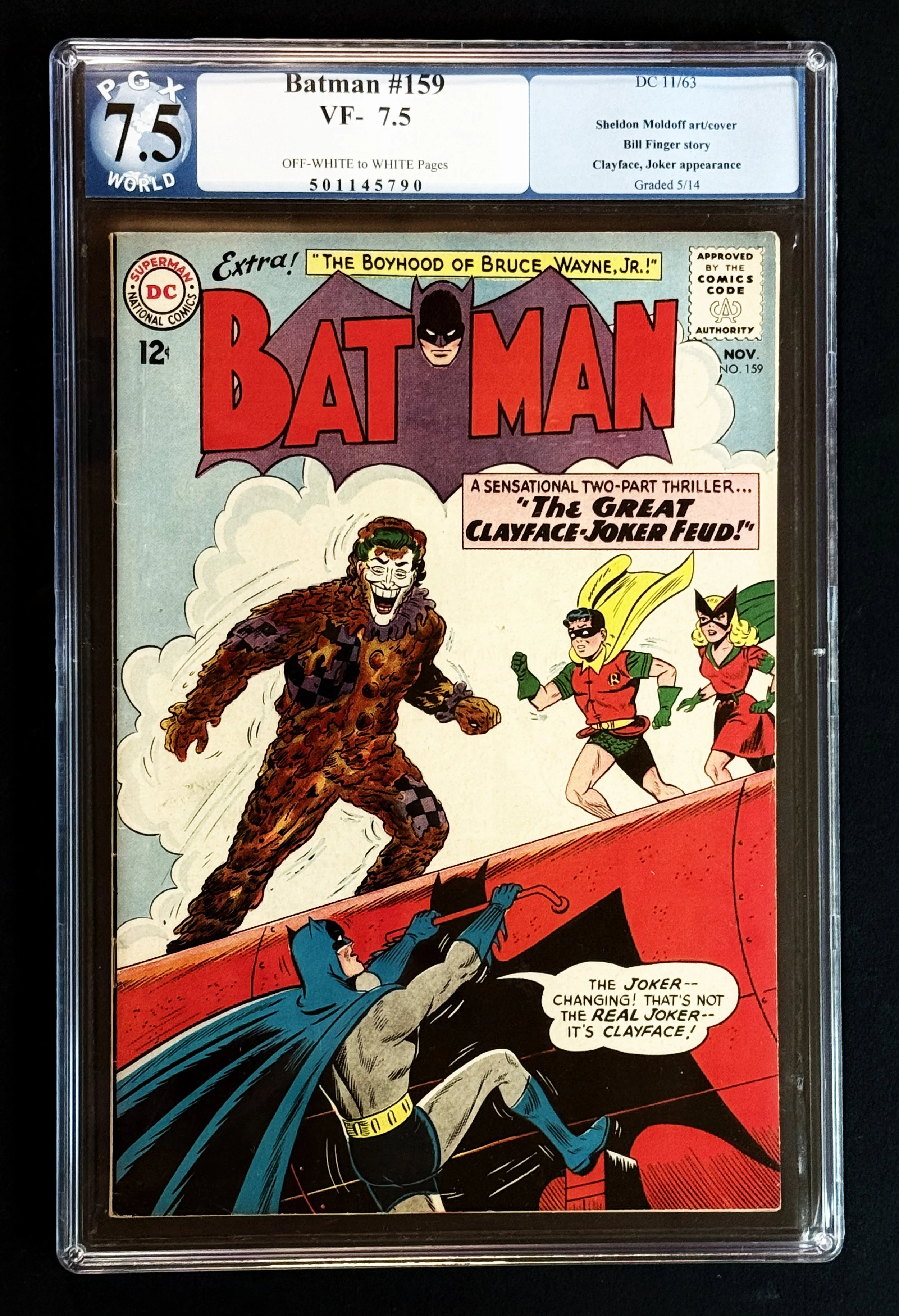
The best Silver Age Batman stories are not the ones with the highest stakes. They are the ones with the strangest premises played completely straight, and “The Great Clayface-Joker Feud” is a small masterpiece of the form.
The setup is professional jealousy. Matt Hagen has escaped prison, found his cache of the transformative liquid, and jury-rigged a synthetic version that only holds for five hours — a limitation Bill Finger introduces and then uses, which is more than most writers of the period bothered to do. Clayface returns to crime. The newspapers pay attention. And the Joker, reading those newspapers, takes it personally.
What follows is a crime spree conducted as an argument about craft. The Joker commits robberies in Clayface’s manner. Clayface commits robberies in the Joker’s. Each is trying to demonstrate that he could do the other man’s job and the other man could not do his. Batman, Robin, Batwoman and Bat-Girl spend sixteen pages trying to determine which villain is standing in front of them at any given moment, and Batman closes the case by putting on the Joker’s face himself. It is a story about impersonation in which nearly every character is impersonating someone.
Sheldon Moldoff drew it under Bob Kane’s byline, as he had for years. Charles Paris inked. Jack Schiff edited, and he did not have long left.
That is the other thing this comic is. Six months after it appeared, the Batman line was in enough trouble that DC discussed retiring the character. Julius Schwartz was given the titles, Carmine Infantino was given the pencil, and Detective Comics #327 arrived with a yellow oval on the chest and a mandate to burn off everything that had accumulated in the previous decade. The aliens went. The transformations went. Bat-Mite went, and Ace the Bat-Hound, and Batwoman, and the original Bat-Girl.
So look again at the cover: Kathy Kane and Betty Kane on a rooftop, running, in costume, entirely unaware. Within half a year they would be gone from continuity for the better part of two decades. Comics rarely announce their own endings. This one is an ending and does not know it.
This copy is graded PGX 7.5, Very Fine-, with off-white to white pages, encapsulated in 2014. The shop discloses grading service on every listing as a matter of policy: PGX holders trade below CGC and CBCS holders of the same assigned grade, and this price reflects that discount rather than ignoring it. What you are buying is a sharp, bright, structurally sound copy of a genuinely peculiar Batman comic, priced honestly for the plastic it sits in.
Ships in a Gemini graded-comic mailer with honeycomb kraft void fill, fully insured, within one business day of cleared payment.
The best Silver Age Batman stories are not the ones with the highest stakes. They are the ones with the strangest premises played completely straight, and “The Great Clayface-Joker Feud” is a small masterpiece of the form.
The setup is professional jealousy. Matt Hagen has escaped prison, found his cache of the transformative liquid, and jury-rigged a synthetic version that only holds for five hours — a limitation Bill Finger introduces and then uses, which is more than most writers of the period bothered to do. Clayface returns to crime. The newspapers pay attention. And the Joker, reading those newspapers, takes it personally.
What follows is a crime spree conducted as an argument about craft. The Joker commits robberies in Clayface’s manner. Clayface commits robberies in the Joker’s. Each is trying to demonstrate that he could do the other man’s job and the other man could not do his. Batman, Robin, Batwoman and Bat-Girl spend sixteen pages trying to determine which villain is standing in front of them at any given moment, and Batman closes the case by putting on the Joker’s face himself. It is a story about impersonation in which nearly every character is impersonating someone.
Sheldon Moldoff drew it under Bob Kane’s byline, as he had for years. Charles Paris inked. Jack Schiff edited, and he did not have long left.
That is the other thing this comic is. Six months after it appeared, the Batman line was in enough trouble that DC discussed retiring the character. Julius Schwartz was given the titles, Carmine Infantino was given the pencil, and Detective Comics #327 arrived with a yellow oval on the chest and a mandate to burn off everything that had accumulated in the previous decade. The aliens went. The transformations went. Bat-Mite went, and Ace the Bat-Hound, and Batwoman, and the original Bat-Girl.
So look again at the cover: Kathy Kane and Betty Kane on a rooftop, running, in costume, entirely unaware. Within half a year they would be gone from continuity for the better part of two decades. Comics rarely announce their own endings. This one is an ending and does not know it.
This copy is graded PGX 7.5, Very Fine-, with off-white to white pages, encapsulated in 2014. The shop discloses grading service on every listing as a matter of policy: PGX holders trade below CGC and CBCS holders of the same assigned grade, and this price reflects that discount rather than ignoring it. What you are buying is a sharp, bright, structurally sound copy of a genuinely peculiar Batman comic, priced honestly for the plastic it sits in.
Ships in a Gemini graded-comic mailer with honeycomb kraft void fill, fully insured, within one business day of cleared payment.