The Cure for the Modern Navy
It arrives looking like a patriot’s keepsake. The cover is all rope-knot borders and steaming battleships, a lookout perched in his fighting-top while the fleet churns past in line astern. Open it expecting the pride of the new American steel navy — the Kearsarge, the Kentucky, the great twenty-thousand-ton dreadnoughts then rising in the yards — and you will find exactly that. You will also find, three pages on, detailed instructions for curing a morphine habit.
This is the small, marvelous deception of the patent-medicine premium. The Dr. Miles Medical Company of Elkhart, Indiana did not publish this booklet to celebrate the Navy. They published it so that a man waiting at the druggist’s counter — in this case the counter of H.A. Blackmer, on Purchase Street in New Bedford — would take it home, admire the warships, and absorb, between the halftones, the gospel of Nervine. “The Nerves are the Life of the Body,” one spread insists beside an anatomical figure wired like a telephone exchange. Another assures the sufferer of “locomotor ataxia” that relief is at hand. A third, the strangest and best of all, lays out a calm domestic protocol for breaking free of the drug habit — hot baths, a blanket, a quart bottle of diminishing morphine — underwritten, naturally, by Dr. Miles’ own remedies.
It is a document of its precise moment: the years just before the Pure Food and Drug Act would force the quack empires to account for what was in the bottle. The Navy it describes is equally of that moment — the Great White Fleet steaming toward its circumnavigation, the country newly convinced of its place among the sea powers. Two American confidences, naval and pharmaceutical, bound together in a single throwaway pamphlet that somehow was not thrown away.
The back wrapper keeps the human trace: a portrait of one Ward L. Goding of Durmid, Virginia, “severe heart trouble relieved with Dr. Miles’ Heart Cure,” and below him the compliments of the New Bedford druggist who handed the booklet across his counter more than a century ago.
Condition & honest notes: This is a survivor, and it wears its survival plainly. There is chipping and short tearing to the edges, a torn corner across two of the Navy leaves, missing paper at the lower edge of some pages, and the toning and soiling that a hundred years of newsprint earns honestly. The color wrappers remain bright and whole, and every page of text reads clean. We offer it as what it is — a genuine, well-traveled artifact of American advertising, not a pristine specimen, and priced as such.
Format: Softcover advertising booklet, chromolithographed color wrappers, approx. 32 pages. Dr. Miles Medical Co., c. 1907–1909. Distributed by H.A. Blackmer, New Bedford, Mass.
The Cure for the Modern Navy
It arrives looking like a patriot’s keepsake. The cover is all rope-knot borders and steaming battleships, a lookout perched in his fighting-top while the fleet churns past in line astern. Open it expecting the pride of the new American steel navy — the Kearsarge, the Kentucky, the great twenty-thousand-ton dreadnoughts then rising in the yards — and you will find exactly that. You will also find, three pages on, detailed instructions for curing a morphine habit.
This is the small, marvelous deception of the patent-medicine premium. The Dr. Miles Medical Company of Elkhart, Indiana did not publish this booklet to celebrate the Navy. They published it so that a man waiting at the druggist’s counter — in this case the counter of H.A. Blackmer, on Purchase Street in New Bedford — would take it home, admire the warships, and absorb, between the halftones, the gospel of Nervine. “The Nerves are the Life of the Body,” one spread insists beside an anatomical figure wired like a telephone exchange. Another assures the sufferer of “locomotor ataxia” that relief is at hand. A third, the strangest and best of all, lays out a calm domestic protocol for breaking free of the drug habit — hot baths, a blanket, a quart bottle of diminishing morphine — underwritten, naturally, by Dr. Miles’ own remedies.
It is a document of its precise moment: the years just before the Pure Food and Drug Act would force the quack empires to account for what was in the bottle. The Navy it describes is equally of that moment — the Great White Fleet steaming toward its circumnavigation, the country newly convinced of its place among the sea powers. Two American confidences, naval and pharmaceutical, bound together in a single throwaway pamphlet that somehow was not thrown away.
The back wrapper keeps the human trace: a portrait of one Ward L. Goding of Durmid, Virginia, “severe heart trouble relieved with Dr. Miles’ Heart Cure,” and below him the compliments of the New Bedford druggist who handed the booklet across his counter more than a century ago.
Condition & honest notes: This is a survivor, and it wears its survival plainly. There is chipping and short tearing to the edges, a torn corner across two of the Navy leaves, missing paper at the lower edge of some pages, and the toning and soiling that a hundred years of newsprint earns honestly. The color wrappers remain bright and whole, and every page of text reads clean. We offer it as what it is — a genuine, well-traveled artifact of American advertising, not a pristine specimen, and priced as such.
Format: Softcover advertising booklet, chromolithographed color wrappers, approx. 32 pages. Dr. Miles Medical Co., c. 1907–1909. Distributed by H.A. Blackmer, New Bedford, Mass.
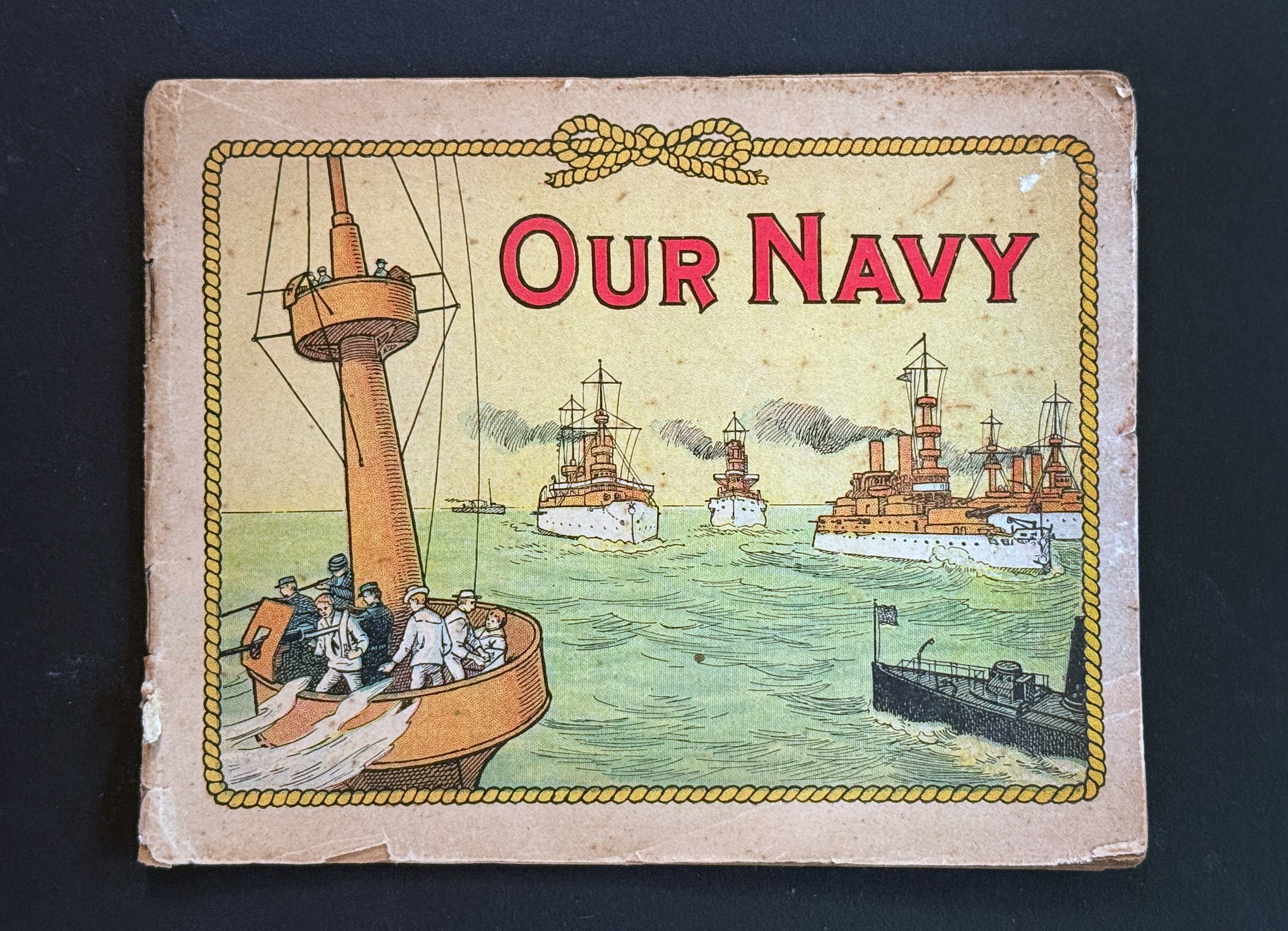 Image 1 of 6
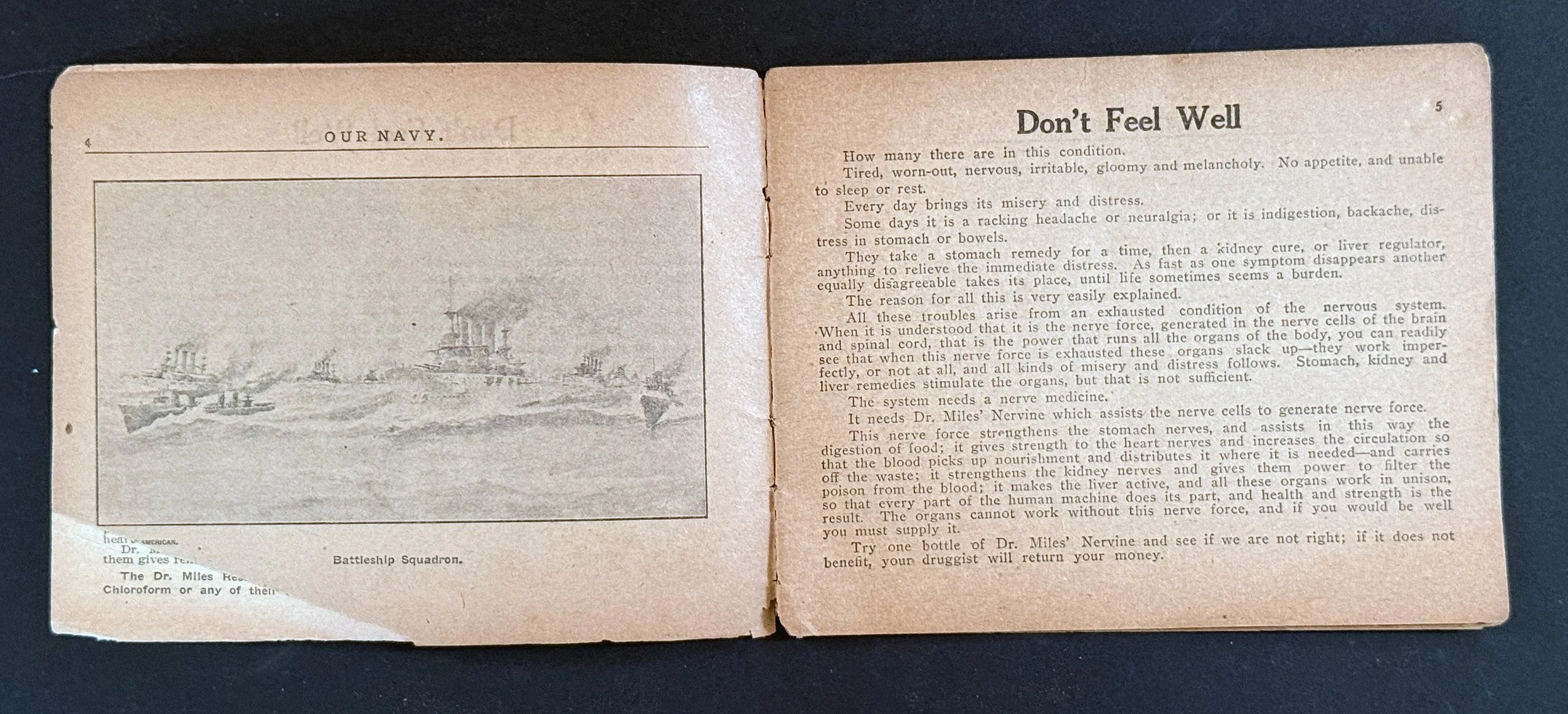 Image 2 of 6
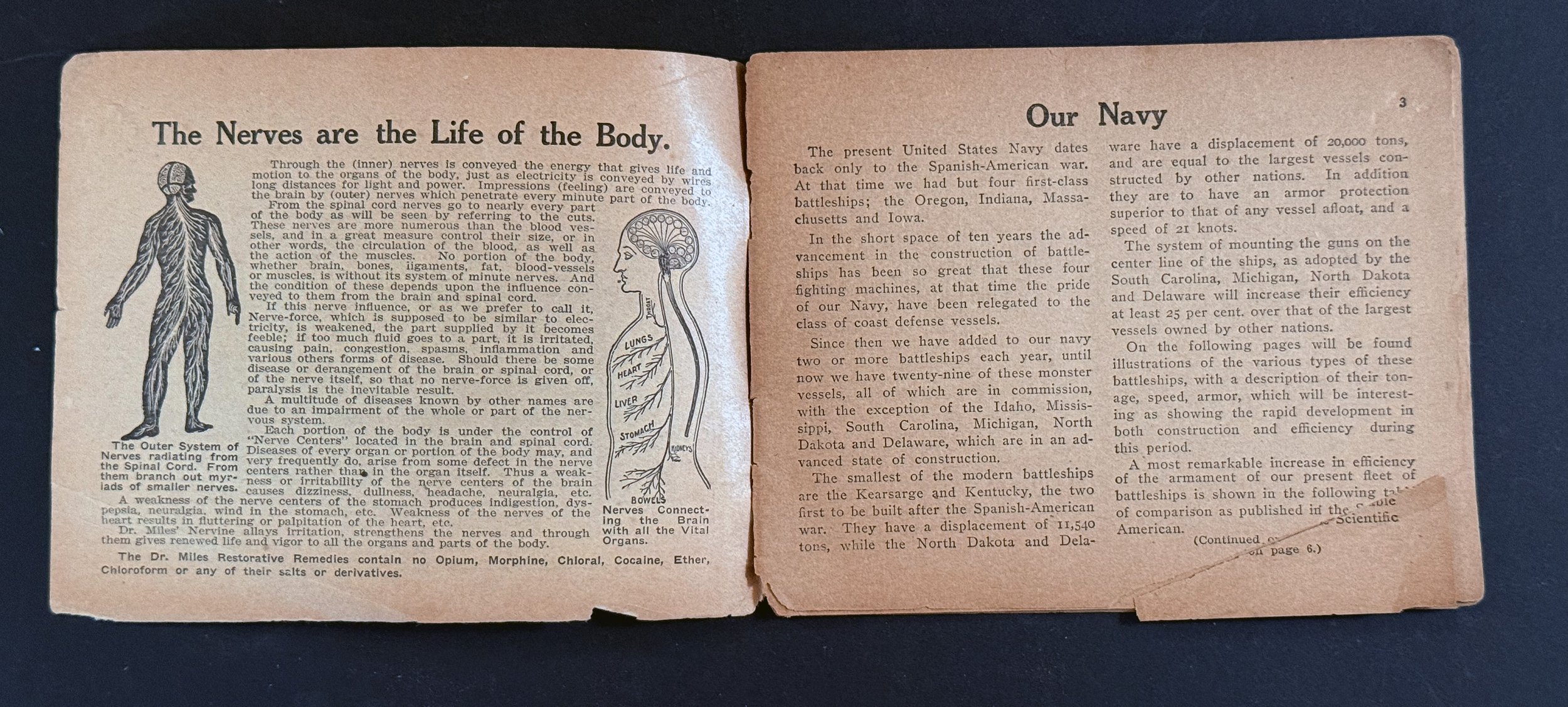 Image 3 of 6
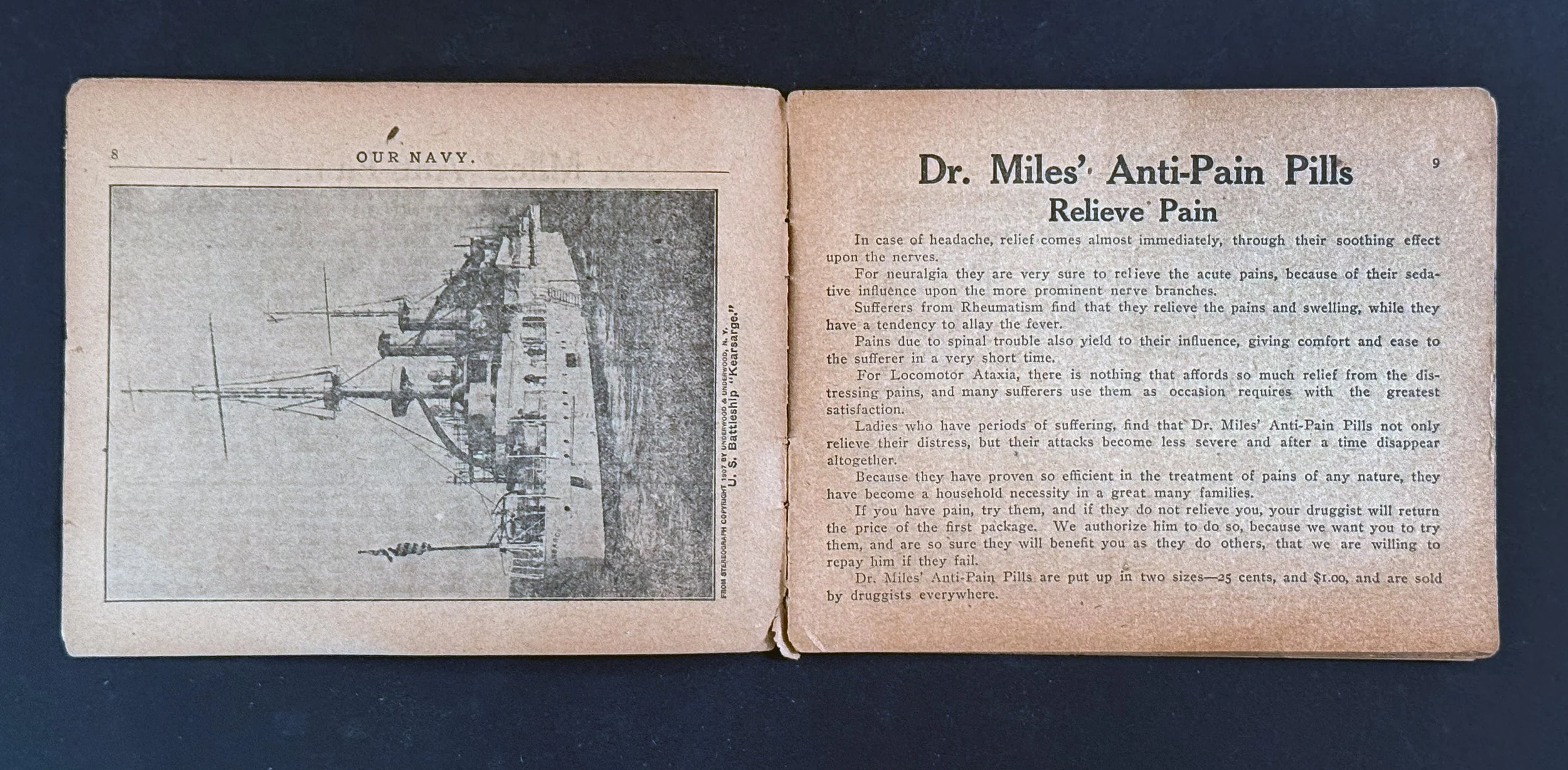 Image 4 of 6
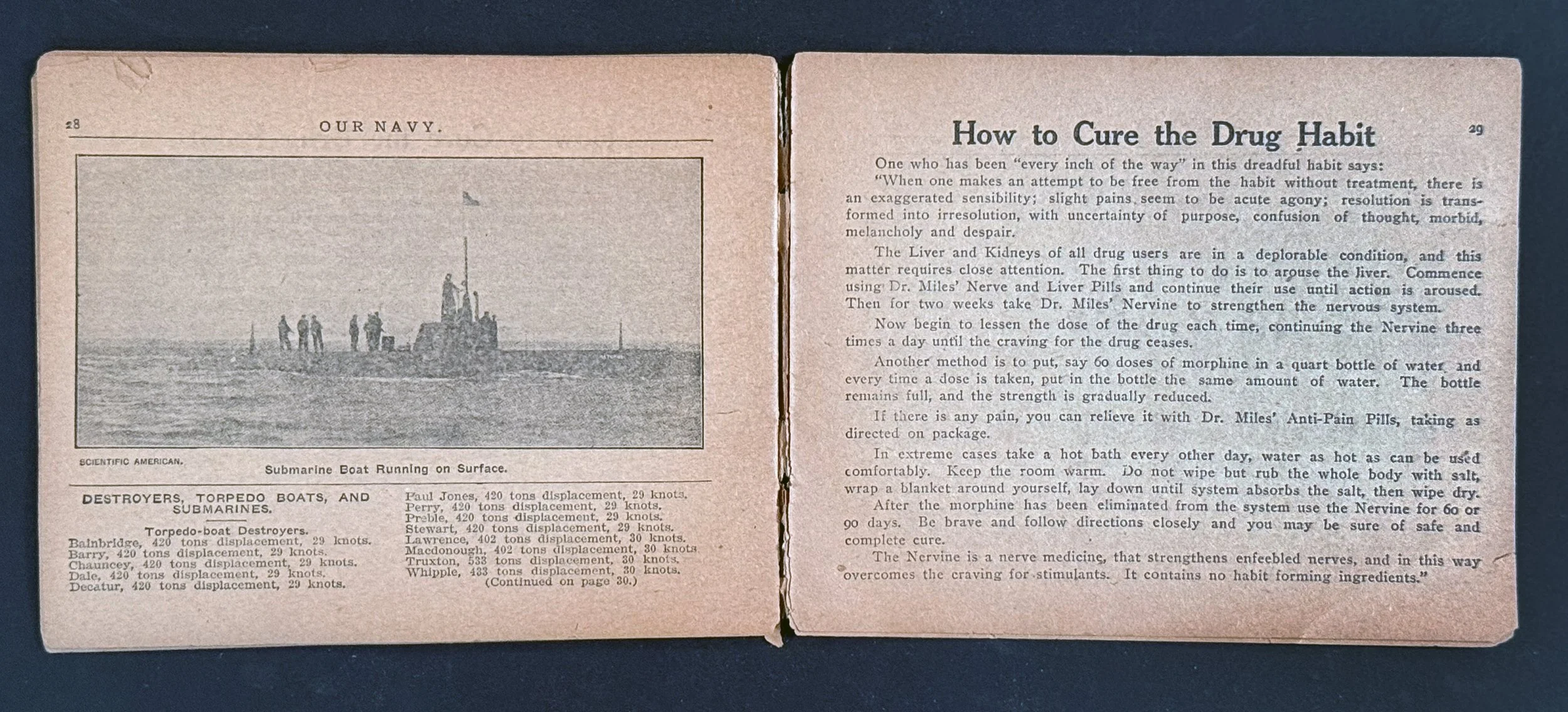 Image 5 of 6
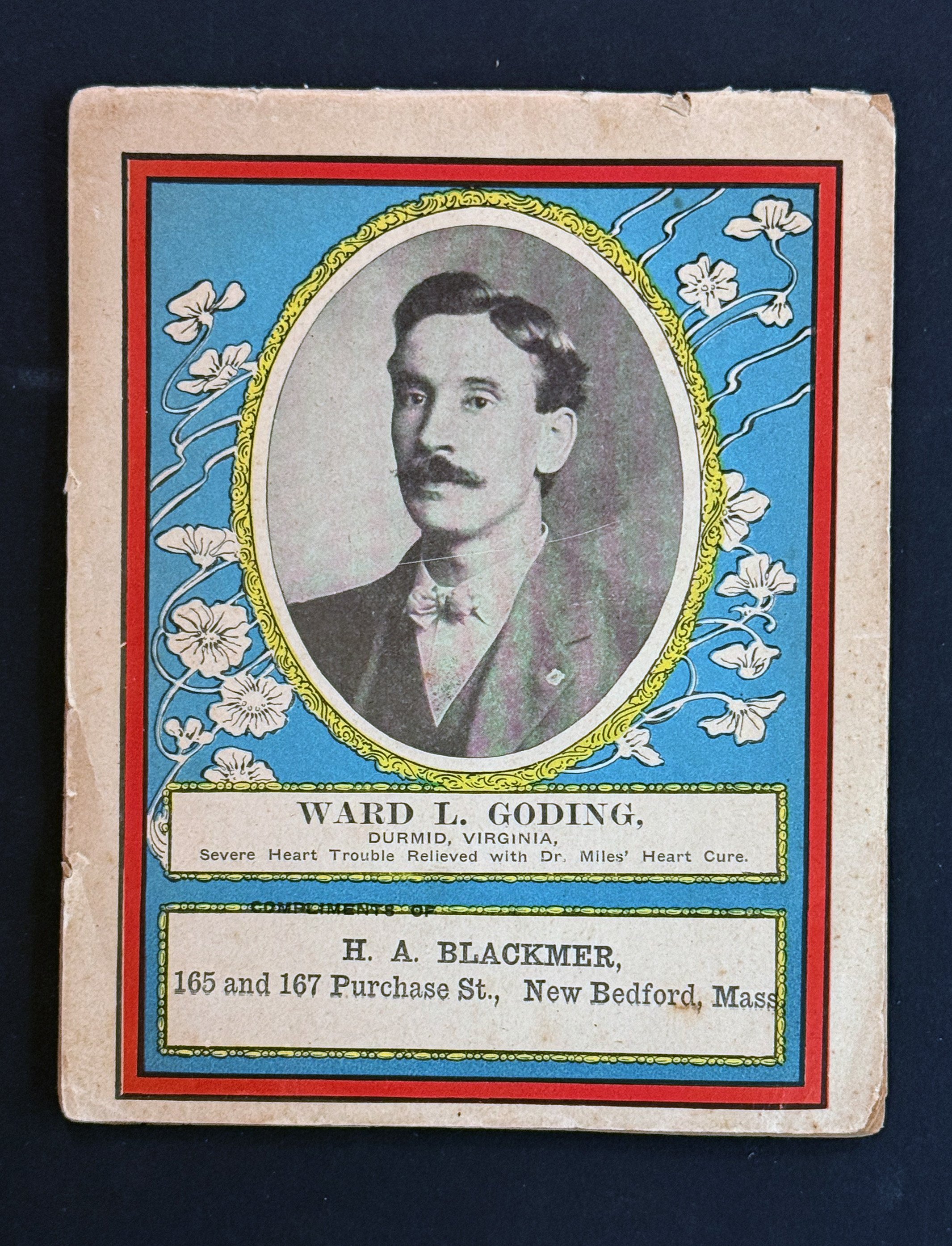 Image 6 of 6