 Image 1 of 3
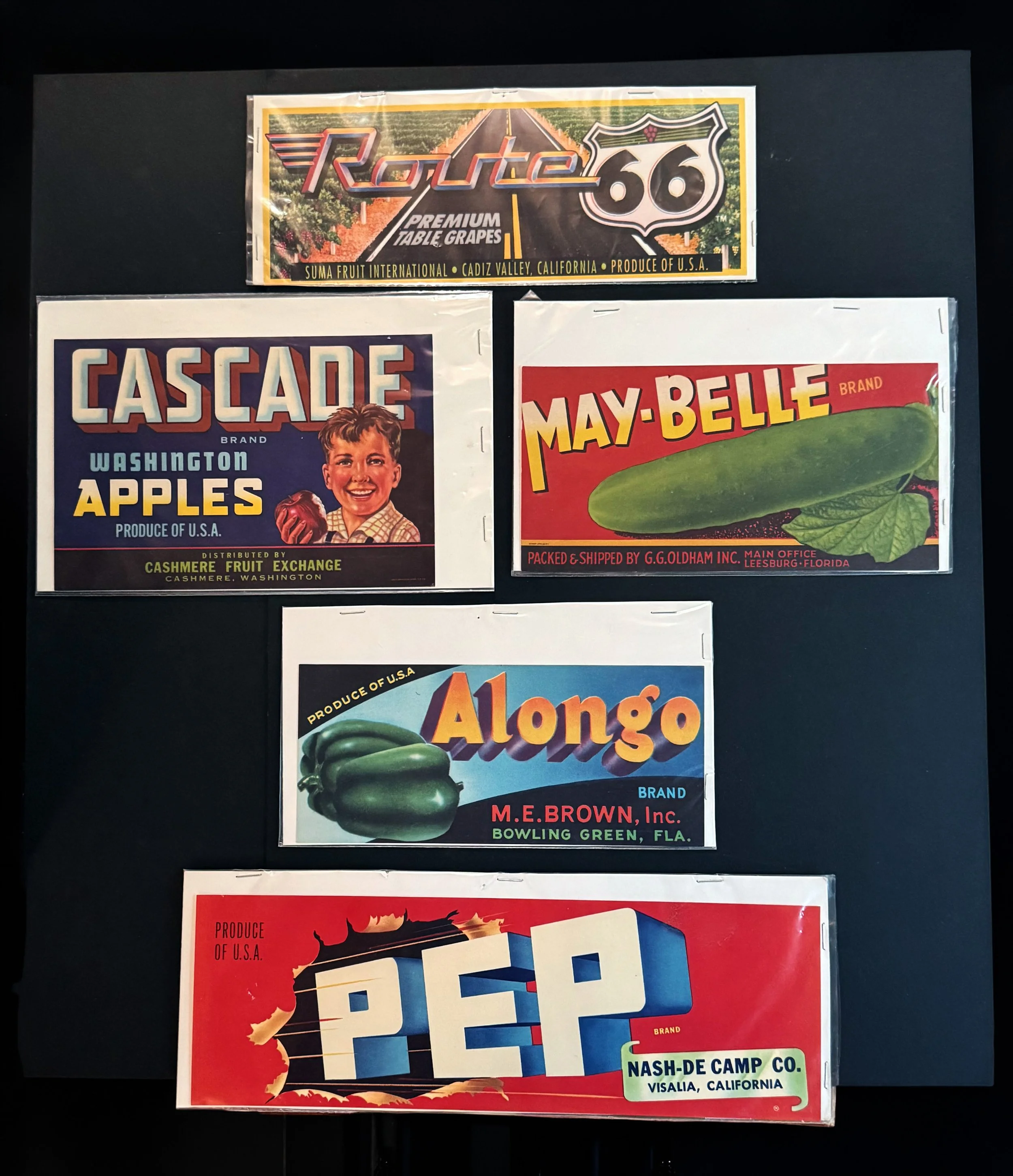 Image 2 of 3
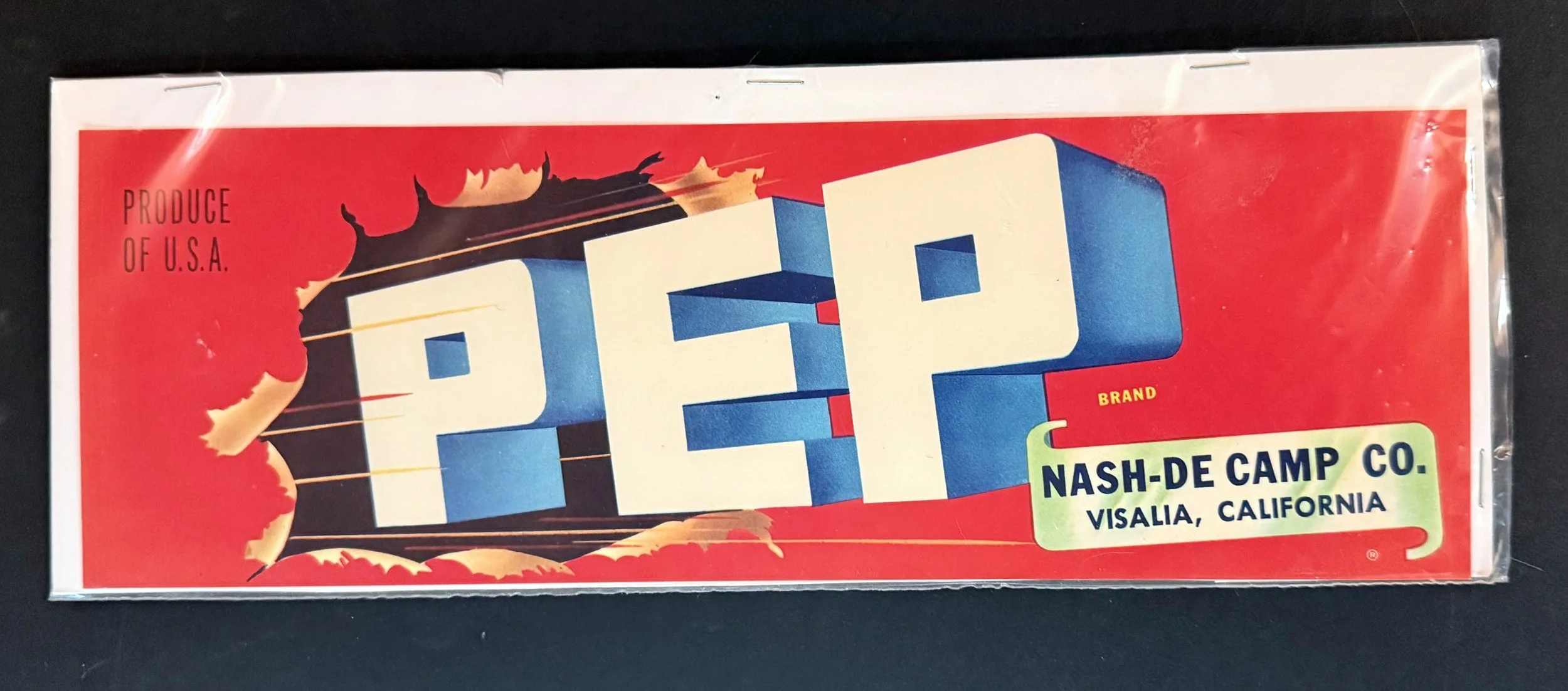 Image 3 of 3
Between the 1880s and the 1950s, American produce crates were rolling billboards. Each wooden box of apples, peppers, cucumbers, or grapes carried a label glued to one end identifying the grower, the brand, and — most importantly — the visual personality of the shipment. The labels were how a Washington apple packer competed with a Florida cucumber operation for the eye of a grocer four states away. They were printed by regional lithographers using stone and metal-plate processes, and the best of them are now recognized as one of America's great folk-art forms: small-format commercial poster art from the era when graphic design was selling fruit out of railcars.
This is a curated set of five unused stock labels — four authentic mid-century pieces and one later revival in the same tradition — representing both coasts of American agriculture:
Cascade Brand Washington Apples — Cashmere Fruit Exchange, Cashmere, Washington. Mid-century. The classic smiling-boy-with-an-apple iconography in deep navy and gold; pure Pacific Northwest apple-country optimism.
May-Belle Brand — G.G. Oldham Inc., Leesburg, Florida. Mid-century. A single oversized cucumber against a dramatic red ground; quiet confidence in the produce itself.
Alongo Brand — M.E. Brown Inc., Bowling Green, Florida. Mid-century. Glossy green bell peppers on a deco-blue gradient with bold drop-shadow typography.
PEP Brand — Nash-De Camp Co., Visalia, California. Mid-century. Modernist sans-serif PEP letters bursting through torn paper in red, white, and blue — pure California optimism rendered as packaging.
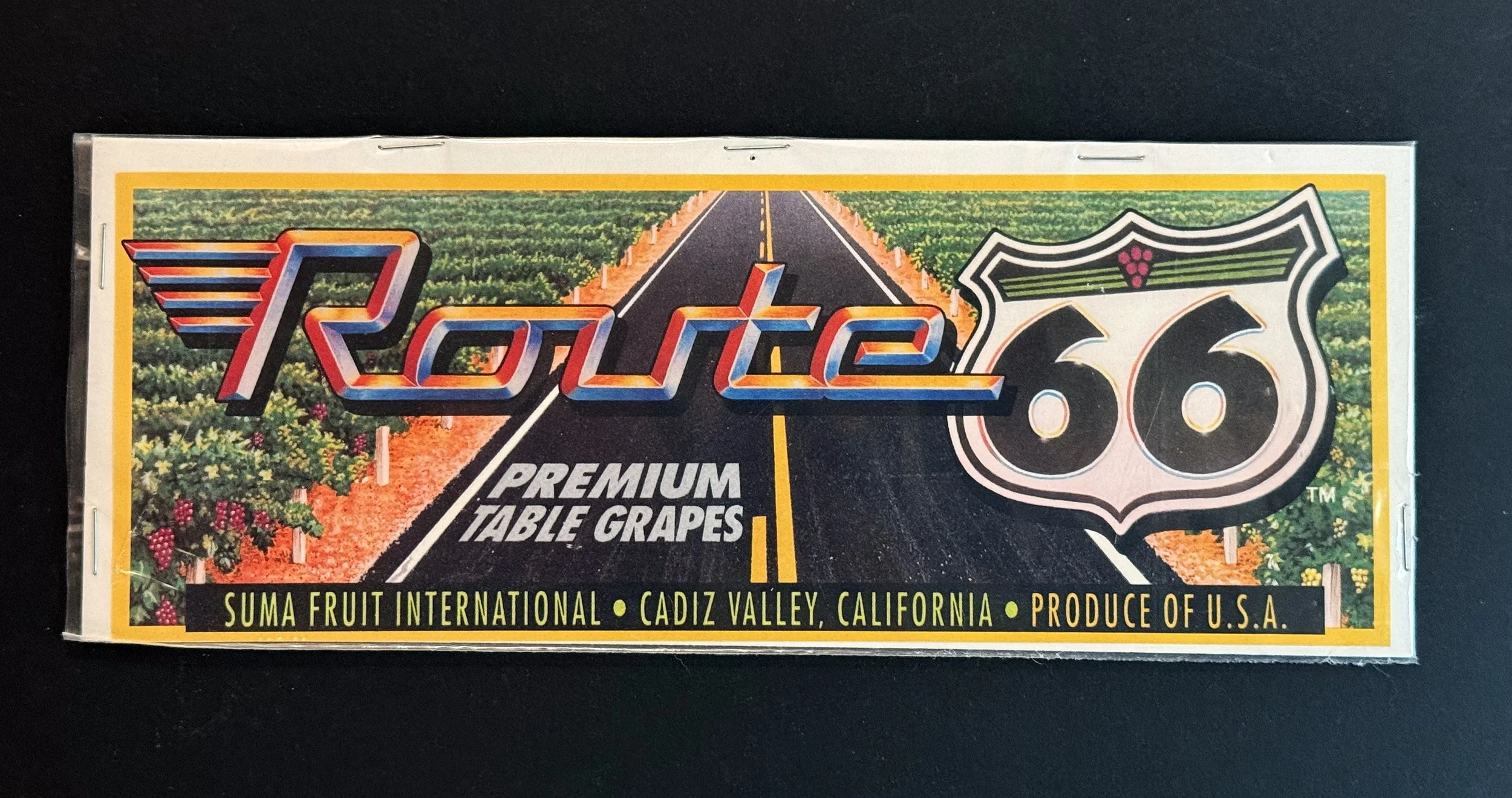
Route 66 Premium Table Grapes — Suma Fruit International, Cadiz Valley, California. Later revival design in the mid-century tradition; the road-trip Route 66 mythology applied to a contemporary table-grape brand.
All five are in unused stock condition, individually sleeved in clear protective bags. Suitable for framing as a five-piece typological wall display, collecting in albums, or splitting across a kitchen, mudroom, and study. The horizontal labels are approximately 11 x 4 inches; the vertical labels approximately 9 x 7 inches.
Offered as a set. A small but cohesive cross-section of American commercial graphic design at its most exuberant — and a reminder that for a century, a wooden crate was a canvas.
Between the 1880s and the 1950s, American produce crates were rolling billboards. Each wooden box of apples, peppers, cucumbers, or grapes carried a label glued to one end identifying the grower, the brand, and — most importantly — the visual personality of the shipment. The labels were how a Washington apple packer competed with a Florida cucumber operation for the eye of a grocer four states away. They were printed by regional lithographers using stone and metal-plate processes, and the best of them are now recognized as one of America's great folk-art forms: small-format commercial poster art from the era when graphic design was selling fruit out of railcars.
This is a curated set of five unused stock labels — four authentic mid-century pieces and one later revival in the same tradition — representing both coasts of American agriculture:
Cascade Brand Washington Apples — Cashmere Fruit Exchange, Cashmere, Washington. Mid-century. The classic smiling-boy-with-an-apple iconography in deep navy and gold; pure Pacific Northwest apple-country optimism.
May-Belle Brand — G.G. Oldham Inc., Leesburg, Florida. Mid-century. A single oversized cucumber against a dramatic red ground; quiet confidence in the produce itself.
Alongo Brand — M.E. Brown Inc., Bowling Green, Florida. Mid-century. Glossy green bell peppers on a deco-blue gradient with bold drop-shadow typography.
PEP Brand — Nash-De Camp Co., Visalia, California. Mid-century. Modernist sans-serif PEP letters bursting through torn paper in red, white, and blue — pure California optimism rendered as packaging.
Route 66 Premium Table Grapes — Suma Fruit International, Cadiz Valley, California. Later revival design in the mid-century tradition; the road-trip Route 66 mythology applied to a contemporary table-grape brand.
All five are in unused stock condition, individually sleeved in clear protective bags. Suitable for framing as a five-piece typological wall display, collecting in albums, or splitting across a kitchen, mudroom, and study. The horizontal labels are approximately 11 x 4 inches; the vertical labels approximately 9 x 7 inches.
Offered as a set. A small but cohesive cross-section of American commercial graphic design at its most exuberant — and a reminder that for a century, a wooden crate was a canvas.