Bob Wills died in 1975. This poster was signed twenty-three years later, in the West Texas town he called home as a young man, by the men who kept his music alive after he was gone.
Every year on the last Saturday of April, Turkey, Texas — population a few hundred — fills with ten thousand people, miles of RVs parked on lawns and roadsides, and the sound of fiddles carried on the Panhandle wind. Bob Wills Day has run since the early 1970s, and for decades the surviving Texas Playboys came back to play it.
On April 25, 1998, a music historian drove down from Cambridge, Massachusetts in an aqua Honda Civic, pitched a tent in a stranger's yard because the one hotel in town had no vacancy, and spent the weekend among the men who had played beside Wills. He came home with this. The signatures are a roster of Western swing itself. Leon Rausch, the voice of the Texas Playboys, who sang on Wills's final recordings and returned to Turkey every year of his life. Bobby Koefer on steel guitar. Benny Garcia. Tommy Perkins on drums. Clarence Cagle, who signed his name and then wrote "Piano" underneath it, in case you didn't know. Johnny Cuviello, who signed himself "Texas Drummer Boy" — the billing he carried in the 1940s — and dated it. And Curly Lewis, fiddler, who wrote a note of thanks to the man who'd driven two thousand miles to meet him. Two of them wrote "To Tom." That's the collector. He still talks about the trip.
This is a vintage-design promotional poster, not a wartime original, and it does not bear Bob Wills's signature — he was two decades gone when these were gathered. What it is instead is rarer in its way: a dated, documented artifact of a specific afternoon when Texas Playboys veterans sat in their seventies and eighties in a small Texas town and put their names to paper for a stranger who loved the music.
It ships framed, accompanied by a signed Statement of Provenance recording the collector's firsthand account — written by Tom Shaker, Ed.D., a retired professor of communications, two-decade radio host, and co-author of two books on American music history.
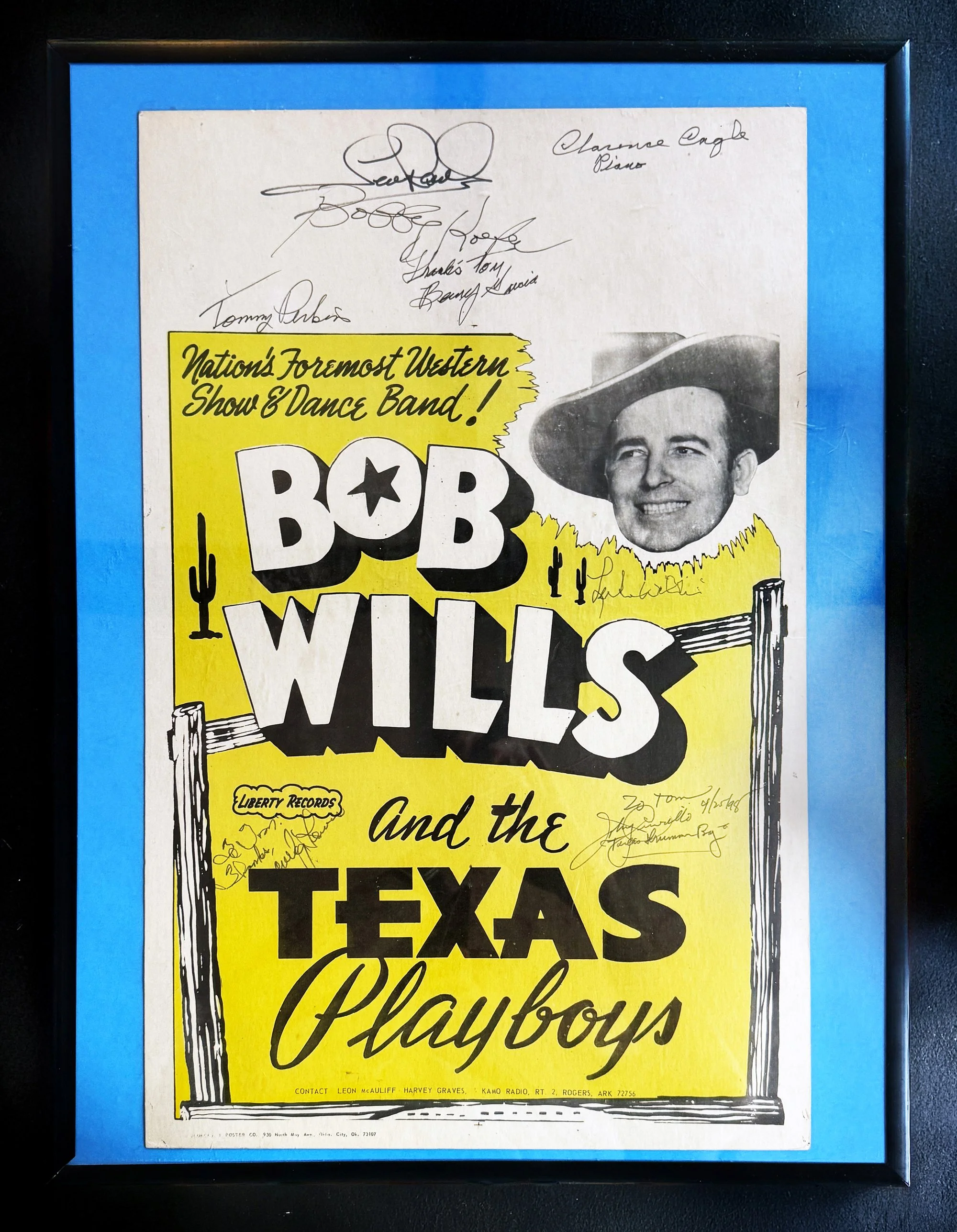 Image 1 of 9
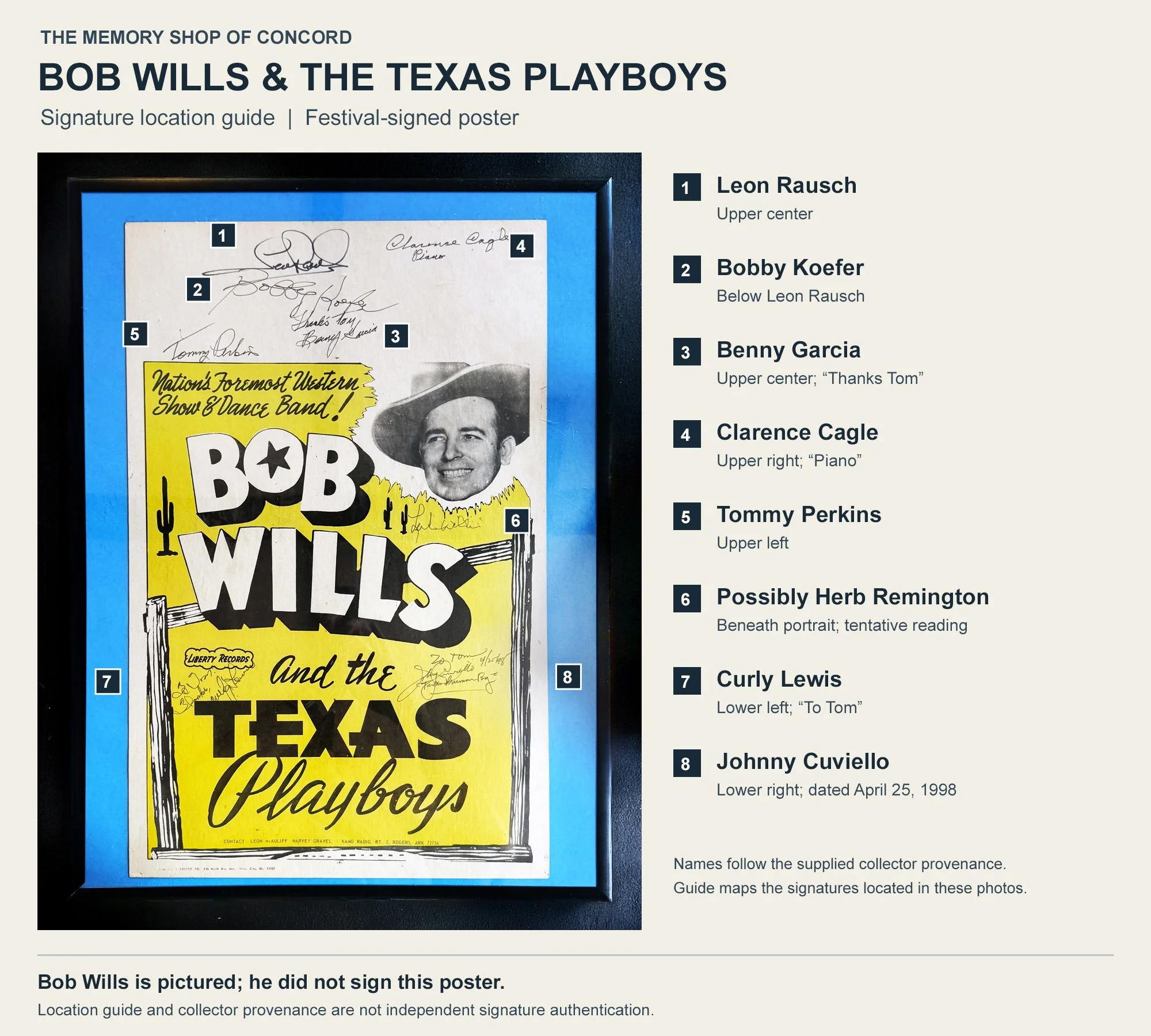 Image 2 of 9
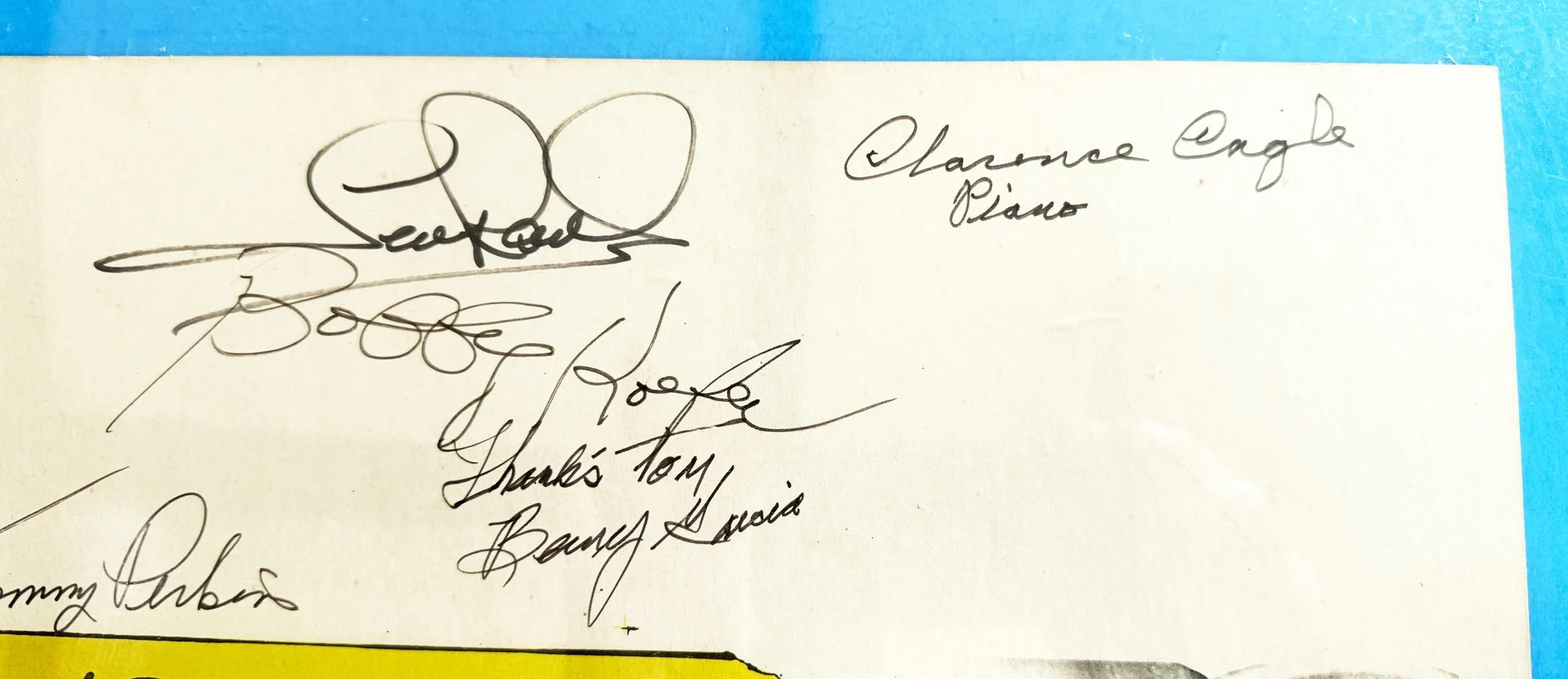 Image 3 of 9
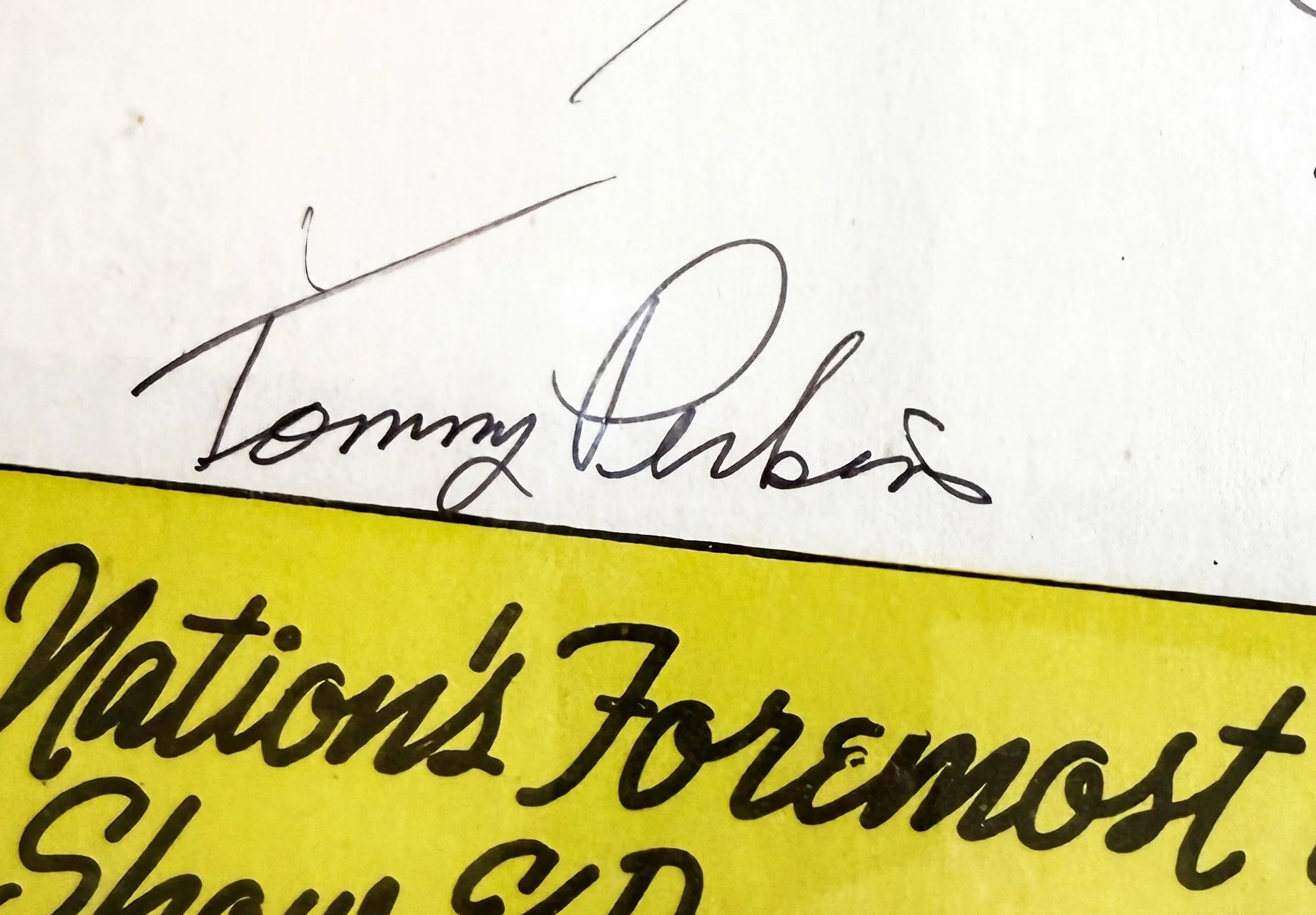 Image 4 of 9
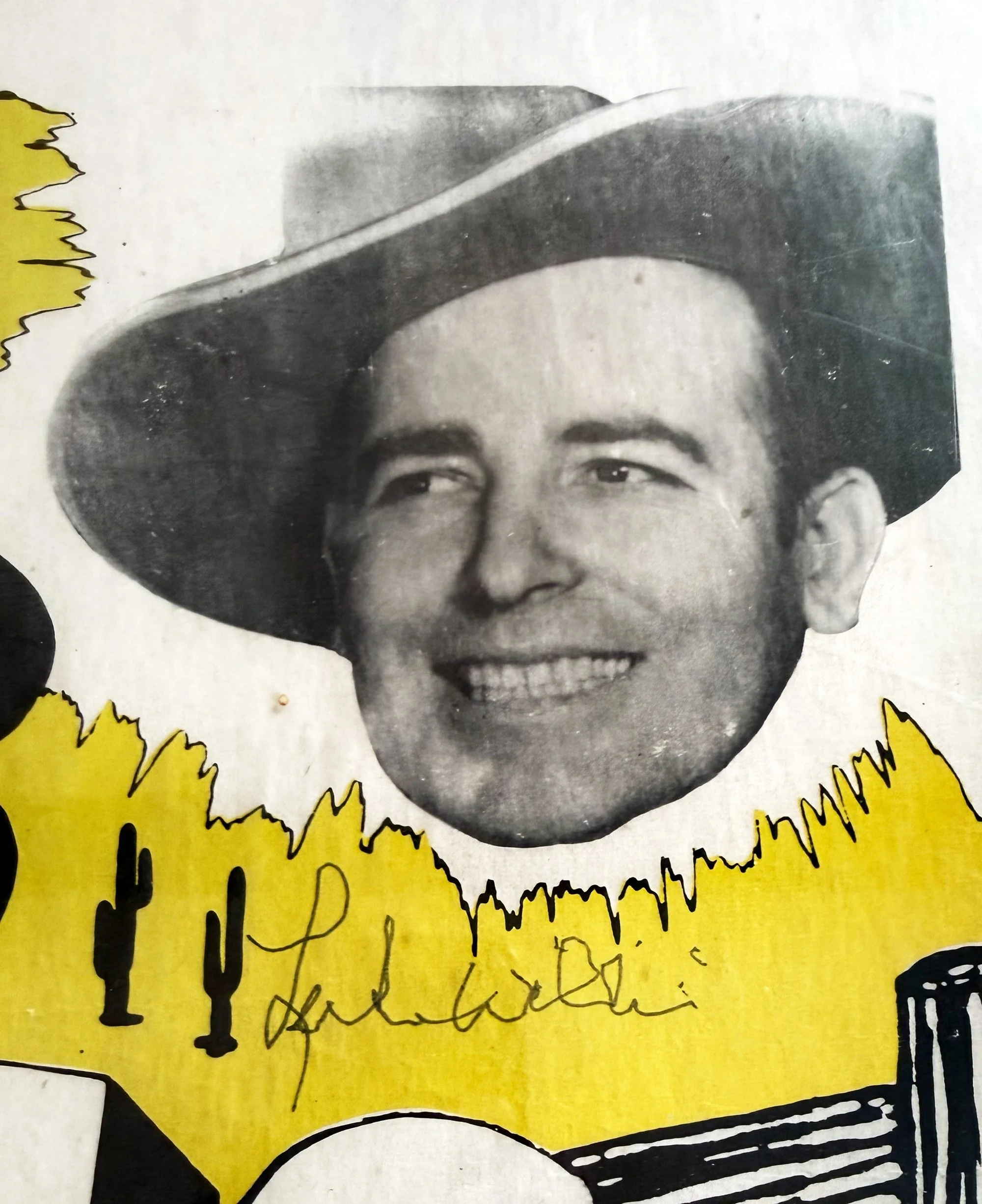 Image 5 of 9
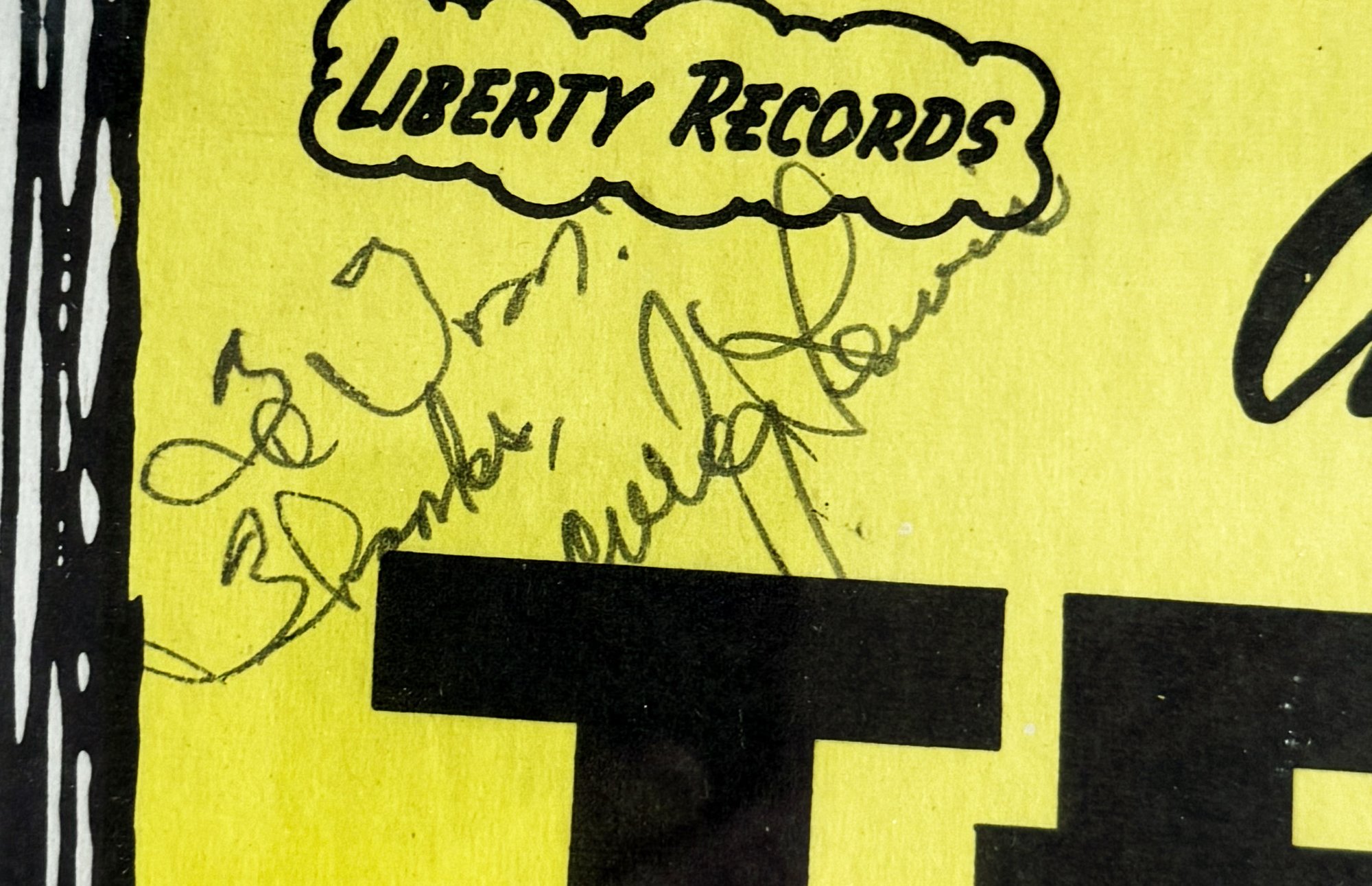 Image 6 of 9
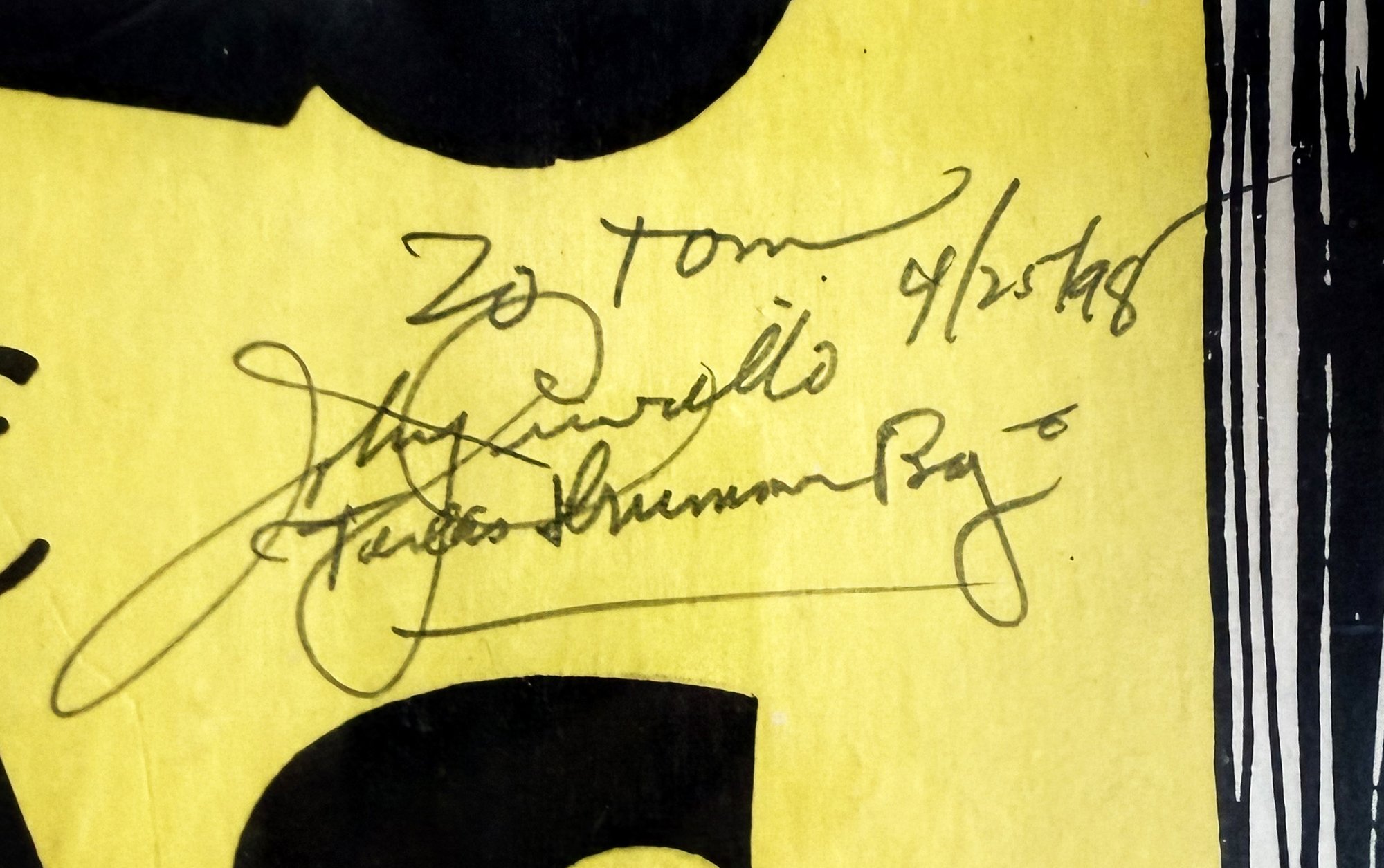 Image 7 of 9
 Image 8 of 9
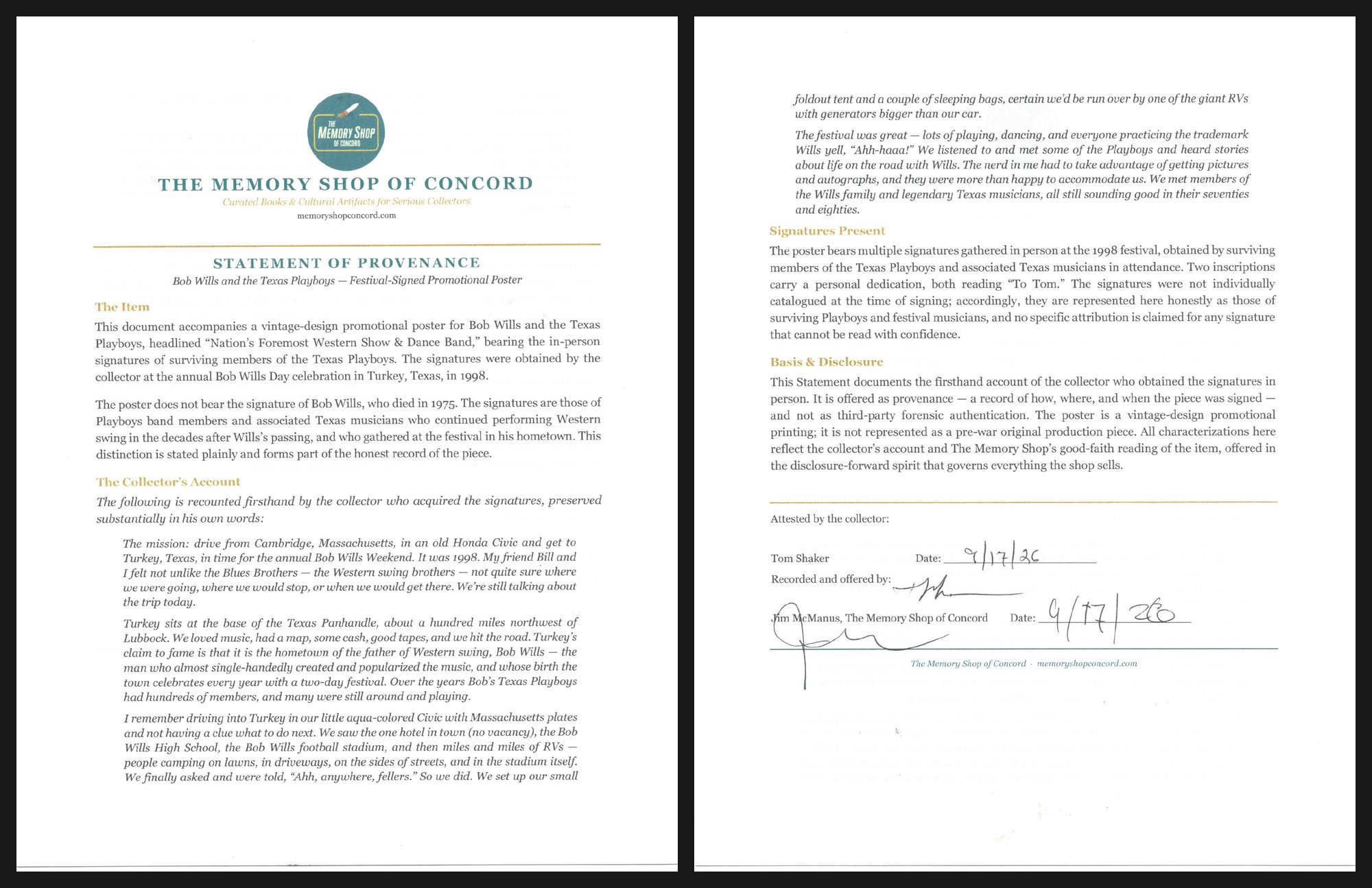 Image 9 of 9