Lunch boxes survive. Thermoses do not.
The glass vacuum liner inside a 1966 Aladdin thermos is about as thick as a Christmas ornament, and one hard set-down on a cafeteria table finished most of them within a few years of purchase. Shake almost any surviving example and you’ll hear the answer rattling around inside. This one is silent. The liner is intact, unbroken, and photographed from above through the neck so you can see the mirrored glass yourself, and the bottle still has its Lox-On No. 30 stopper and the correct original black cup. That is the scarce half of what’s being offered here, and it is why the two pieces are staying together.
The box itself is one of the defining objects of Batmania. The television series premiered in January 1966 and ran twice a week, an aggressive scheduling decision that turned a thirty-year-old comic book character into a national event inside of a month. By that fall Aladdin Industries of Nashville had this kit in stores.
What has aged strangely well is that Aladdin’s illustrator ignored the show entirely. There’s no Adam West here, no photographic likeness, no wink. The Batman on the front panel is the comic-book Batman — swinging in on a line, connecting with a hood beside the Batmobile while Robin comes up behind. The back is a rescue: Robin carrying a child out of a burning building, Batman reaching in for them both. It is played completely straight, which in 1966 was almost a contrarian position.
The engineering deserves a mention on its own. The main panels are deep-relief embossed, so the figures stand off the steel and you can feel them under your hand. The rim, which most manufacturers treated as trim, carries a continuous five-scene story around all four sides — Batcave laboratory, Batmobile, Hot-Line, the Joker and Riddler roped together, the Penguin at a lever with Robin sliding toward a furnace. Turn the thermos and there’s a second scene entirely: the Riddler crossing a tar-slicked street, the Joker upending the bucket behind him, the Penguin with his umbrella drawn like a sabre.
Two things are missing and you should know them before you decide. The box’s carrying handle is gone along with the brackets that held it — the four mounting slots are still there in the front panel, empty — and so is the wire retainer that holds the thermos in the lid. In collector terms this is a complete thermos in an incomplete box, and it is priced accordingly. Everything else is simply school wear: heavy scratching across the lid, rims worn to bare metal with surface rust, rust at the interior hinge. No dents, no punctures, no restoration.
Left exactly as it came to us, which is the only defensible thing to do with lithographed tin.
Lunch boxes survive. Thermoses do not.
The glass vacuum liner inside a 1966 Aladdin thermos is about as thick as a Christmas ornament, and one hard set-down on a cafeteria table finished most of them within a few years of purchase. Shake almost any surviving example and you’ll hear the answer rattling around inside. This one is silent. The liner is intact, unbroken, and photographed from above through the neck so you can see the mirrored glass yourself, and the bottle still has its Lox-On No. 30 stopper and the correct original black cup. That is the scarce half of what’s being offered here, and it is why the two pieces are staying together.
The box itself is one of the defining objects of Batmania. The television series premiered in January 1966 and ran twice a week, an aggressive scheduling decision that turned a thirty-year-old comic book character into a national event inside of a month. By that fall Aladdin Industries of Nashville had this kit in stores.
What has aged strangely well is that Aladdin’s illustrator ignored the show entirely. There’s no Adam West here, no photographic likeness, no wink. The Batman on the front panel is the comic-book Batman — swinging in on a line, connecting with a hood beside the Batmobile while Robin comes up behind. The back is a rescue: Robin carrying a child out of a burning building, Batman reaching in for them both. It is played completely straight, which in 1966 was almost a contrarian position.
The engineering deserves a mention on its own. The main panels are deep-relief embossed, so the figures stand off the steel and you can feel them under your hand. The rim, which most manufacturers treated as trim, carries a continuous five-scene story around all four sides — Batcave laboratory, Batmobile, Hot-Line, the Joker and Riddler roped together, the Penguin at a lever with Robin sliding toward a furnace. Turn the thermos and there’s a second scene entirely: the Riddler crossing a tar-slicked street, the Joker upending the bucket behind him, the Penguin with his umbrella drawn like a sabre.
Two things are missing and you should know them before you decide. The box’s carrying handle is gone along with the brackets that held it — the four mounting slots are still there in the front panel, empty — and so is the wire retainer that holds the thermos in the lid. In collector terms this is a complete thermos in an incomplete box, and it is priced accordingly. Everything else is simply school wear: heavy scratching across the lid, rims worn to bare metal with surface rust, rust at the interior hinge. No dents, no punctures, no restoration.
Left exactly as it came to us, which is the only defensible thing to do with lithographed tin.
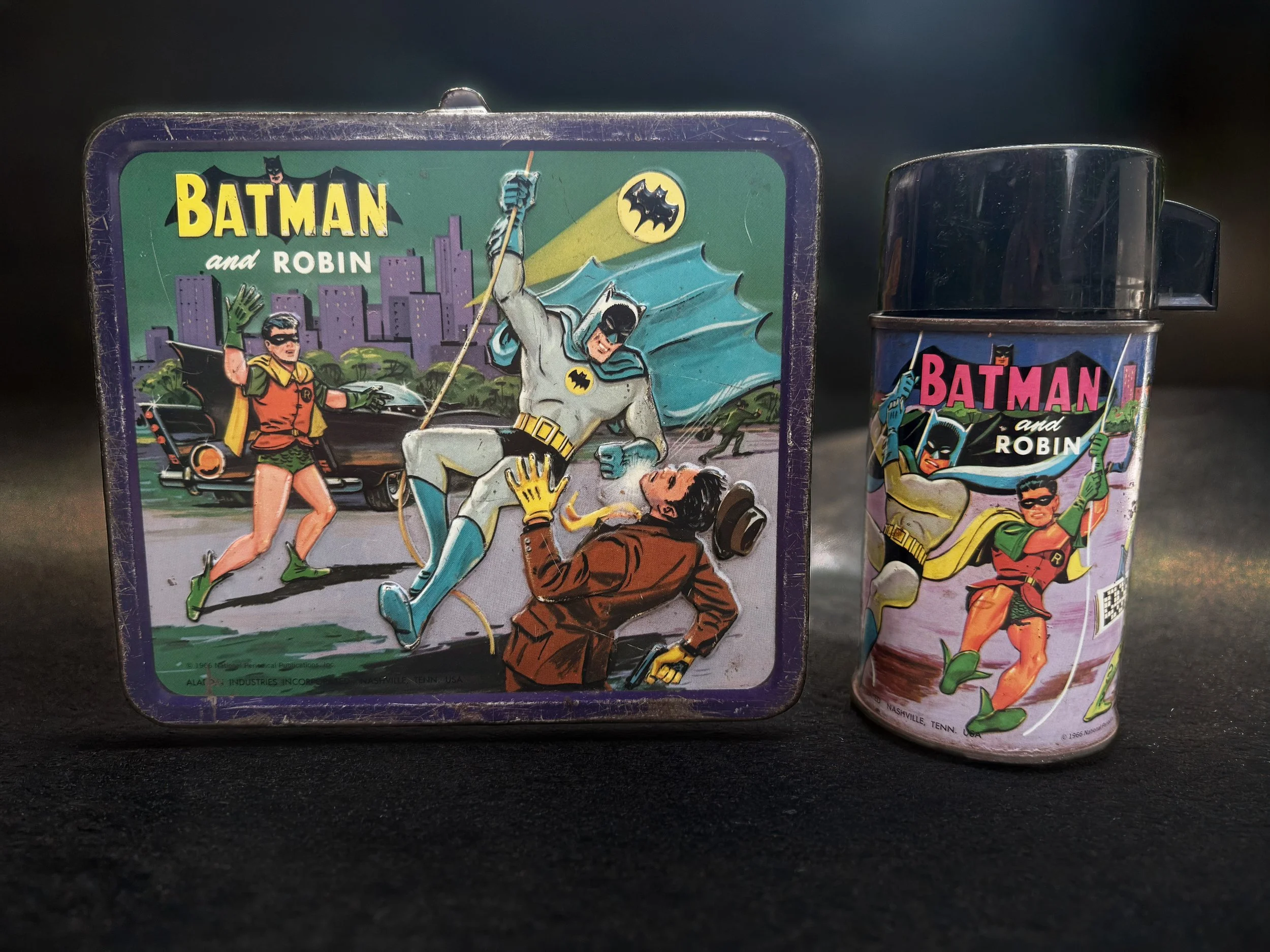 Image 1 of 16
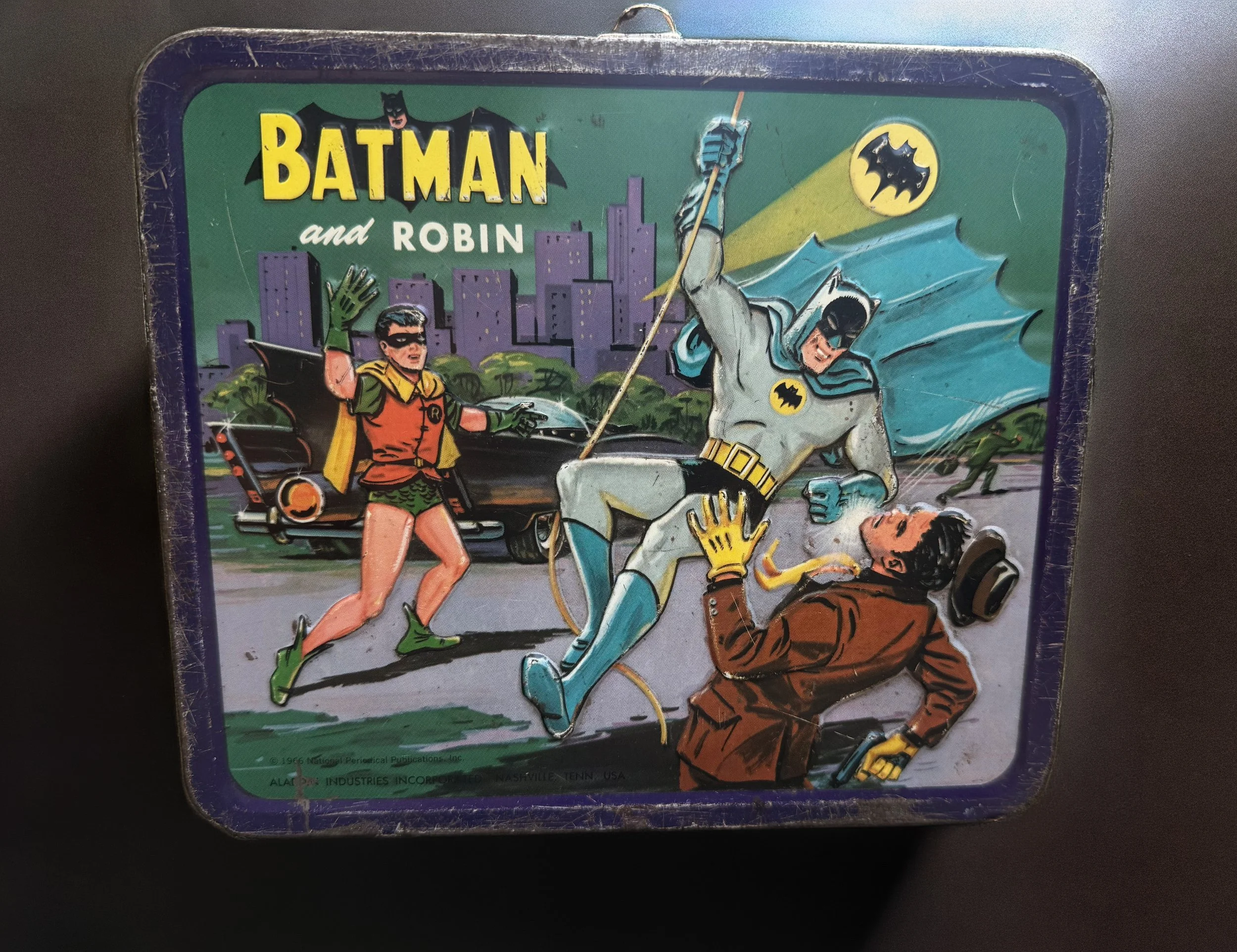 Image 2 of 16
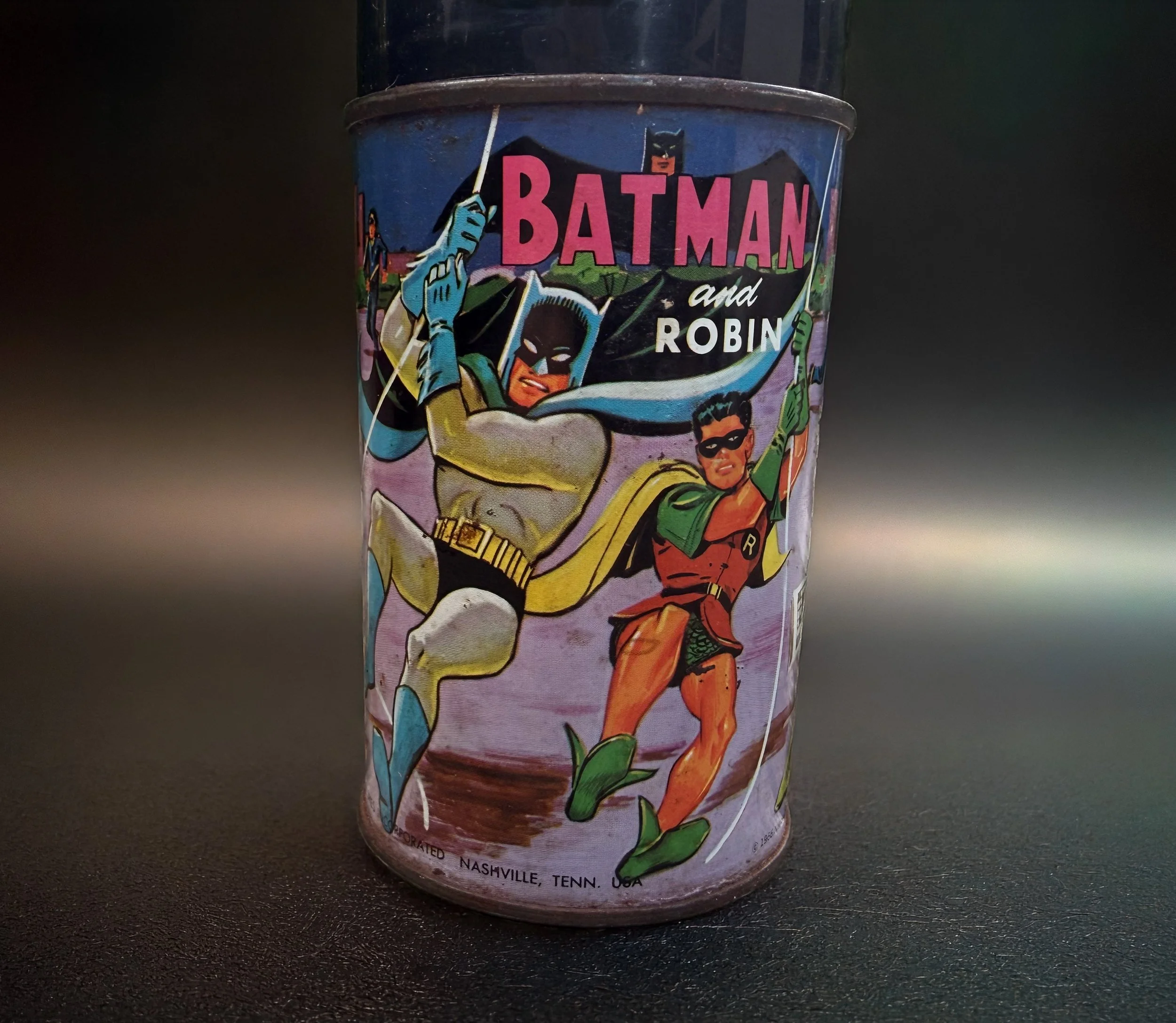 Image 3 of 16
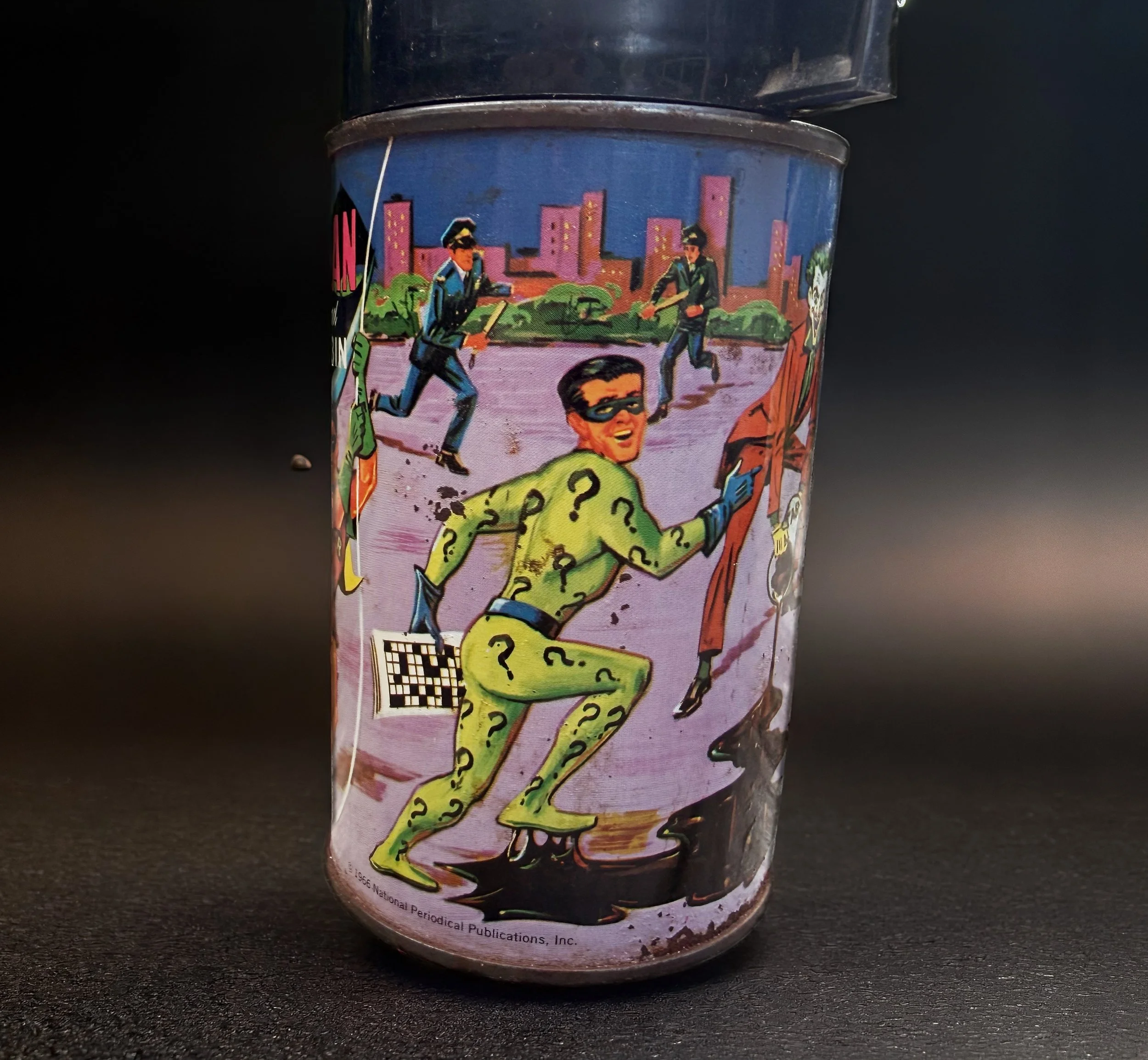 Image 4 of 16
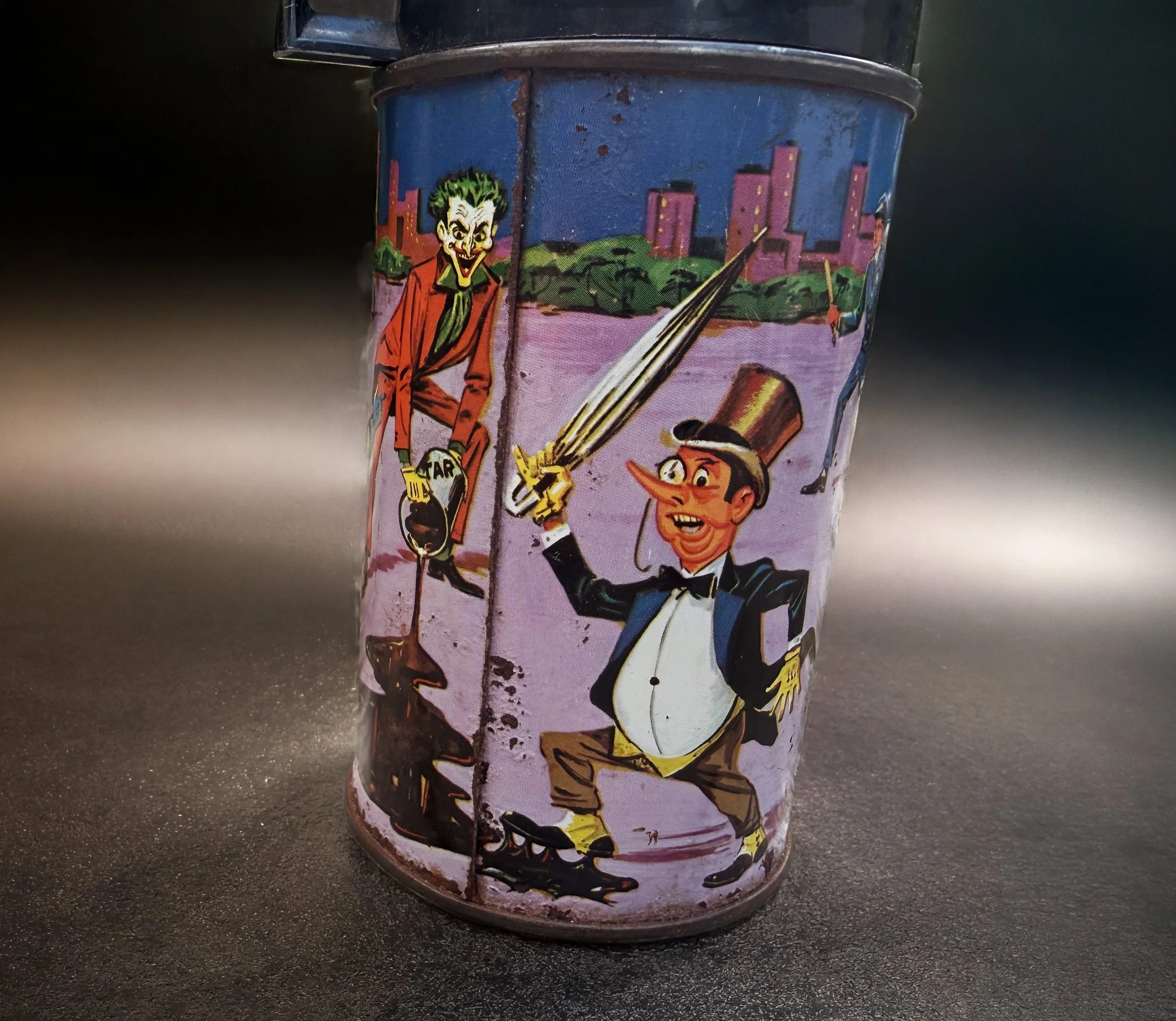 Image 5 of 16
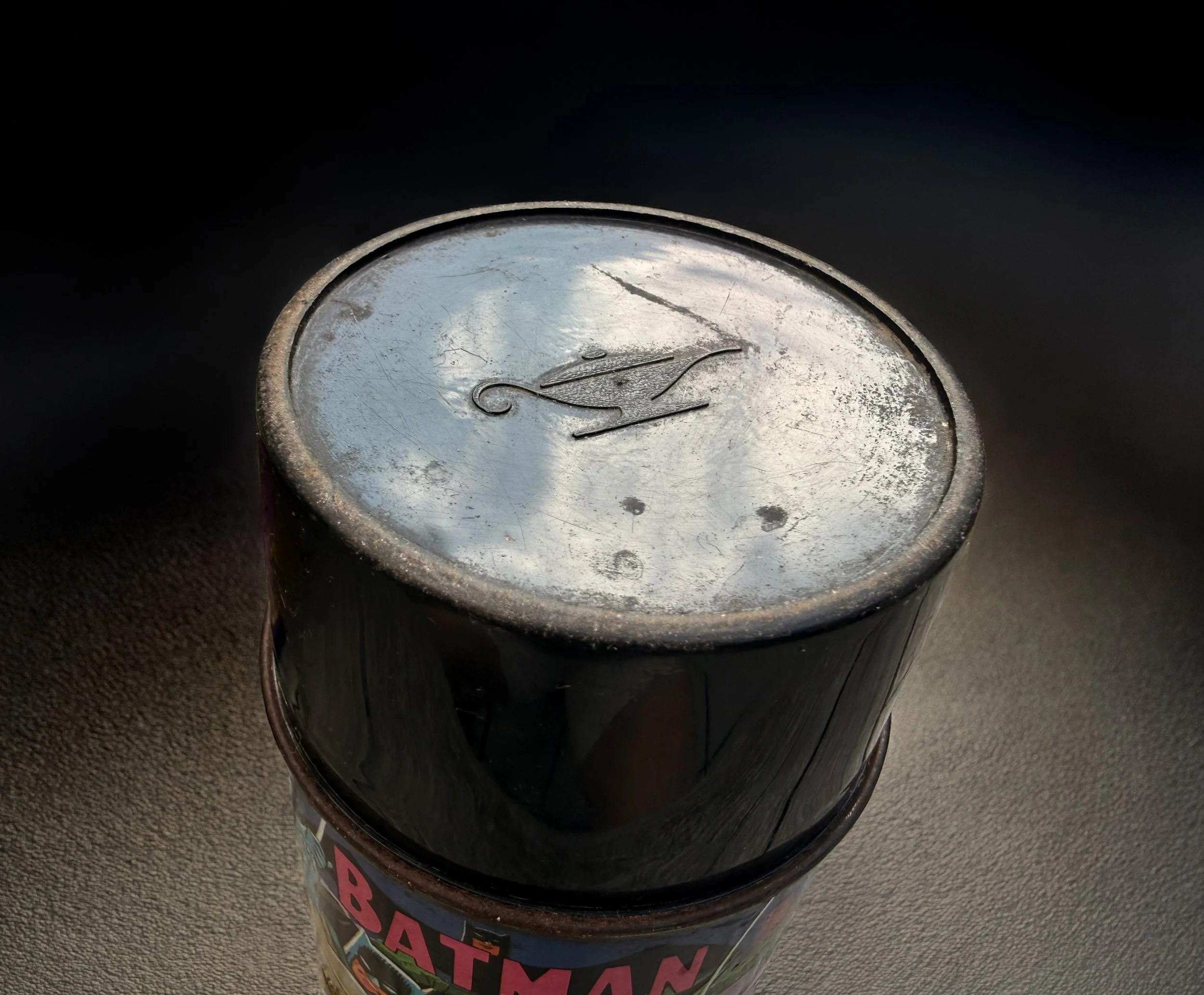 Image 6 of 16
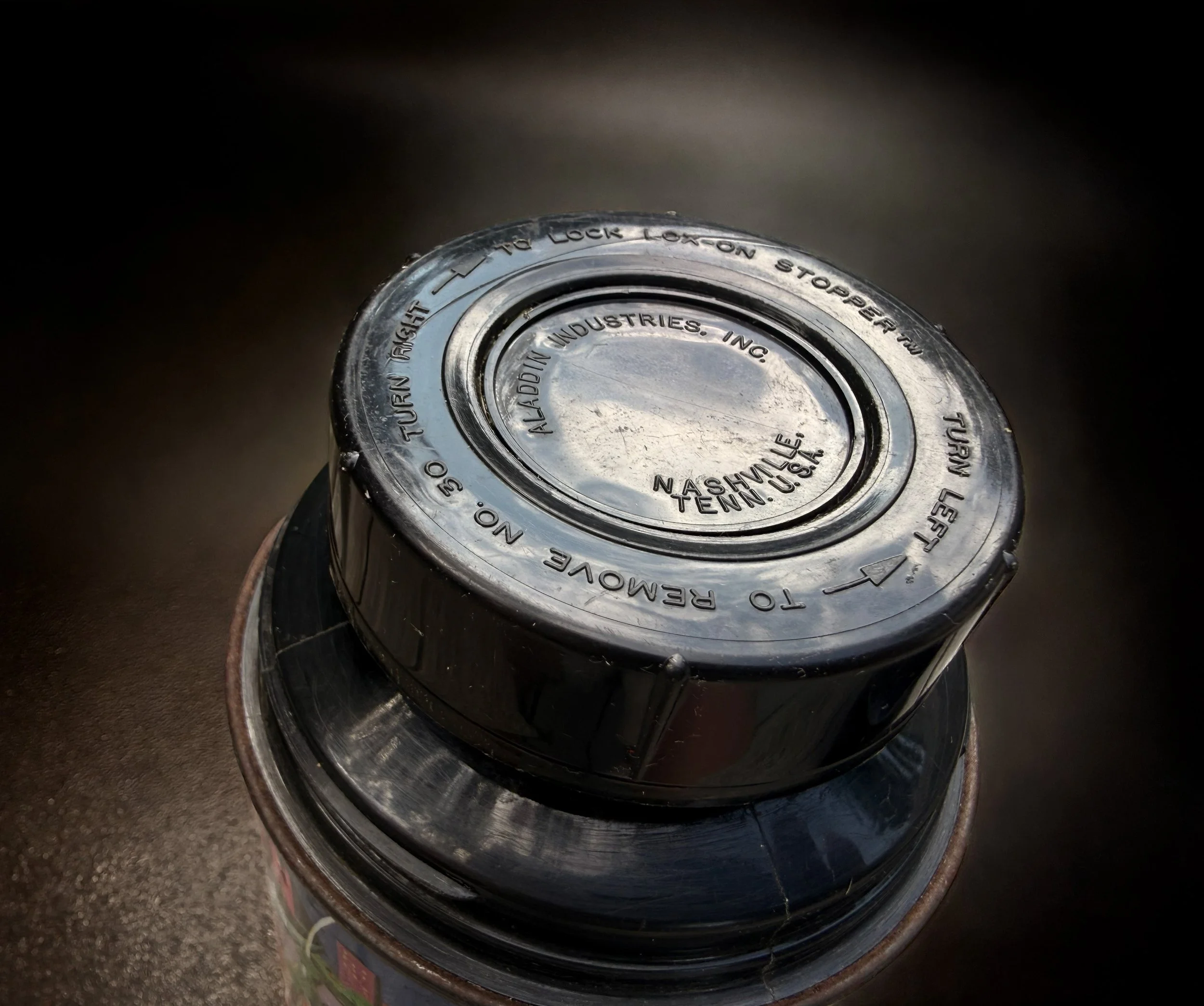 Image 7 of 16
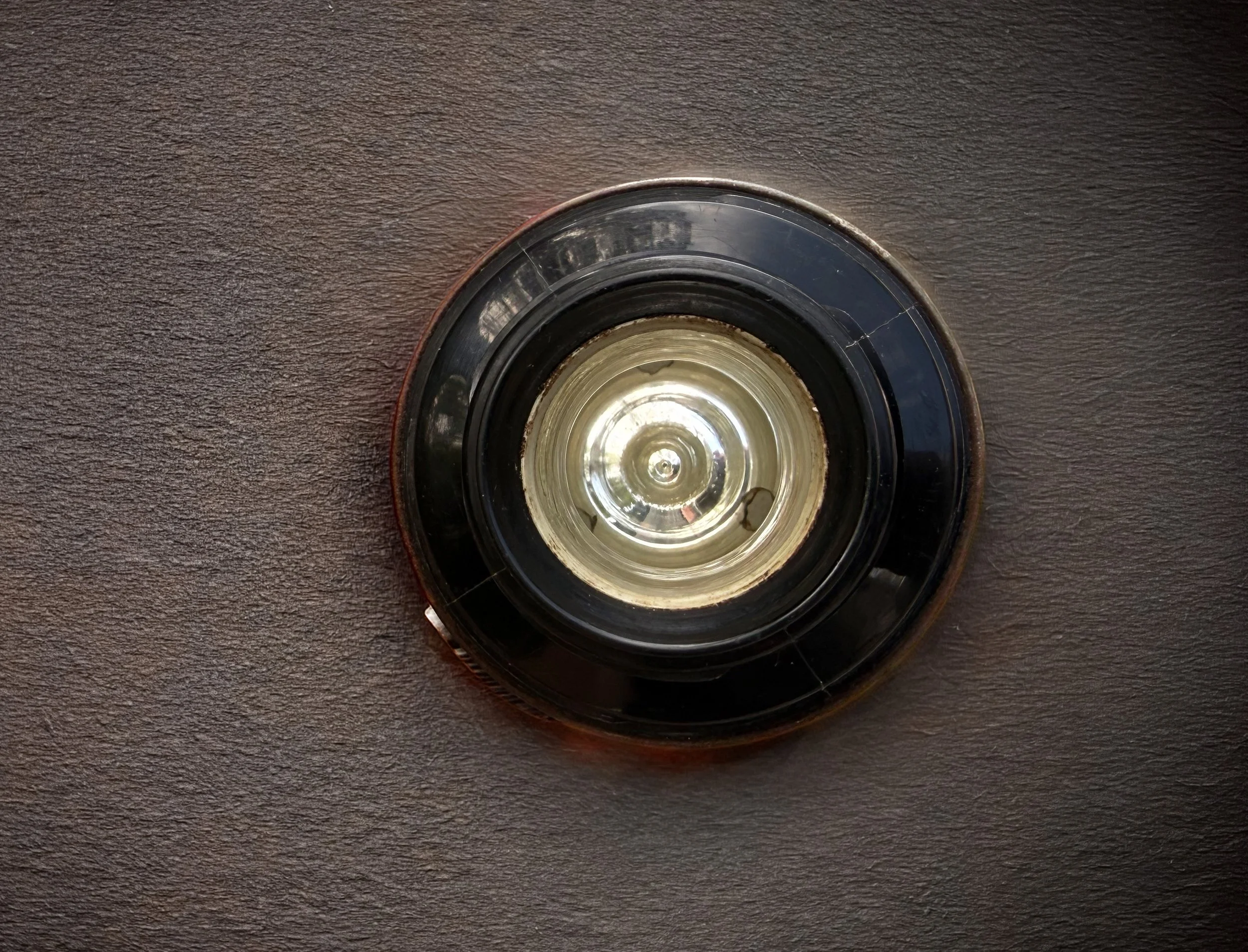 Image 8 of 16
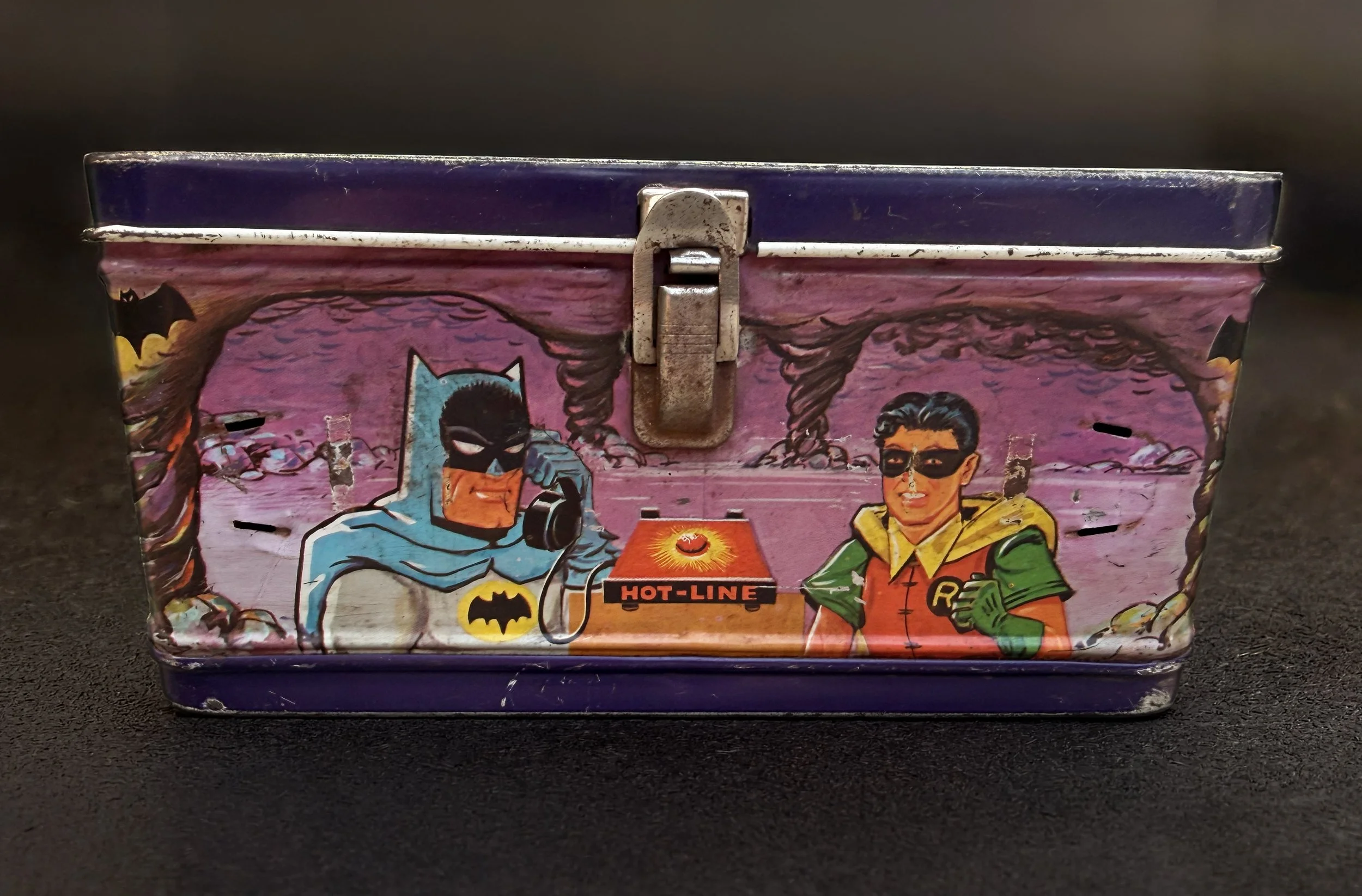 Image 9 of 16
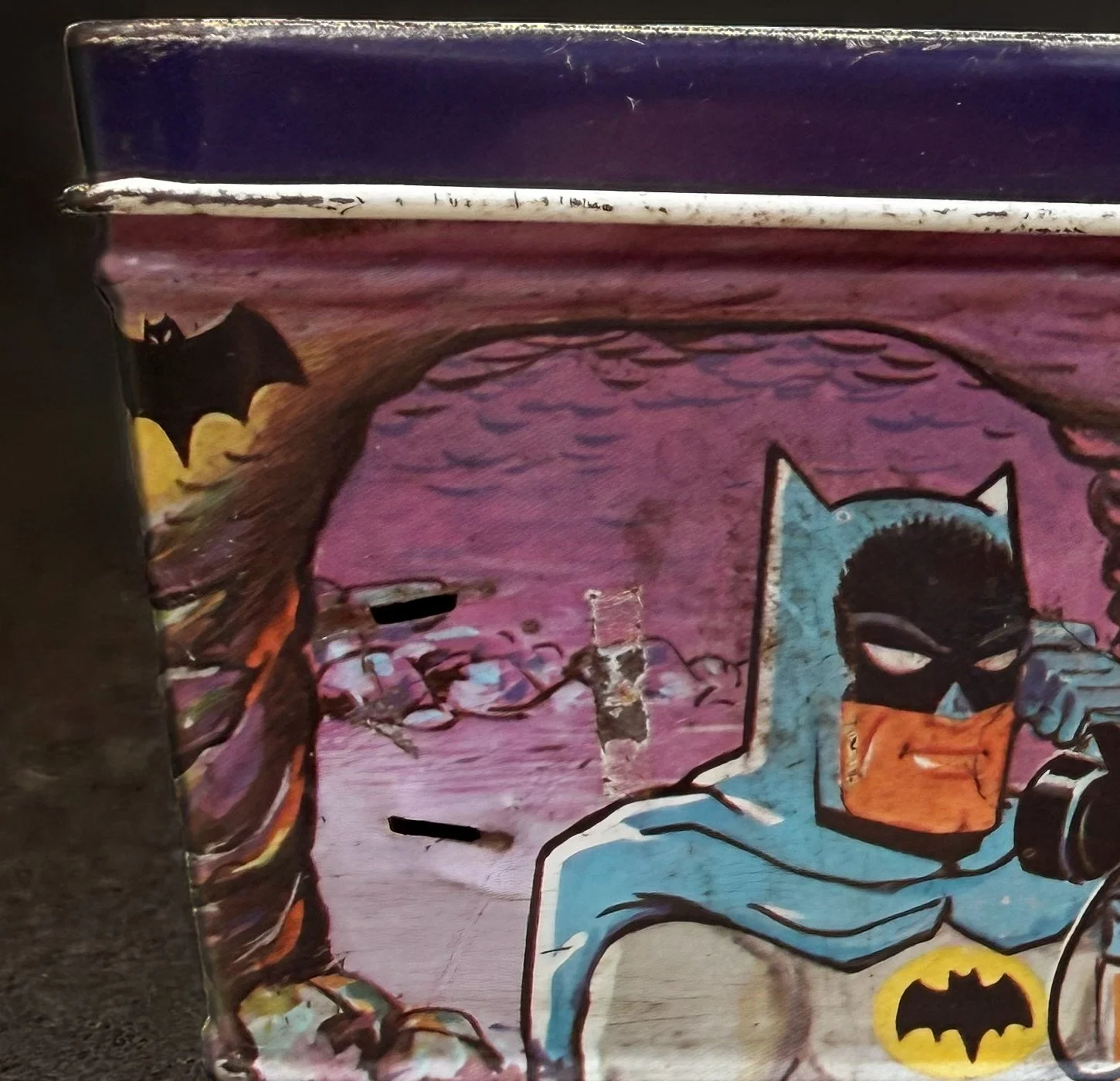 Image 10 of 16
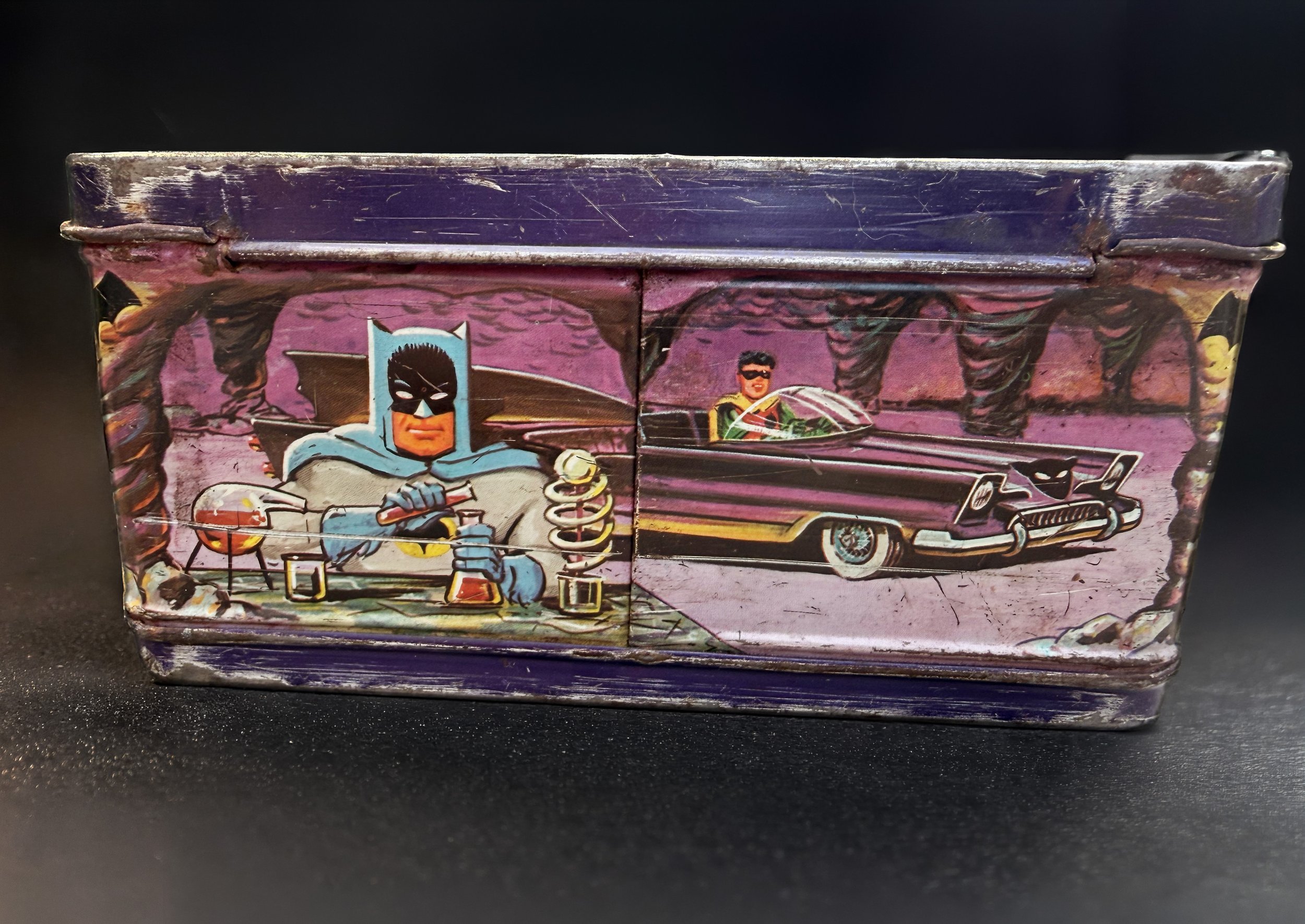 Image 11 of 16
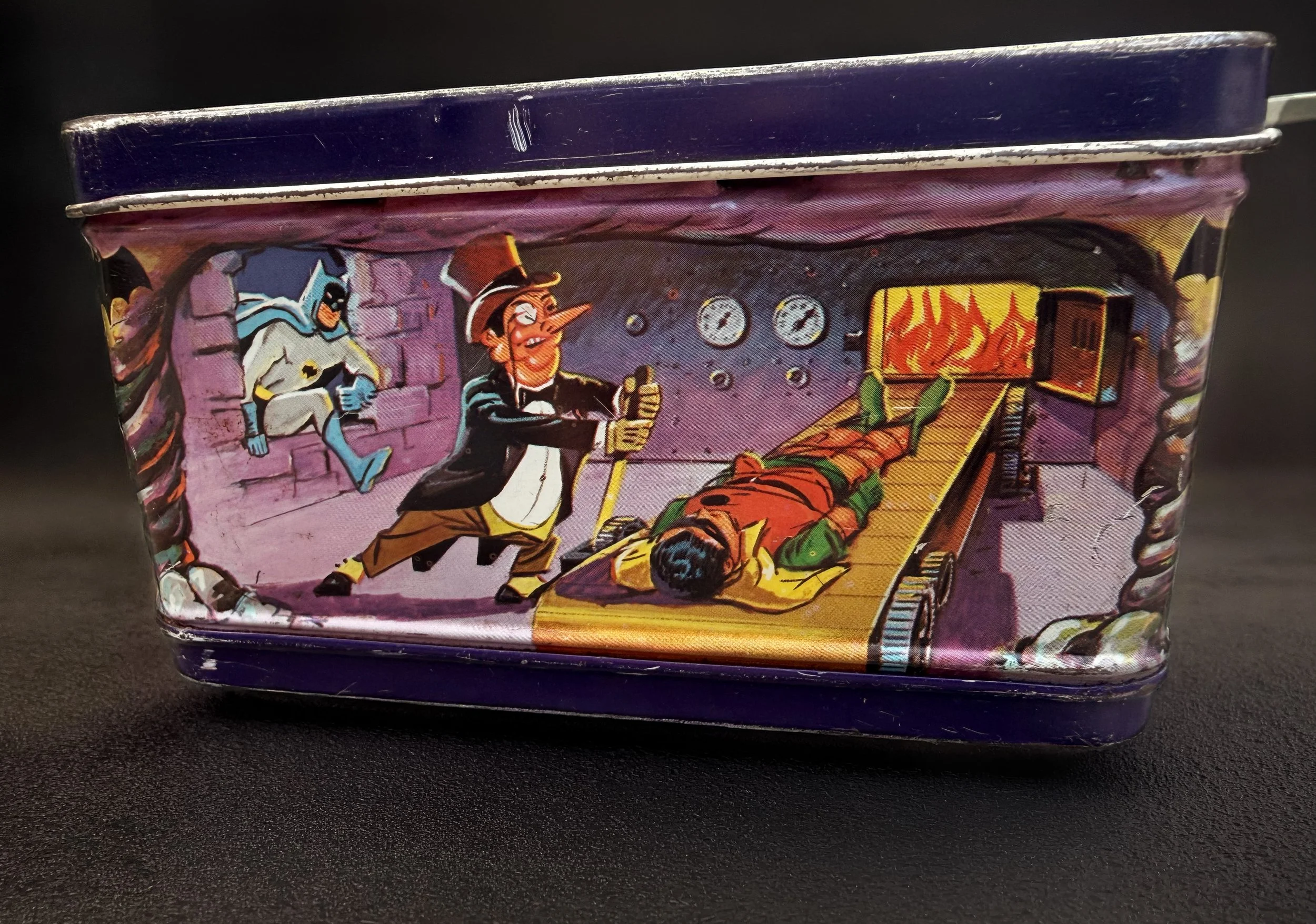 Image 12 of 16
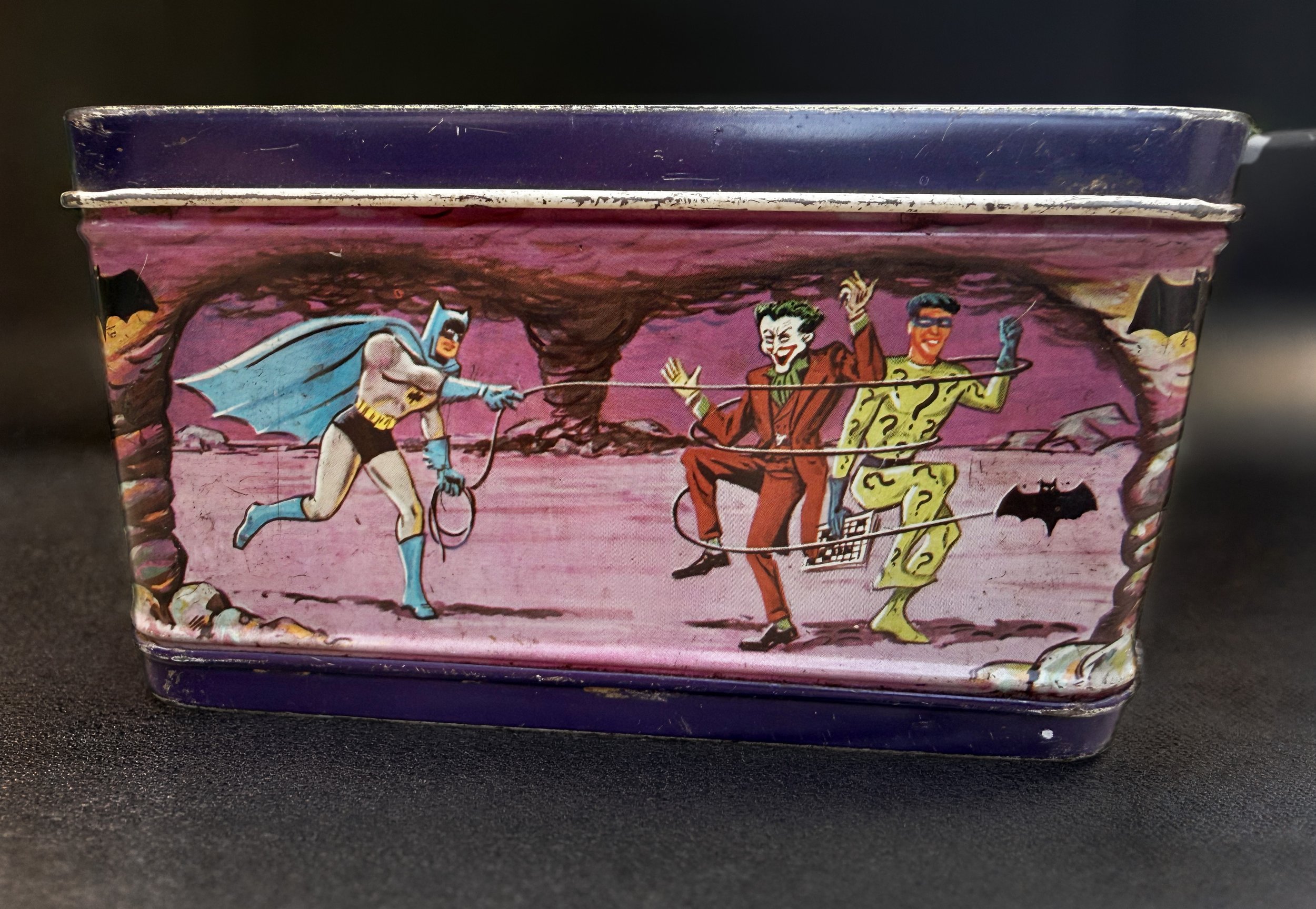 Image 13 of 16
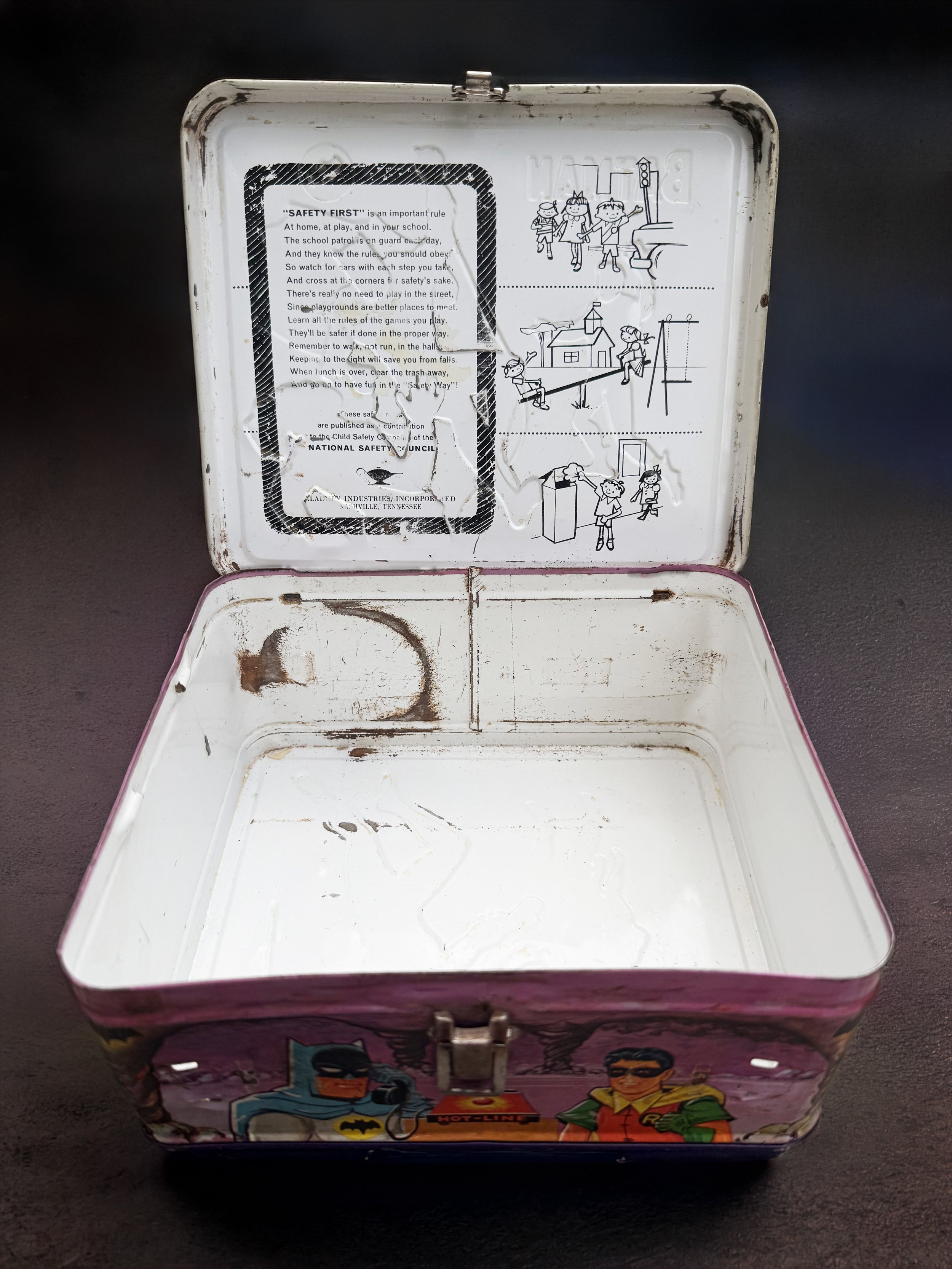 Image 14 of 16
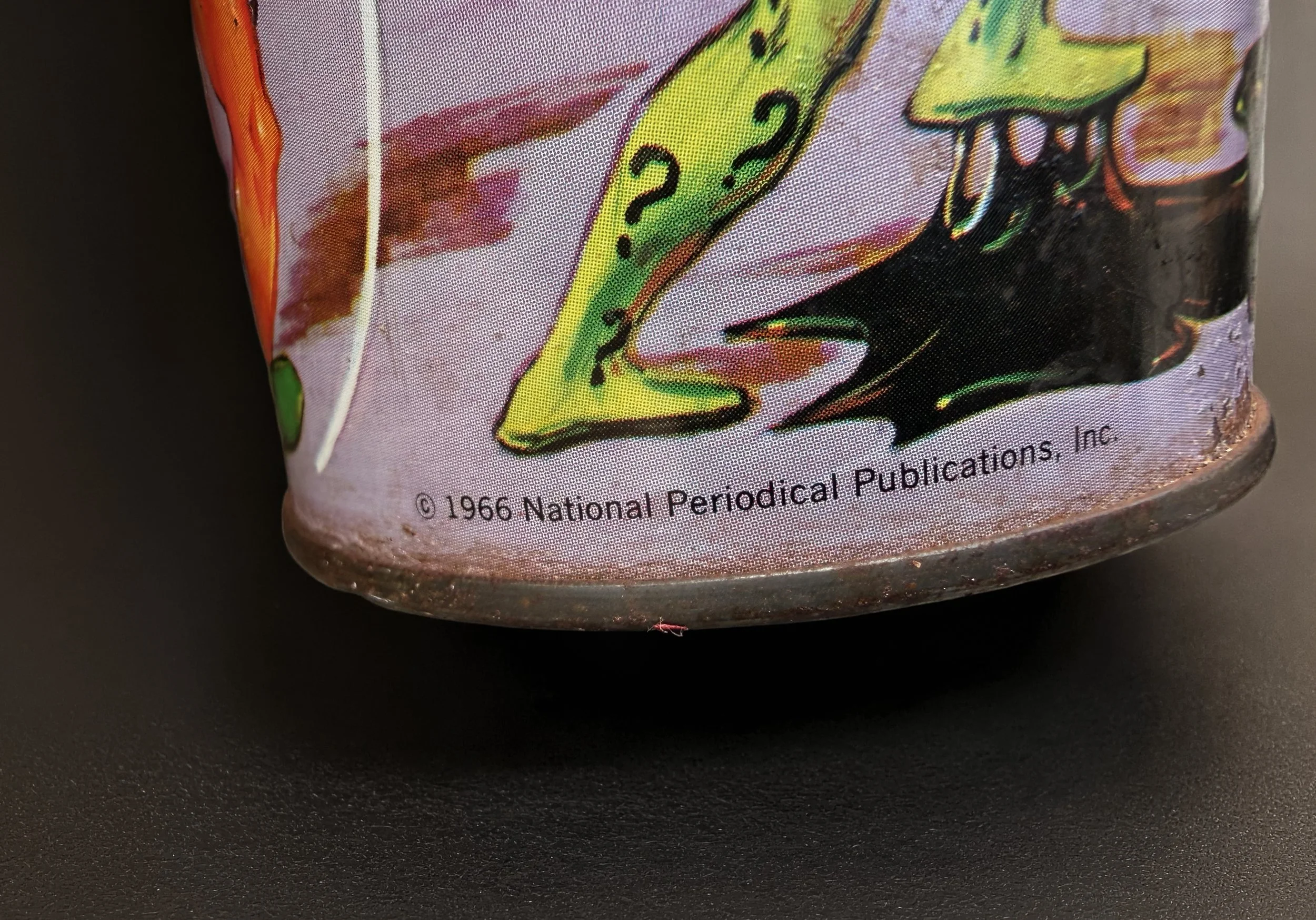 Image 15 of 16
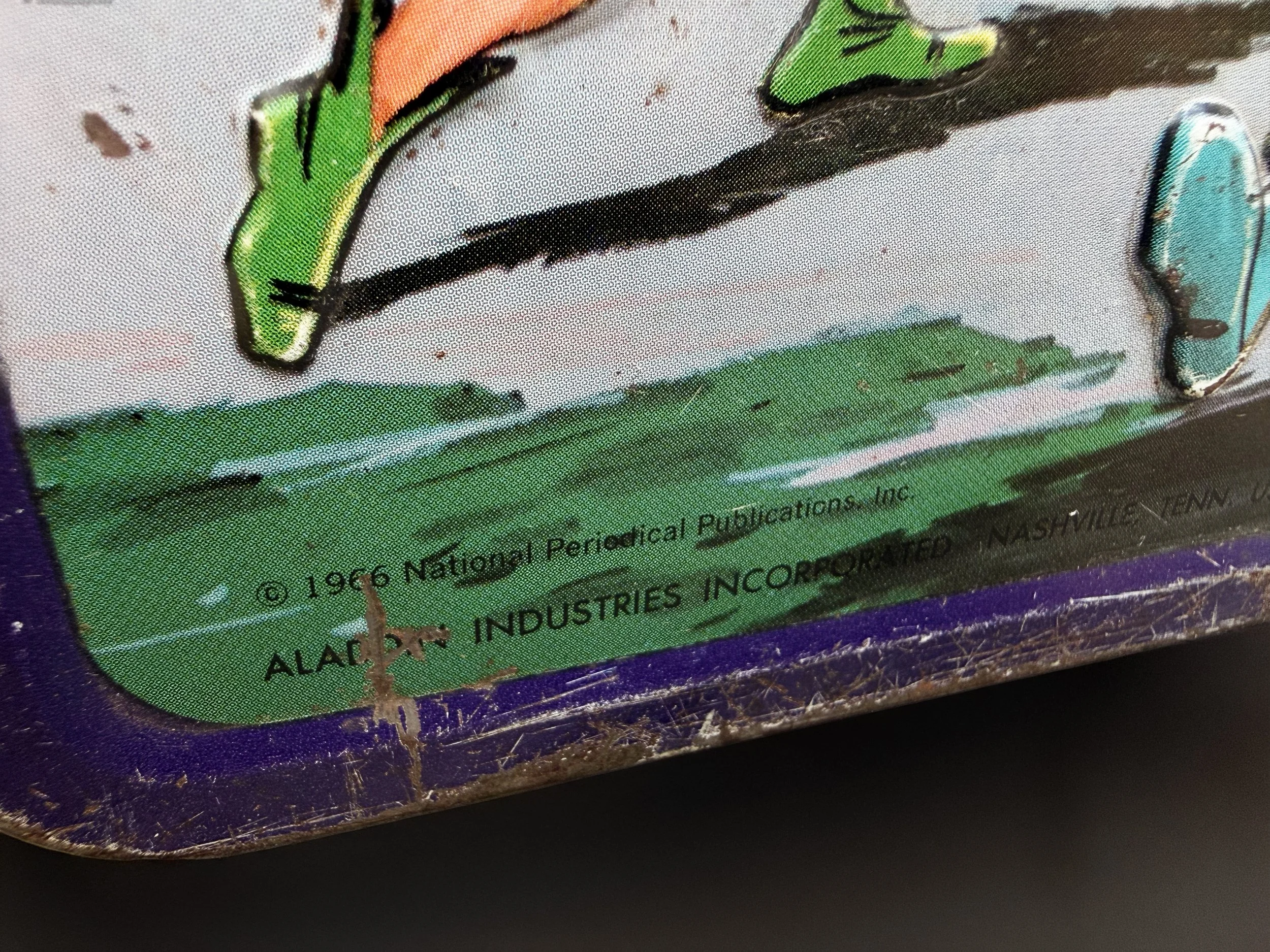 Image 16 of 16